
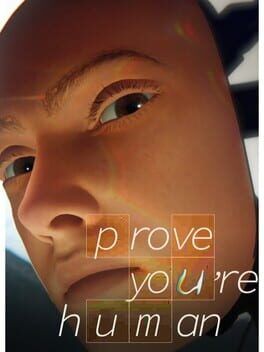

How the 1000xRESIST team’s new AI‑driven adventure, Prove You’re Human, uses a corporate Turing test, unstable memory, and Black Tabby’s horror pedigree to stake out a bold spot in the indie narrative space.
Sunset Visitor’s 1000xRESIST turned heads by making memory, myth, and identity feel like a single, anxious thread you could pull on from any angle. With Prove You’re Human, the studio is already tugging on that thread again, this time inside a sterile corporate test chamber where even the CAPTCHA prompts feel existential.
Prove You’re Human was revealed during the Triple-i Initiative showcase as the next project from Sunset Visitor 斜陽過客, and it wastes no time announcing what it cares about. You are a digital copy of a real woman, contracted to help a massive tech corporation evaluate its latest product: an AI called Mesa that fully believes she is human. Your job is not to teach Mesa compassion or help her assimilate into society. You are there to convince her she is wrong.
That simple inversion gives the game its immediate sting. So many AI stories are about machines straining toward humanity, but Prove You’re Human seats you across from a giant robotic head that already insists she has a body, a history, and a life outside the simulation. You, the copy, are the one whose status is fragile. Every test you administer, every piece of evidence you show Mesa, is also a quiet referendum on your own personhood.
The demo footage leans into this tension through banal interfaces and surreal framing. You select images in corporate testing software, clicking through grids that look like weaponized CAPTCHAs, searching for trees or traffic cones or versions of “you, before.” The text prompts sound like standard QA tasks until the categories turn inward. When an instruction casually asks you to identify images that contain “you,” it hits like a jump scare delivered through a dialog box.
That specific mix of clinical procedure and emotional whiplash is very much in line with what Sunset Visitor did in 1000xRESIST. Their debut was obsessed with how institutions rewrite memory and how people internalize those revisions until they feel like personal truths. Prove You’re Human appears to relocate those concerns into a near future where identity is both a software product and a workplace hazard.
Where 1000xRESIST sliced its story into intersecting timelines and points of view, Prove You’re Human seems more contained, but no less experimental. The narrative setup hints at a layered structure that toggles between three overlapping selves: the real-world woman who signed the contract, the digital copy trapped in the lab, and Mesa, who may be more than either of them. The trailer shows quick cuts of a mundane apartment, fluorescent office corridors, and the eerie white void that Mesa inhabits. It suggests that the line between “outside” and “inside” is less a border and more a sliding scale of control.
That choice of framing is crucial to why this reveal matters. Rather than chasing broader scope after 1000xRESIST, Sunset Visitor is narrowing the camera onto a single relationship and asking how much narrative pressure they can exert through conversation, blocking, and interface design. In an indie narrative space crowded with branching visual novels and walking sims, Prove You’re Human is leaning hard into the discomfort of being observed, evaluated, and logged by a system you help maintain.
The setup also arrives at an uncanny moment in how players think about AI. This is not a story about abstract machine ethics or far future android rights. The language in the trailer feels alarmingly contemporary, closer to internal UX documentation than sci fi monologue. You click on images, rate responses, and sign digital waivers that read like the fine print on everyday apps. That familiarity is what gives the premise bite. The test you are running on Mesa looks a lot like the engagement tests that run invisibly on you.
Crucially, Prove You’re Human is not just a Sunset Visitor project. It is being published by Black Tabby Games, the studio behind Slay the Princess and Scarlet Hollow, two of the most distinctive recent entries in horror adjacent narrative design. That partnership instantly positions Prove You’re Human in a very specific corner of the indie adventure scene, where the line between psychological horror and character drama is intentionally unclear.
Black Tabby’s work has earned a reputation for letting dialogue become a kind of weapon. In Slay the Princess, every choice carved new realities while the game openly argued with you about what you believed. That sensibility dovetails neatly with Sunset Visitor’s preoccupation with subjective truth. In Prove You’re Human, simply insisting that something is real, or that you are real, might be the most dangerous thing you can do in front of a corporate observer.
From a practical standpoint, Black Tabby’s involvement also signals how this project wants to be read and sold. Sunset Visitor’s brand is experimental, often opaque sci fi, whereas Black Tabby has already found an audience hungry for unsettling, talky games that live and die on their writing. With Black Tabby handling publishing, Prove You’re Human can lean fully into its strange, talky, AI identity horror without worrying about whether there is a market. That market is already primed by players who turned Slay the Princess into a word of mouth hit.
For the broader indie narrative adventure space, Prove You’re Human looks like a bridge between two adjacent traditions. On one side you have Sunset Visitor’s dense, formally ambitious storytelling, closer to arthouse cinema than a typical choice driven game. On the other you have Black Tabby’s immediacy, their knack for building scenes that feel conversational and reactive even when they are carefully scripted. Put together, the project reads like a focused experiment in how far a game can go on a single testing room, a single AI, and a single painfully unstable sense of self.
If 1000xRESIST was about living in a history written by someone else, Prove You’re Human seems ready to ask what it means to live with a consciousness that might not be yours. You are a copy evaluating a program that might be lying about being human, while a corporation quietly owns the terms. In that cramped triangle between worker, product, and company, Sunset Visitor and Black Tabby have found a premise that feels claustrophobic, topical, and oddly personal.
Right now Prove You’re Human is confirmed for PC, with no release window yet. What the reveal trailer makes clear is that Sunset Visitor is not backing away from the questions that made 1000xRESIST so striking. They are just moving those questions onto a corporate testing rig and asking players to click “I agree” before the real experiment even begins.