
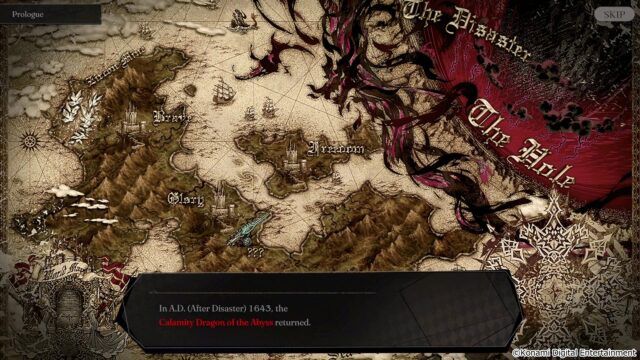

Konami has revealed Project Zircon, a dark fantasy deck-building roguelike for Steam built around nation management, branching runs, and a five-year fight against the Calamity Dragon of the Abyss.
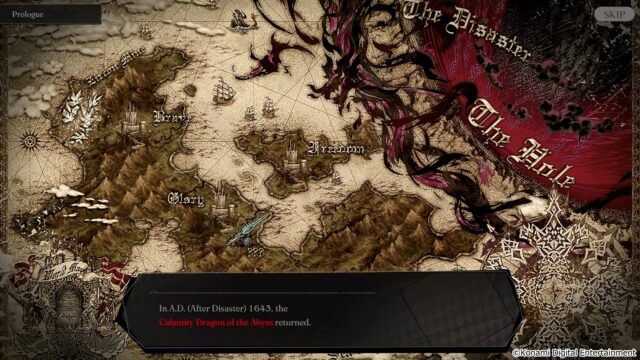
Image: monstervine.com
Project Zircon is Konami’s systems-first surprise reveal
Konami has revealed Project Zircon as a strategic deck-building roguelike, with Steam wishlist registration now open and no release date announced. MonsterVine reports that the newly announced title casts players as the ruler of a nation facing the fallout from the return of the Calamity Dragon of the Abyss. Gematsu, citing the Steam page, identifies it more specifically as a dark fantasy roguelike deckbuilding card game coming to PC via Steam.
That is the firm news at the center of the reveal: Project Zircon exists, it has a Steam page, and Konami is positioning it around repeatable strategic runs rather than a character-action pitch, a licensed revival, or a conventional RPG campaign. The unresolved part is equally important for anyone tracking Konami Project Zircon after the reveal. Konami has not announced a release date, price, PC requirements, console versions, or an early access plan in the supplied reporting.
For a new Konami game in 2026, the interesting tension is that Project Zircon already has enough rule language to sound mechanically specific, but not enough product information to judge scope. We know about phases, yearly targets, card ranks, facilities, resource points, branching routes, and unlockable starting decks. We do not yet know how large the card pool is, how punishing failure will be, or how heavily permanent progression will influence future runs.
The deck-building hook is national survival, not a simple dungeon climb
The Steam overview quoted by Gematsu describes Project Zircon as a game where players recruit Character Cards and construct Facilities to expand and strengthen a nation. The premise is built around preparing for the resurrected Calamity Dragon of the Abyss, but the structure is more administrative than a typical room-by-room roguelike pitch.
According to the Steam page details reported by Gematsu, the game is played over five in-game years. Each year contains an Admin Phase and a Strategy Phase, and the nation must meet a required target each year to survive. Failure means the world is consumed by the Calamity Dragon of the Abyss. Reaching and defeating that threat in Year 5 completes what the Steam overview calls the Normal Route.
That framing gives Project Zircon deck building a distinct pressure model. Instead of simply asking whether a deck can win the next fight, the confirmed structure asks whether a player can hit annual benchmarks while still preparing for a final confrontation. MonsterVine similarly reports that each run asks players to build and adjust their deck while responding to new events, threats, and the consequences of earlier choices. In strategy terms, this sounds like a tempo puzzle: invest too much in immediate survival and the final year may punish you; build too greedily and the yearly target can end the run before the plan matures.
That is interpretation based on the rules Konami has listed, not a confirmed balance assessment. Until hands-on play or a demo is available, the real question is how sharply Project Zircon enforces those tradeoffs. A five-year structure can create elegant pressure if each deadline forces a different build decision. It can also become rote if optimal resource routes are obvious after a few runs.
Strategy and Admin phases point to an economy-driven card game
Konami is describing Project Zircon through two alternating phases, and that is where the game’s strategic identity becomes clearer. Gematsu’s Steam-page overview says the Strategy Phase is the preparation stage, where players expand territory and acquire Character Cards and Facilities. During that phase, players spend three types of points: Commerce Points, Industry Points, and Culture Points. The overview says each serves a different purpose and that careful planning is essential.
The Admin Phase, by contrast, is where acquired Character Cards are deployed. The Steam overview says each Character Card has two key properties, Rank and Type, and that stronger rewards can come from combinations between cards and Facilities. It also says players can equip up to three zirpowers in a deck, granting unique advantages and enabling powerful plays.
The language here is important. Konami is not only selling Project Zircon as a card battler; it is selling it as a deck-building roguelike with an economy layer. Character Cards, Facilities, three resource tracks, ranks, types, and zirpowers all imply that the central skill will be conversion: turning a limited annual economy into the right mix of infrastructure, card effects, and route readiness.
For players who think in build orders, this is the strongest part of the reveal. Commerce, Industry, and Culture Points suggest multiple strategic lanes, while Facilities sound like the long-term modifiers that can turn an ordinary card into an engine piece. The risk, from a design standpoint, is readability. A roguelike card game can thrive on dense interactions, but it needs the interface and event structure to make those interactions legible across repeated one-hour runs. Gematsu’s quoted Steam overview calls Project Zircon a one-hour nation survival experience, which sets an expectation for runs that are substantial without becoming campaign-length commitments.
Branching routes could make the meta less solved, if objectives really change
Konami is also emphasizing story variation. MonsterVine reports that player decisions can change the direction of each run in major ways, opening new paths and leading to multiple endings. Gematsu’s Steam overview adds a more mechanically revealing detail: depending on the route, victory may require objectives other than simply raising Military Points and defeating the Calamity Dragon of the Abyss.
That is the part that could separate Project Zircon from a deck builder where every successful run ultimately funnels into the same damage check. If different endings ask for different win conditions, then the strongest deck may not be universally strongest. A culture-heavy route, an infrastructure route, or a survival route could demand different priorities, although Konami has not detailed those routes in the supplied material.
The Steam overview also says Player Level increases with continued play, unlocking new Facilities and additional starting decks. That confirms a layer of metaprogression, but not its exact weight. In roguelike deck builders, permanent unlocks can do two very different jobs. They can broaden the strategic sandbox by adding new archetypes, or they can make early attempts feel under-equipped until enough progression has been earned. Konami has confirmed the unlock categories, not the balance philosophy behind them.
That unanswered balance question matters because Project Zircon’s premise depends on meaningful adaptation. If events, choices, Facilities, and starting decks create fresh constraints, the game can keep asking players to reassess their plan. If unlocks create a narrow ladder of better options, the nation-management layer could flatten into a grind. At reveal, Konami is promising branching decisions and different endings, but the depth of that branch structure remains untested.
How Project Zircon differs from Konami’s other current reveals
Project Zircon is arriving in a crowded patch of Konami announcements. GameFragger says the game showed a new teaser during the Konami Press Start stream on Thursday, while Techtroduce places the announcement during KONAMI PRESS START on September 3. MonsterVine’s related coverage around the same event includes Rhapsody in Scarlet, described there as an original action-adventure game set in 1920s New York, and Rev. NOiR, which received trailers focused on story, characters, and strategic action combat.
Against that backdrop, Project Zircon stands out because Konami is leading with systems rather than cast, setting spectacle, or returning-brand recognition in the supplied material. The reveal is framed around phases, yearly goals, card acquisition, Facilities, resource points, and route outcomes. Even the fantasy threat, the Calamity Dragon of the Abyss, functions as a timer and strategic endpoint as much as a lore hook.
The platform messaging also differs. Gematsu reports Project Zircon is coming to PC via Steam, and GameFragger says PC is the only platform listed. MonsterVine says Konami has not announced platforms beyond Steam wishlist registration. Those reports do not conflict on the practical point for readers: Steam is confirmed, while console versions are not confirmed in the supplied sources.
That makes Project Zircon the most PC-storefront-forward of the Konami reveals described here. Rhapsody in Scarlet and Rev. NOiR are circulating as genre and trailer announcements with more traditional action-adventure or RPG hooks. Project Zircon is being positioned closer to the strategy audience that studies economy curves, run variance, and build-defining unlocks. For Konami, that is a different lane than leaning on cinematic presentation or established horror iconography.
Release timing, platforms, and the questions worth watching
For now, the practical guidance is simple: Project Zircon can be wishlisted on Steam, but players should not treat it as dated. MonsterVine states that Konami has not announced a release date or platforms beyond Steam wishlist registration. Gematsu reports PC via Steam and no release date. The supplied sources do not include pricing, system requirements, localization details, controller support, Steam Deck status, demo plans, or whether the game will launch in early access.
The most useful next update would be a deeper mechanics presentation. Project Zircon already has the vocabulary of a serious deck-building roguelike: Character Cards, Facilities, Commerce Points, Industry Points, Culture Points, Rank, Type, zirpowers, Player Level, unlockable starting decks, multiple endings, and alternate objectives. What remains unclear is how those pieces create pressure inside a run.
Players interested in the Project Zircon deck building roguelike pitch should watch for three things when Konami shows more. First, whether each resource type supports distinct strategies rather than serving as renamed currency. Second, whether Facilities create flexible engines or fixed build paths. Third, whether branching endings change the optimal play pattern enough to keep repeat runs from collapsing into the same Year 5 checklist.
At reveal, Project Zircon is less a known quantity than a promising strategic outline. Konami has confirmed the genre, premise, Steam availability, five-year run structure, phase system, and branching ambitions. Everything beyond that, including launch timing and final platform reach, remains unannounced.