
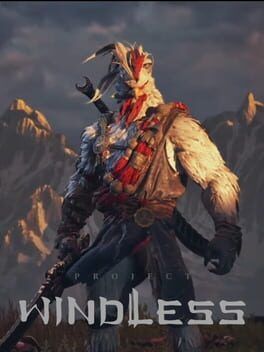

Krafton Montréal’s Project Windless turns cult Korean fantasy The Bird That Drinks Tears into a sprawling open‑world action RPG. Here’s what the State of Play reveal shows about its premise, worldbuilding, combat, creative leads, and the studio’s clarified stance on AI.
Sony’s latest State of Play finally pulled back the curtain on Project Windless, Krafton Montréal Studio’s debut project and a rare big‑budget RPG adaptation of a Korean fantasy novel. Built in Unreal Engine 5 and led by a former Far Cry director, it landed with a trailer full of towering bird‑warriors, mythic battlefields, and hints of large‑scale war.
Below, we break down what the reveal actually shows and what Krafton has clarified since, including how its AI systems fit into the overall design.
A Korean fantasy epic turned playable
Project Windless is a single‑player open‑world action RPG based on The Bird That Drinks Tears by Lee Yeongdo, a hugely influential Korean novel cycle that is often described as a Korean answer to Western fantasy epics.
Krafton is positioning the game as an entry point for players who have never touched the books. You do not need to know the source material to follow what is happening, but the team is clearly leaning on its tone and structure. The trailer and accompanying press material frame the story as a mythic age where legend is being written in real time rather than retold long after the fact.
The broad premise centers on a land on the brink of seismic change. Ancient pacts between peoples are fraying, wars are about to erupt, and you step into that moment as a legendary warrior who will help decide which alliances survive and which empires burn. Rather than casting you as a scrappy nobody, Project Windless wants you to start as someone already feared and revered, then escalate from there.
Playing a Rekon: Seven‑foot bird warrior as protagonist
One of the reveal’s most striking hooks is its choice of protagonist. You play as a Rekon, a towering, humanoid bird warrior drawn directly from the novels. In the trailer, this Rekon cuts a silhouette closer to a mythic warlord than a conventional RPG hero, with dual blades, ornate armor, and a distinctly avian stride.
That choice does a lot of work for the fantasy. Instead of defaulting to yet another human soldier or rogue, the game immediately signals that its world has its own cultural center of gravity rooted in Korean fantasy rather than Western medieval tropes. The Rekon’s presence also hints at social and political themes inside the fiction: towering martial elites, distinct codes of honor, and long‑standing rivalries with other races and kingdoms.
Patrik Méthé, the studio head and creative director, has framed the core question as, “What does it really mean to play a legendary figure in a fantasy world?” The Rekon is the answer to that question, and most of the reveal is focused on framing you not as a background participant in someone else’s legend but as the main historical actor.
Worldbuilding hooks: War, myth and a living chronicle
State of Play only showed slices of the world, but the structure is clear. This is a war‑scarred fantasy land built on competing myths and power blocs. The environments range from misty battlefields strewn with banners and corpses to fortified strongholds looming over river valleys.
Krafton’s press materials describe a world “shaped by myth, war, and legendary heroes.” That shaping is not just aesthetic. The studio is building what it calls Mass Technology, an in‑house system designed to push thousands of participants into a single battle. That tech is meant to give the world the feel of an active war chronicle rather than static, staged skirmishes. Even if you are just riding across a field, you are riding across history in motion.
Crucially, Méthé keeps stressing player agency as a worldbuilding pillar. The promise is that your decisions about which factions to support, which battles to fight, and what kind of ruler or warlord you become will affect how future conflicts play out and how the history of the setting is recorded. The game wants to sell the fantasy that “legend is not something you observe, it is something you create.”
For fans of the novels, that suggests a chance to inhabit decisive moments from the books in an interactive form. For newcomers, it suggests a world where political maps and power structures respond visibly to your choices instead of staying fixed in the background.
Combat glimpses: Brutal duels inside massive wars
The reveal trailer focuses less on systems breakdowns and more on tone, but it still offers a few clear combat cues.
First, combat is firmly in the action RPG camp. The Rekon fights in real time, wielding dual swords and chaining together slashes, dodges, and finishers. The camera work lingers on heavy strikes that send enemies flying or carve through them in a single brutal arc, hinting at a weighty feel closer to a character‑action title than a pure numbers‑driven RPG.
Second, those personal duels are framed against the backdrop of large‑scale warfare. Torches dot hillsides, armies clash in chaotic melees, and siege engines rumble across battlefields while you carve your own line through the fray. This is where the Mass Technology concept kicks in. Instead of a handful of AI soldiers hitting each other in loops, the intent is to render dense, reactive battlefronts where hundreds or thousands of NPCs are colliding at once.
That mix of tight individual combat inside sprawling warzones is the game’s combat identity. The Rekon’s size and reach help sell the fantasy of being a front‑line commander who can literally reshape the tide of battle, not just a lone adventurer cleaning up side quests.
Krafton is not yet detailing things like builds, loot, or progression trees, but between the action focus, the bird‑warrior protagonist, and the emphasis on war strategy rather than isolated monster hunting, Project Windless is already carving out a different feel from the usual Western fantasy action RPG.
Creative leads: Far Cry DNA meets Korean fantasy
Project Windless is the first project from Krafton Montréal Studio, but the team is not inexperienced. The studio is headed by Patrik Méthé, a veteran from Ubisoft who served as game director on Far Cry 3, Far Cry 4, Far Cry 5, Far Cry New Dawn, and Rainbow Six Extraction.
That pedigree suggests a few likely influences. Méthé’s past work includes open worlds with clear regional identities, systemic combat spaces, and faction‑driven conflicts. Those strengths line up well with Project Windless’s focus on warring kingdoms, large‑scale battles, and a protagonist inserted into the middle of them.
Behind Méthé, Krafton is also leaning on teams in South Korea, including staff familiar with The Bird That Drinks Tears and its lore. The adaptation is being developed in close collaboration between Montréal and Pangyo, which helps explain how the game can chase AAA open‑world ambitions while trying to stay grounded in specifically Korean fantasy traditions.
The engine choice also matters here. Unreal Engine 5 is doing a lot of heavy lifting on lighting, scale, and physics, which should give the team more room to focus on encounter design, narrative branching, and those huge war scenarios. Taken together with the leadership, Project Windless reads as a deliberate fusion of Western open‑world design experience and a distinctly Korean IP.
Sidebar: How Project Windless is actually using AI
The State of Play reveal was quickly followed by concern from some players who associated Krafton with broader AI experiments. Eurogamer followed up with the studio, and Krafton clarified exactly what role AI plays in Project Windless.
The headline is simple. Project Windless is not using generative AI for content creation or narrative elements. The game’s story, characters, worldbuilding, and art are being created by human writers, quest designers, and artists. If you are coming to this as a fan of The Bird That Drinks Tears, Krafton wants you to know that the adaptation is being authored by people, not by text or image generators.
Where AI does show up is on the systemic side, particularly in how NPCs behave on the battlefield and in the open world. Krafton describes its approach as using AI as a limited tool to drive crowd behavior and improve how non‑player characters move, react, and coordinate, especially in those huge Mass Technology battles. In practice, that might mean more convincing group formations, flanking maneuvers, or changes in morale and retreat behavior based on what is happening around them.
The important distinction is scope. AI is being treated like a technical aid to sell the fantasy of enormous, responsive wars, not as a replacement for writers, quest designers, or artists. There are no AI systems spitting out procedurally written quests, dynamic dialogue trees, or AI‑painted key art. Narrative beats, lore, and character arcs remain traditionally authored.
For players, the takeaway is straightforward: if you are intrigued by the setting and the promise of a faithful adaptation, Krafton’s stated use of AI should not change the creative heart of the experience. It is there to make the crowds feel more alive, not to write the script.
Where Project Windless fits among literary RPGs
Big RPGs based on novels are still relatively rare, and Project Windless is landing in the same broad space as games like The Witcher series or Metro when it comes to adapting a specific author’s vision.
Like The Witcher, Project Windless is using one protagonist and one core saga as its anchor, rather than a loose anthology of stories. It is not treating the source material as a generic fantasy toolkit but as a particular mythos with its own creatures, politics, and cosmology. The Rekon as a playable hero fills the same role that a witcher does in Sapkowski’s world: a figure that only makes full sense inside that specific fiction.
Where it differs is cultural center and focus. Instead of Central European folklore, this is Korean fantasy at AAA scale, bringing its own pantheons, species, and power dynamics. If it works, Project Windless could do for The Bird That Drinks Tears what CD Projekt Red’s games did for The Witcher books, introducing a regional literary phenomenon to a global audience through a highly produced RPG.
It is also arriving at a time when open‑world RPGs are expected to offer a strong sense of authored identity rather than a soup of interchangeable quests. Between the Far Cry‑inflected approach to conflict, the colossal battlefield tech, and the promise that your choices will visibly redraw the political map, Project Windless is trying to stand out not with sheer map size but with how wars and legends unfold across that map.
Krafton has not dated the game yet, and there is still a lot we do not know about progression, side content, or long‑term structure. But even at this early stage, the State of Play reveal makes one thing clear. Project Windless is not just another “new IP” trailer. It is a pointed attempt to turn one of Korea’s most famous fantasy sagas into a big, loud, interactively authored legend, where a towering bird‑warrior carves their story directly into the history of a world on the brink of war.