
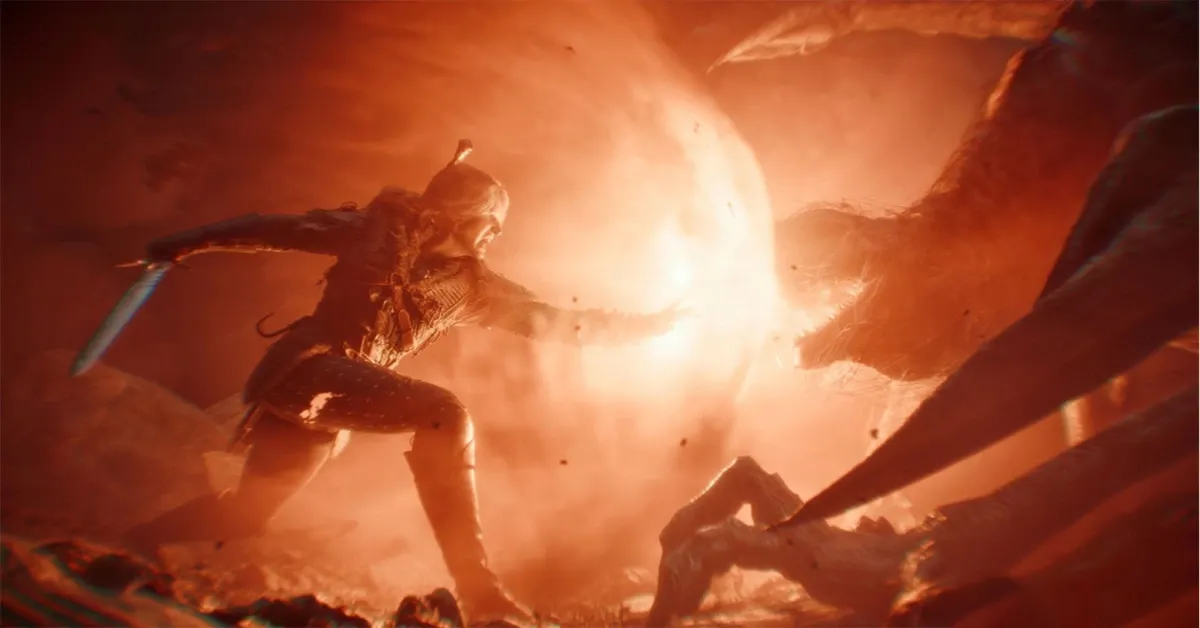
CD Projekt Red has confirmed another staffing reduction on Project Sirius, the elusive Witcher multiplayer spin-off, after reports of a broader development strategy shift.
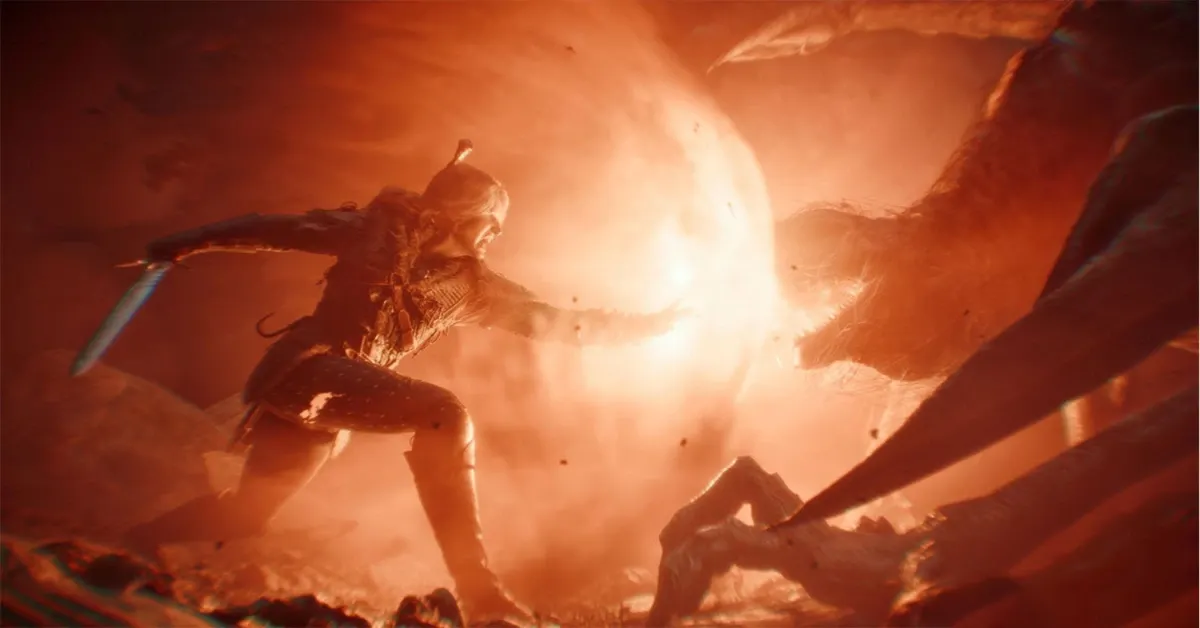
Image: allkeyshop.com
CD Projekt Red confirms a smaller Sirius team
CD Projekt Red has confirmed that nine people are leaving the Project Sirius team, creating another visible setback for the studio’s still-unshown Witcher multiplayer project. In a statement provided to Eurogamer, the company said it had “adjusted the size of the Sirius team to reflect the project’s needs at this stage of development.” CD Projekt Red said four people in Boston and five in Warsaw are leaving the company, while nine others have been invited to internal recruitment processes for possible roles on other CD Projekt Red projects.
That confirmation followed Kotaku’s report that nine staff had been laid off and another nine were being moved or considered for other work inside the organization. Kotaku attributed the changes to a “broader shift in development strategy,” citing an unnamed source. CD Projekt Red’s public statement confirms the staffing impact, but it does not use that same strategy language or explain what, specifically, has changed in the game’s design, production plan, or release ambitions.
The immediate tension is clear: The Witcher Project Sirius still exists, but the team around it has been cut again. Eurogamer noted that CD Projekt Red listed 83 people working on Sirius in a May financial report. Kotaku’s update, citing the same pre-layoff figure, said the changes bring the total to 65. However the company ultimately redistributes the nine workers invited into internal recruitment, Sirius is now operating with a smaller dedicated staff than it had earlier this year.
A multiplayer Witcher game that has never fully taken shape in public
Project Sirius was announced in 2022 as part of CD Projekt’s wider roadmap for The Witcher and Cyberpunk. According to Eurogamer, Sirius was described at the time as a Witcher spin-off with a multiplayer element as well as single-player content, developed by The Molasses Flood. GameSpot described CD Projekt’s original positioning as an “innovative take” on The Witcher series aimed at both veterans and newcomers.
That combination has always made Sirius the oddest piece of CD Projekt’s Witcher slate. The mainline Witcher games are built around authored quests, difficult choices, character progression, and the lonely professionalism of monster hunting. A cooperative or multiplayer version of that fantasy has obvious appeal, especially if players can build different roles, pursue contracts together, and explore a world less tied to one protagonist. It also creates design friction. The more a Witcher game leans on shared play, social systems, and repeatable progression, the harder it becomes to preserve the pacing and consequence-driven quest design that players associate with the series.
The public record does not yet show how CD Projekt Red plans to resolve that tension. No gameplay reveal, platform list, price, release window, or final title has been announced in the source material. Reports repeatedly describe the game as mysterious because the project’s shape has remained private even as its staffing changes have become public.
The new layoffs follow an earlier reboot, not a clean development arc
The latest Project Sirius layoffs matter because this is not the first time the game has been visibly reworked. GameSpot reported that CD Projekt Red confirmed more than 25 layoffs tied to Project Sirius in 2023, while Kotaku and TheGamer put that earlier figure at 29 developers. The earlier reduction came as CD Projekt Red implemented what GameSpot described as a “new framework” for the game.
Eurogamer’s prior reporting, summarized in its latest story, said CDPR re-evaluated “the scope and commercial potential of the original concept” before rebooting Sirius. That is unusually important language for anyone reading the project as a future CDPR multiplayer RPG. A scope reset suggests the issue was not limited to polish or timing. It points to a fundamental reassessment of what the game should be and whether its original version made business sense.
CD Projekt Red said at the time, according to GameSpot, that it was “excited with the updated direction” but not ready to discuss details. Years later, the company still has not put that updated direction in front of players. The latest reduction therefore lands differently from an ordinary end-of-milestone contraction. It arrives after a reboot that was already tied to framework, scope, and commercial concerns.
Molasses Flood’s role has shifted from external partner to internal CDPR studio
Project Sirius began as a game from The Molasses Flood, the studio known for The Flame in the Flood. Eurogamer describes the studio as then-external when Sirius was announced, and says CDPR later acquired Molasses Flood in 2025 so the team could work on the game internally. That shift changes how the project should be read. Sirius is no longer simply an outside experiment attached to the Witcher license. It now sits inside CD Projekt Red’s broader production structure, competing for people, attention, and strategic oxygen with the company’s biggest projects.
Those other projects are substantial. Eurogamer says the bulk of CD Projekt Red is currently working on The Witcher 4, while a Cyberpunk sequel is also in development. Eurogamer also reports that a collaboration with Fool’s Theory, a studio made up of former CDPR developers, will deliver a Witcher 3 expansion called Songs of the Past before The Witcher 4, sometime next year.
That context helps explain why CD Projekt Red’s statement about “project needs at this stage of development” raises practical questions. A reduced Sirius team could mean the project has narrowed, entered a different production phase, or been reorganized around a smaller design target. It could also reflect resource prioritization while The Witcher 4 remains the company’s main internal focus. The confirmed statement does not say which of those is true, so the responsible reading is narrower: CD Projekt Red has cut and redistributed people on Sirius while its flagship Witcher project commands the bulk of the studio.
A stronger writing hire suggested momentum, but it did not remove the risk
One reason the latest staffing hit feels especially uneasy is that Sirius had recently shown signs of forward movement. Eurogamer reported earlier this year that CDPR hired a Destiny 2 and Guild Wars 2 writer to work on the game. Kotaku identified that writer as Kwan Perng and said Perng had joined as lead writer. Kotaku also reported that, according to its understanding, the project had been going relatively well recently after changes made in the spring.
That is the most interesting contradiction in the current reporting. A project can be improving creatively and still lose staff. A stronger narrative lead does not settle questions about production scale, multiplayer systems, monetization, platform strategy, or whether the game’s loop can support both solo and cooperative play. For an RPG audience, the writing hire signals that CD Projekt Red still values story architecture within Sirius. For a production-minded reader, the layoffs signal that story direction alone is not the same thing as a locked overall design.
The distinction matters because Witcher players will judge Sirius on systems as much as lore. If the game includes co-op, it needs progression that gives players meaningful roles without flattening everyone into interchangeable monster slayers. If it includes single-player, it needs quest structure that can survive alongside multiplayer demands. If it is aiming for newcomers as well as long-time fans, as GameSpot says CD Projekt originally suggested, it needs onboarding that does not dilute the identity of the setting. None of those design questions has been answered publicly.
Rumors and parallel Witcher multiplayer reports muddy the picture
The source material also points to a wider multiplayer push around The Witcher, but not all of it should be treated as confirmed Sirius information. Eurogamer says that, around the same time as the Sirius writing hire, a second Witcher multiplayer project was reported to be in development as a free-to-play mobile game. That is separate reporting, and Eurogamer frames it as another project rather than a confirmed description of Sirius.
TheGamer also cites leaks from MP1st about an unannounced PC and mobile Witcher game allegedly set in 1230, with a customizable character, monster contracts, a skill-based system, and Witcher 3-style combat elements such as dodges, parries, executions, and blocks. TheGamer notes that those claims lined up with older job listings mentioning a stylized game, branching and non-linear storytelling, cinematic storytelling, voiced dialogue, game modes, player progression, social systems, and hints of classes.
Those details are tempting because they sound like the kind of RPG scaffolding a cooperative Witcher game would need. They should still be kept in the rumor and listing-signal bucket. The leaks are not confirmed by CD Projekt Red in the provided sources, and the existence of a reported second multiplayer Witcher project makes it risky to attach every PC, mobile, class, or custom-character claim directly to Project Sirius. At present, the confirmed Sirius facts are narrower: it is a Witcher spin-off associated with single-player and multiplayer elements, it was rebooted, it moved under CD Projekt Red after the Molasses Flood acquisition, and it has now suffered another staffing reduction.
For players, the sensible expectation is patience rather than pre-launch theorycrafting
There is no confirmed release timing, platform plan, price, beta schedule, or gameplay format for The Witcher Project Sirius in the provided reporting. Readers hoping to plan around a CDPR multiplayer RPG should treat the project as active but unsettled. The team has not disappeared, and the latest confirmed numbers still leave a meaningful group assigned to Sirius. At the same time, two rounds of layoffs tied to a previously rebooted project are a clear sign that CD Projekt Red is still calibrating what this Witcher multiplayer game should be.
That leaves several unanswered questions that matter more than the codename. Is Sirius still built around both solo and cooperative play? Has the scope narrowed after the newest staffing adjustment? Does CD Projekt Red see it as a premium RPG, a service-style multiplayer game, or something between those models? How will it avoid turning Witcher progression into a generic class grind while still giving co-op players distinct builds and roles?
Until CD Projekt Red shows the game, the healthiest read is neither cancellation panic nor blind confidence. Project Sirius remains one of the most uncertain parts of CD Projekt’s announced future, and the latest CD Projekt Red layoffs reinforce that uncertainty. For now, players should watch for official details rather than build expectations around leaks, job listings, or the simple appeal of hunting monsters with friends.