
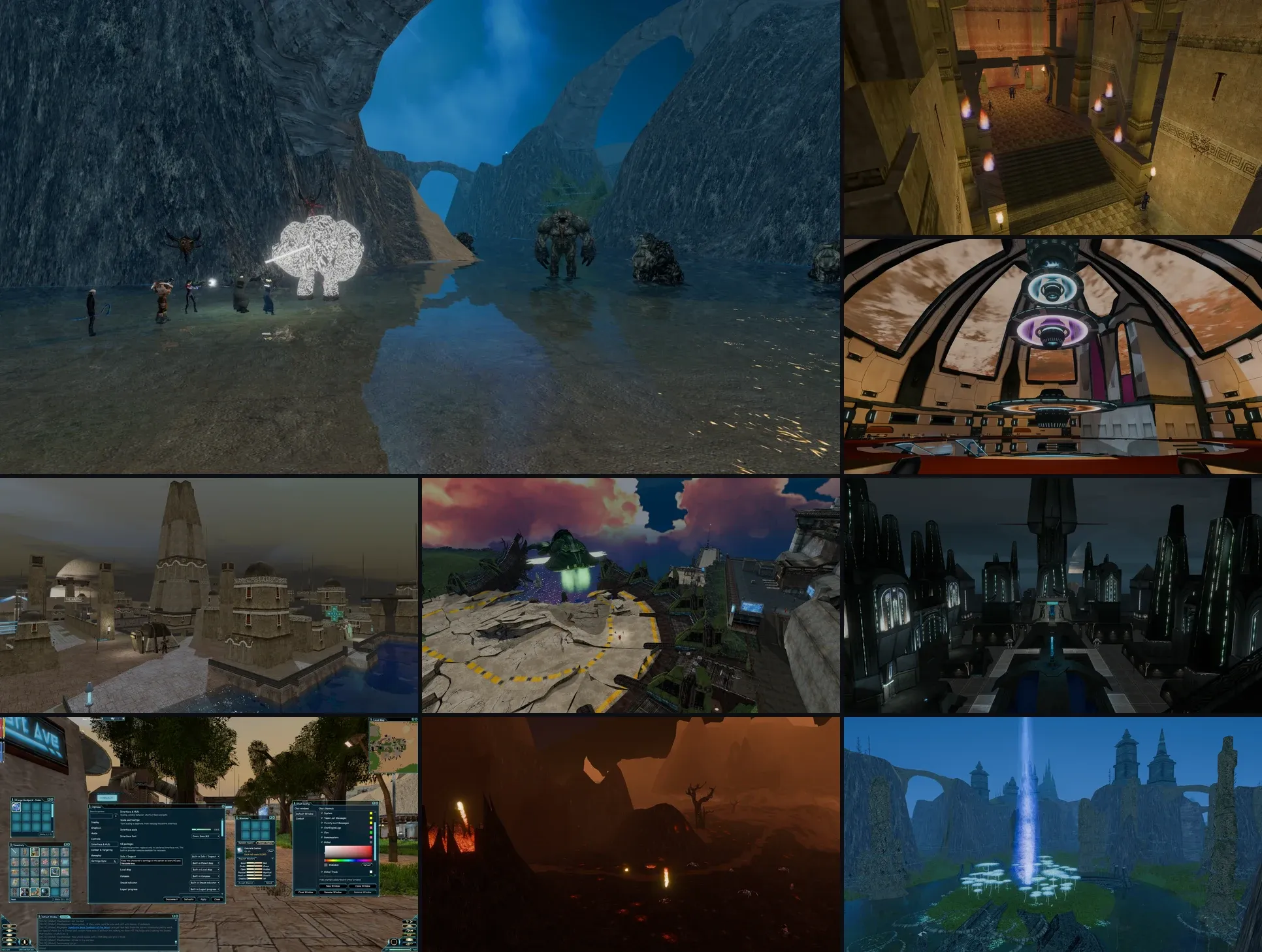

Project Rubi-Ka’s Spiritech open beta gives the Anarchy Online fan server a new 64-bit client and engine, with native Windows, Linux, and Mac builds, modern UI tools, and big preservation questions for veterans.
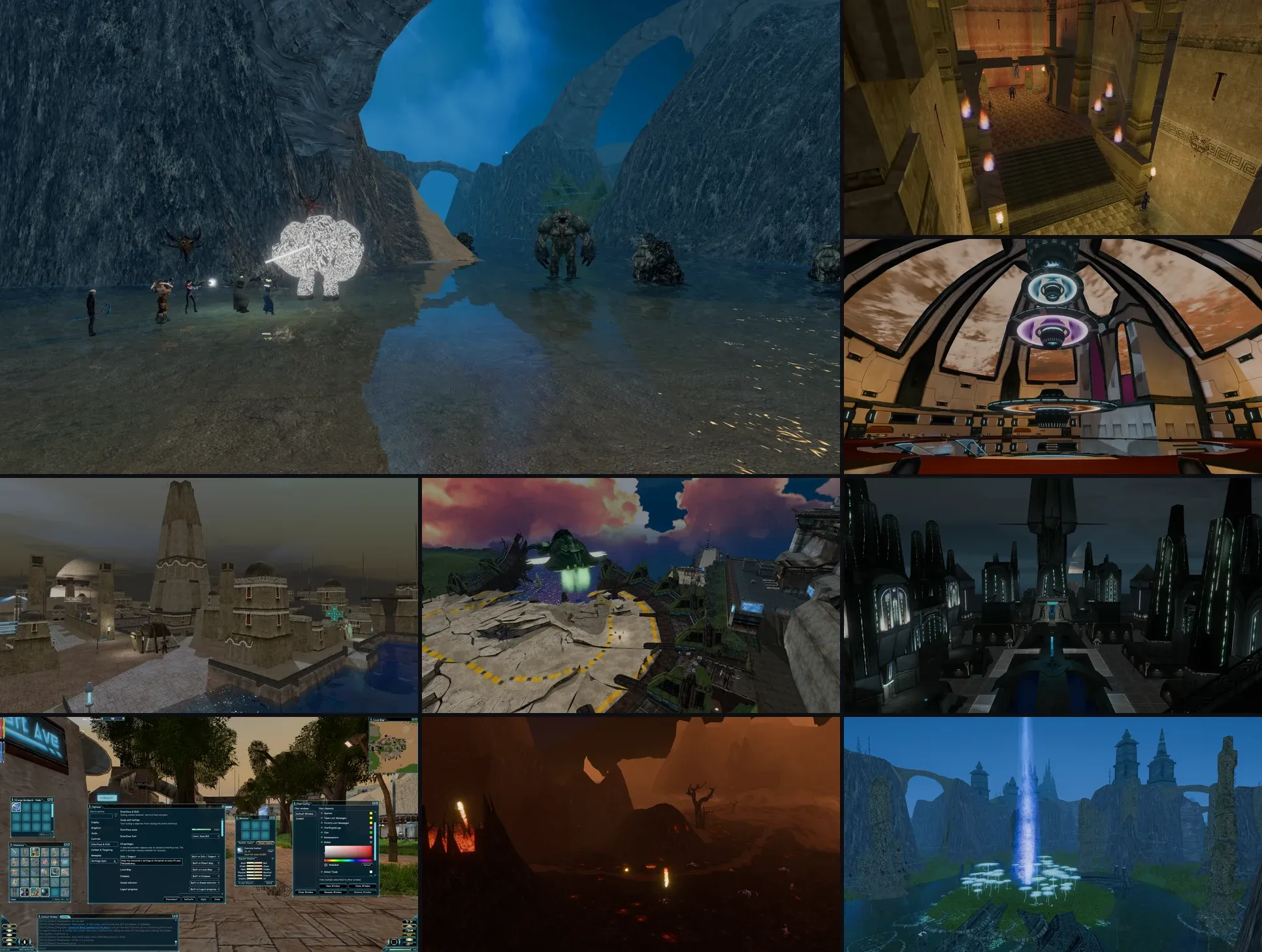
Image: project-rk.com
Project Rubi-Ka’s biggest access change is now in open beta
Project Rubi-Ka, the fan-run Anarchy Online revival server that MassivelyOP describes as an Anarchy Online rogue server, has opened beta testing for Spiritech, its own client and engine. MMOHuts reports that the Project Rubi-Ka open beta went live Friday, November 13, with installation instructions being handled through the project’s Discord.
That is the concrete development. The tension around it is larger than a client patch. Spiritech is presented as a new client and engine built from scratch for Project Rubi-Ka, rather than a modification of Anarchy Online’s original client code. For a long-running MMO whose audience has spent years living around legacy technical limits, the difference between “we run an old game” and “we have our own modern client path” is strategically significant.
The sources do not say that Spiritech replaces the official Anarchy Online service, nor do they say Funcom has endorsed Project Rubi-Ka. In fact, MMOHuts says the Project Rubi-Ka team does not plan to actively support using Spiritech on Anarchy Online’s official live servers. For now, this is a Project Rubi-Ka client, built for a fan server, in a beta state.
Still, the open beta changes the project’s profile. A fan server can attract nostalgic veterans with rates, rules, and community familiarity. A custom client changes the infrastructure conversation. It affects who can install the game, which operating systems are supported, how future features can be built, and how much control the fan project has over the player experience. That is why Anarchy Online veterans are watching closely.
What Spiritech offers in the beta build
According to MMOHuts, Spiritech launches with native builds for Windows, Linux, and Mac, and the client is 64-bit for modern PCs. The outlet reports that the engine is new, not a port or modification of the original Anarchy Online client code. MMOHuts also says Spiritech shares code with the Project Rubi-Ka server for better compatibility.
The feature set reads like a targeted answer to the friction points that accumulate around an old MMO client. MMOHuts lists scalable UI, inventory and bank search, cloud-synced settings, customizable chat colors, an account-wide bank, and a zoomable local map. Those are practical tools, not cosmetic talking points. In an MMO with heavy character management, item handling, travel, and social coordination, interface drag becomes part of the metagame. Reducing that drag changes how often players are willing to roll alts, organize banks, move between characters, and keep playing after the nostalgia hit fades.
The beta also includes an API intended for community-made UI, shader, and model work, which MMOHuts compares in spirit to Lua-based MMO addons. That matters because old MMO communities often extend games through unofficial tools. Here, Project Rubi-Ka appears to be trying to formalize that creativity inside its new client architecture.
There is a tradeoff. MMOHuts reports that older community mods relying on dropping DLL files into the game installation will not work with Spiritech. That makes the beta a reset point for modders. The new API could become a cleaner foundation, but existing workflows do not automatically carry over. For players who have spent years relying on specific tools, this is one of the first real decisions attached to the Project Rubi-Ka client.
The old client is not gone, and the beta label matters
The Project Rubi-Ka team is not presenting Spiritech as a finished cutover. MMOHuts reports that the original client will still be supported alongside Spiritech for now. That is the correct posture for a project trying to move a veteran MMO audience without breaking its own community in the process.
The beta warning is also explicit. MMOHuts says the developers describe Spiritech as playable without major issues, while still telling players to expect bugs and some missing features. That phrasing leaves room for normal beta instability: interface gaps, edge-case behavior, mod incompatibility, and client-server issues that only appear once a wider population starts playing.
From a strategy perspective, parallel support is the safety valve. If the new client has a rough encounter with a player’s setup, a missing feature, or an essential mod dependency, the old client keeps the server from forcing a hard choice on day one. It also lets the Project Rubi-Ka team compare live behavior across clients while the community identifies what still needs parity.
The practical access picture is therefore mixed but promising. Native Windows, Linux, and Mac builds widen the hardware and operating-system runway. A 64-bit client fits current PCs better than a legacy client path. But the onboarding route, according to MMOHuts, runs through Discord installation instructions, not a conventional storefront or official launcher listing. Players looking for a frictionless, mainstream MMO install should expect a community-project process, and players dependent on older DLL-based mods should not assume their setup will survive the jump to Spiritech.
Why Anarchy Online veterans are paying attention now
Project Rubi-Ka’s timing lands in a sensitive period for Anarchy Online’s community. MMOHuts describes Anarchy Online as a long-running sci-fi MMO and says Project Rubi-Ka began in 2018. The outlet also reports that the fan project has grown into one of the larger Anarchy Online fan efforts, with the team claiming a peak of more than 465 concurrent players.
That number needs context. A reported peak above 465 concurrent players would be modest by current blockbuster MMO standards, but for a niche revival effort attached to a decades-old sci-fi MMO, it signals enough population to make infrastructure decisions meaningful. A custom client is a large investment only if there is a player base worth serving and a future worth planning around.
MassivelyOP separately framed recent Funcom layoffs as stoking fears of an Anarchy Online sunset and a surge in emulator activity. The provided sources do not include an official shutdown announcement for Anarchy Online, and they do not include a Funcom statement about Project Rubi-Ka. That distinction is important. Veteran concern, emulator activity, and fan preservation work are observable parts of the discussion in the cited coverage, but they are not confirmation that the official game is ending.
Even so, the preservation pressure is obvious. When an old MMO’s future feels uncertain, fans tend to evaluate which projects have more than enthusiasm behind them. Server rules matter. Community leadership matters. But client control is a different category of resilience. Spiritech suggests Project Rubi-Ka is attempting to solve access and modernization at the software layer, which is why the Spiritech Project Rubi-Ka beta is attracting attention beyond the usual private-server audience.
A new client could reshape Project Rubi-Ka’s meta, if it holds up
The most interesting part of Spiritech is not visual novelty, at least based on the reported feature list. It is the way client-side modernization can affect player behavior over time.
Inventory and bank search reduce the cost of managing accumulated gear. An account-wide bank, if it works as MMOHuts describes, changes alt logistics by making shared storage part of the expected toolset. Scalable UI and customizable chat colors make long sessions easier to parse. A zoomable local map affects navigation and spatial planning. Cloud-synced settings reduce the pain of moving between machines or reinstalling.
None of those features rewrite Anarchy Online’s underlying design on their own. They do, however, change the friction budget. In MMOs, the friction budget is often where retention lives. If an old interface makes every build experiment, bank cleanup, or return after a break feel like a chore, the game loses players before the combat or social systems get a fair hearing. If Spiritech lowers that barrier, Project Rubi-Ka can become easier to recommend to returning veterans and curious players who know the game’s reputation but not its old-client rituals.
The API may become the longer-term lever. A sanctioned path for community UI, shader, and model work could create a healthier extension ecosystem than DLL-based modification, but that depends on documentation, stability, permissions, and moderation. A powerful addon ecosystem can improve usability and deepen theorycrafting. It can also create expectation creep, where players feel required to install tools to keep up. The beta will start answering which direction Project Rubi-Ka’s client culture is likely to move.
What is confirmed, what is still unanswered, and who should try it
Confirmed by the cited coverage: Project Rubi-Ka’s Spiritech client is in open beta, the beta went live Friday, November 13, and installation instructions are being handled through Discord. MMOHuts reports native Windows, Linux, and Mac builds, a 64-bit client, a new engine built from scratch, shared code with the Project Rubi-Ka server, a community-facing API, and several quality-of-life tools. The original client remains supported for now. The developers warn that bugs and missing features should be expected, and older DLL-based mods will not work with Spiritech.
Also confirmed by the cited coverage: the team is not actively supporting Spiritech use on Anarchy Online’s official live servers. MassivelyOP identifies Project Rubi-Ka as a rogue server, while MMOHuts calls it a fan-run revival server. Those descriptions point to the same unresolved risk around unofficial MMO preservation. The provided sources do not include any Funcom authorization, legal position, shutdown notice, pricing details, minimum hardware requirements, beta end date, wipe policy, or full roadmap.
If you are an Anarchy Online veteran curious about Project Rubi-Ka open beta testing, Spiritech is worth watching now, especially if modern OS support and UI scaling are your main barriers. If you rely on older client mods, play only official live servers, or want a stable release with public requirements and a settled addon ecosystem, waiting is the safer move.
The long-term question is whether Project Rubi-Ka can turn a technical milestone into a sustainable platform. A fan server with a custom Anarchy Online client has a stronger modernization path than one chained entirely to legacy software. It also inherits bigger responsibilities: compatibility, governance, community trust, and the constant uncertainty that surrounds unofficial MMO infrastructure.