
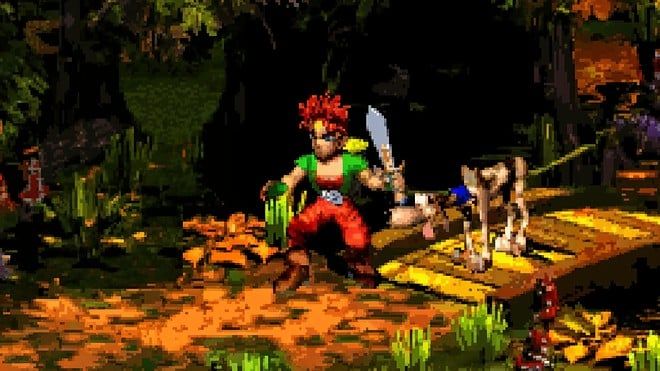

Rare’s leaked Project Dream SNES prototype appears to show the early RPG roots of Banjo-Kazooie, but its anonymous release leaves preservation, provenance, and legality questions unresolved.
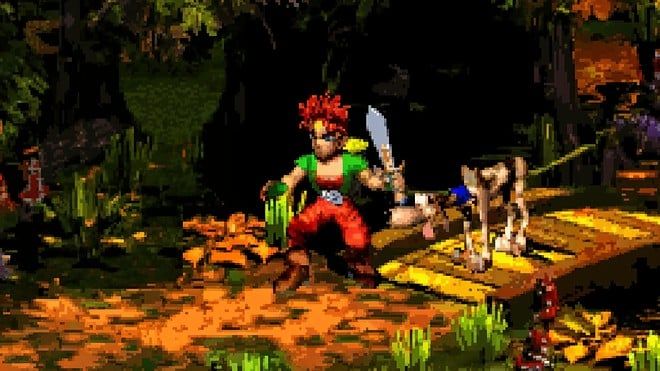
Image: winfuture.de
A long-rumored Rare prototype is suddenly playable
A build described as Rare’s SNES proof-of-concept alpha for Project Dream has been uploaded to the Internet Archive, giving players their first reported chance to directly handle a prototype tied to the game that eventually became Banjo-Kazooie. Video Games Chronicle reports that the ROM was posted by an anonymous user using the name “FvckAsha&Phil,” who framed the release as a protest against Microsoft and the current state of the games industry.
That is the hard news, and also the tension around it. The Project Dream leak is being treated by Rare fans as a major preservation event because this specific SNES build had lived for decades as history glimpsed through screenshots, old footage, and developer recollection. At the same time, Rare and Xbox have not publicly authenticated the files in the provided source material, and the uploader has declined to explain the chain of custody beyond saying they received it indirectly.
My Nintendo News describes the upload as something that “appears” to be Project Dream and notes that authenticity is “still to be decided,” while Time Extension uses similar caution, saying the build appears to be a demo but that concerns remain because of the pseudonymous upload and limited provenance. The most important confirmed public detail is therefore narrow but significant: a file claiming to be Project Dream SNES is online, former Rare staff have said it looks legitimate, and the build is already being examined by fans and preservation-minded players.
The missing link between Edson and Banjo
Project Dream matters because it sits at the hinge point between two very different Rare games: an unreleased fantasy RPG and one of the Nintendo 64’s defining 3D platformers. According to Video Games Chronicle, Project Dream was the codename for Dream: Land of Giants, an RPG starring a boy named Edson who was in conflict with pirates. Rare began work on it in the mid 1990s as a Super Nintendo project with an isometric viewpoint and pre-rendered sprites, a visual approach VGC compares to the Donkey Kong Country games.
The project then moved to Nintendo 64, where VGC says it was planned as a larger action RPG before being scaled down into a 3D platformer. In that process, Edson was replaced by Banjo, setting the course for Banjo-Kazooie. That makes the Rare SNES prototype valuable less as a lost finished game and more as an exposed design layer: a place where Rare’s late-SNES craft, RPG ambitions, character work, and platforming instincts had not yet settled into the form players know from 1998.
For platformer fans, that distinction is delicious. Banjo-Kazooie is remembered for dense spaces, readable collectibles, musical identity, and a comic rhythm that turns traversal into personality. Project Dream, as described by the sources, comes from an earlier recipe: isometric screens, sword combat, pirates, and an RPG structure before the move to the N64’s full 3D demands reshaped the project. Seeing even a fragment of that earlier build helps explain that Banjo-Kazooie did not spring fully formed from a bear-and-bird premise. It emerged from Rare iterating its way out of one genre and into another.
What the leaked SNES build appears to contain
The build should not be mistaken for a lost full-length Rare RPG. VGC describes it as “a very early test build” where there is not much for the player to do beyond running through a series of screens and attacking enemies with a sword. One especially odd and useful detail reported by VGC is that a second controller can be used to control the enemies, suggesting the prototype was built to test interactions rather than deliver a conventional slice of finished gameplay.
Techtroduce reports that the upload contains a raw .bin dump and the same file renamed as an .sfc for use in Super Nintendo emulators. The outlet also says people examining the build have reported multiple unfinished scenes, basic movement and combat, plus artwork and music from the project’s early development phase. Those details line up with the picture of a proof-of-concept: a playable sketch where the important artifact is the toolmark, not the content volume.
From a craft perspective, that is exactly the kind of fragment that can be more revealing than a polished vertical slice. Movement, collision, enemy behavior, camera angle, sprite scale, and combat reach are the bones of a game. If this build is authentic, the playable material may help preservationists and historians study how Rare tested an isometric RPG on SNES hardware while carrying forward the pre-rendered visual language that had helped define Donkey Kong Country.
Former Rare composers lend weight, but not final proof
The strongest public support for the prototype’s authenticity in the source material comes from former Rare composers. VGC reports that Grant Kirkhope wrote on X that the leak “looks real to me,” then asked David Wise for his opinion. Kirkhope also said Wise was responsible for the music in the SNES prototype, according to VGC. Wise replied, “It looks real to me,” while noting how long ago the work would have been.
That matters, but it does not close the case. These are informed reactions from people with Rare history, not a formal statement from Rare, Xbox, Microsoft, or an archival institution. My Nintendo News phrases the situation carefully, saying various Rare staffers have said it looks legitimate while the authenticity remains unsettled. Time Extension also notes that dataminers have reportedly found leftover sprites from Ken Griffey Jr.’s Winning Run, which the outlet frames as a detail that would make a recreation unusually elaborate if the build were fake.
The responsible read is therefore balanced: the Project Dream SNES files have credible signals around them, including comments from former Rare composers and apparent technical oddities being discussed by dataminers, but their provenance remains unverified in the public record provided here. For readers excited by the phrase “Banjo-Kazooie predecessor,” that caveat should travel with every clip, screenshot, and emulator capture.
The preservation argument is wrapped in a protest
The uploader’s own statement, quoted by VGC, Kotaku, and Time Extension, places preservation at the center of the release. The anonymous user wrote that they had held onto the build for years and did not want to risk getting someone else in trouble, but now felt it was “more important to make sure this is properly preserved” and examined by people with more technical knowledge. The same statement says the release was motivated by frustration with “Microsoft’s current heartless gutting and mismanagement of Rare and other companies it controls,” language that is the uploader’s accusation rather than an independently established fact in the provided sources.
Kotaku and Time Extension report that the statement also broadens into criticism of layoffs, AI, ownership practices, and platform holders. Time Extension quotes the uploader calling for “the last beautiful things hiding on our hard drives” to be released. That line captures the emotional power of the leak, but also the problem around it. Preservation through an anonymous leak can rescue a build from obscurity, yet it can also strip away documentation, consent, and a clean historical chain.
For game history, context is part of the artifact. Who built this exact version? When was it compiled? Which pieces were experiments, which were placeholders, and which were intended for the SNES game Rare was actively pursuing? Without official archival notes or a transparent acquisition path, the ROM can answer mechanical questions while creating new historical ones.
How to read this leak without sanding off its edges
There is a temptation to flatten the story into a neat origin myth: Rare made Project Dream, Project Dream became Banjo-Kazooie, and now the missing SNES version is free to play. The sources support a more interesting and messier version. Project Dream began as an isometric SNES RPG with Edson and pirates, moved to Nintendo 64 as a larger action RPG, then transformed into a 3D platformer starring Banjo. The leaked build, if authentic, appears to preserve a small piece of the first stage of that route.
Readers should also be practical. The build is reportedly on the Internet Archive, but it is not an official Rare Replay-style release, not a sanctioned Xbox publication, and not something Rare has authenticated in the material supplied here. Anyone following the Project Dream leak should separate preservation reporting from download advice, and should treat footage and datamining claims as developing evidence until stronger documentation appears.
Still, the reason this Rare prototype leaked story has landed so loudly is easy to understand. Platformers are often remembered by their finished jumps, tunes, and mascots, but their histories are made from abandoned cameras, discarded heroes, borrowed tools, and genre pivots. Project Dream’s SNES build appears to put one of those pivots under glass, playable enough to study but unfinished enough to remind us how fragile game history can be when it survives on private hard drives instead of in public archives.