
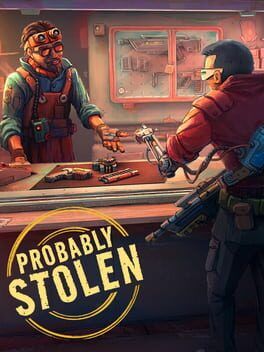

Probably Stolen is out on Steam with a cyberpunk shopkeeping hook built around risky trades, faction pressure, rising rent, and shady station customers.
Image: IGDB
Store links: Probably Stolen on Steam
Probably Stolen is out on Steam, and the rent is already the villain
Probably Stolen: Cyberpunk Shopkeeper Sim has launched on Steam, putting Questing Goose Studio’s small-space-station storefront into the hands of PC players. MonsterVine reports that the Probably Stolen Steam launch price is $19.99, with a 10% launch discount running for two weeks, and identifies tinyBuild as publisher. The Steam listing supplied in the source material also shows a “Save 10%” promotion for the game.
That is the clean store-page fact. The more interesting tension is the design underneath it: Probably Stolen is asking indie sim fans to run a cramped kiosk where every margin has a possible consequence. Rock Paper Shotgun describes it as a “neuromantic kiosk game” set aboard a backwater space station, where the player is a new store owner dealing with a line of suspicious customers. MonsterVine frames the pressure more bluntly: rent keeps rising whether the business is thriving or wobbling, pushing players toward riskier trades when safer ones stop paying enough.
For players searching for a new cyberpunk trading sim, that setup is the pitch. This is a counter-management game about buying low, selling under pressure, reading people, checking goods, and deciding which trouble is worth monetizing. The fiction has gangs, megacorp pressure, criminals, security, revolutionaries, and rogue augmented customers in the mix, according to the coverage and publisher-linked details cited by MonsterVine and Rock Paper Shotgun. The shop may be small, but the station around it sounds designed to keep squeezing.
The hook is appraisal, suspicion, and choosing your kind of trouble
The Probably Stolen game starts from a familiar shopkeeping loop, then dirties it up. Rock Paper Shotgun’s early hands-on account says the basics are simple despite a heavily menu-led presentation: buy what you can afford based on your sense of the market, then sell what fits a customer’s budget. That could have been a cozy spreadsheet with neon trim. Instead, the reported systems keep asking whether the item, the buyer, or the supplier is hiding a cost.
Rock Paper Shotgun describes checking customers against mugshots, deciding whether to report wanted criminals to security, and weighing how transactions affect faction opinions, from revolutionaries to corporate bosses and the mob. It also mentions inspecting goods with a magnifying glass, including robot hands and cigarette packets, to spot vintage items and counterfeits. MonsterVine similarly reports that buying stock requires judging condition and risk, while selling contaminated goods can damage reputation and drive customers away.
That is where Probably Stolen’s indie sim shape becomes clearer. Its appeal is not only that prices move or customers haggle. It is that information is partial, consequences are delayed, and the player’s greed can become a business model. In practical terms, that makes it closer to an inspection-and-trade sim than a pure store decorator. Rock Paper Shotgun cautiously compared its early feel to Papers, Please with “a lot more wheeling and dealing,” which is useful shorthand as long as expectations are set correctly: this is counter work, not an action RPG, and its drama appears to come from reading menus, faces, goods, and risk.
Starting trades turn the shop into a risk profile
One of Probably Stolen’s sharper ideas is that the type of shop you run changes the trouble you inherit. Rock Paper Shotgun quotes the Steam page as saying players can start as a gunsmith, chemist, water merchant, fence, farmer, or from “absolute rock bottom.” Each product line has its own profit curve and its own way of ruining the business, according to that quoted store description.
The examples matter because they give the cyberpunk dressing some mechanical teeth. Weapons bring inspections. Chemicals bring addiction. Water brings liability. Contraband brings raids. MonsterVine’s launch coverage repeats the same broad structure, adding that some trades require machinery or permits, while others depend on hiding spots and nerve. That suggests the opening choice is not a cosmetic class label. It is closer to choosing which systems will harass you first.
For indie trading sim players, this is the detail worth watching. A small shop sim lives or dies on whether its choices create different stories instead of funneling everyone toward the same optimal shelf. Probably Stolen’s reported trade types imply a game built around asymmetric pressure: legal goods may reduce one kind of danger but lower your ceiling, while contraband and higher-margin items invite raids, inspections, and reputation damage. The sources do not provide a full systems breakdown or long-term balance read, so it would be premature to call that promise fulfilled. But the design pitch is specific enough to stand out from the usual buy-sell-upgrade loop.
The station keeps adding people you may not want to serve
Probably Stolen’s kiosk fantasy works because the customers are part of the puzzle. MonsterVine says visitors can include undercover security, wanted criminals, revolutionaries, and rogue AI-augmented impostors. Rock Paper Shotgun’s account describes shady types passing the counter and mentions the need to watch for wanted criminals, report them or perhaps look the other way, and manage faction opinions through transactions.
That gives the game a useful social economy. Selling to the wrong person might make immediate sense if they have credits and you need rent. Reporting a criminal might bring credits and favors, according to MonsterVine, but ignoring them could keep other relationships intact. The coverage also says faction relationships can unlock access to exclusive deals. The confirmed idea is not moral choice in the grand RPG sense. It is business choice under surveillance, which feels more appropriate for a cyberpunk pawnshop than a speech-wheel morality meter.
There is also some danger beyond the counter. Rock Paper Shotgun notes that players can head out at night to scrounge stock from dumps, and also refers to shooting rogue androids in the CPU. MonsterVine’s piece emphasizes that a bad purchase or security bust can end your business. Between those details, Probably Stolen seems to be using roguelike pressure, reputation management, and survival accounting to make every day feel slightly unstable. That instability is the selling point, but it is also the part most dependent on tuning. If the rent curve, inspection risk, and item appraisal are fair, the loop could sing. If they become opaque punishment, the kiosk could turn into paperwork friction.
A big pre-launch signal, with numbers that need attribution
Probably Stolen did not arrive quietly. MonsterVine reports that, according to tinyBuild, the Steam Next Fest demo attracted more than 660,000 players and peaked at nearly 40,000 concurrent players. The same report says the game had accumulated more than 500,000 wishlists before launch. IXBT Games, in an article marked as AI-translated from Russian, also reports more than 500,000 wishlists prior to release.
IXBT goes further, saying Probably Stolen’s launch peak exceeded 86,000 concurrent players and calling that an all-time record for tinyBuild, ahead of Graveyard Keeper 2 at 60,000 and the original Graveyard Keeper at 46,000. Because that claim comes from IXBT’s translated report rather than a supplied Steam chart or direct tinyBuild statement in the source packet, it should be treated as a reported launch-performance claim, not independently verified here.
Still, the surrounding evidence points to unusual attention for a small trading sim. A half-million wishlist figure, if taken from the publisher-reported context cited by MonsterVine and IXBT, means the Probably Stolen launch entered Steam with a much larger audience than its grubby kiosk premise might suggest. IXBT also reports that early Steam reviews were “Very Positive,” with a 95% rating after the first few hundred reviews. Again, that is attributed to IXBT’s snapshot rather than a live review audit. Steam sentiment can shift quickly after launch, especially for games built around run length, late-game pressure, and balance.
The early caveats are about flavor, not the core idea
The most useful caution in the source material comes from Rock Paper Shotgun’s early look, which was intrigued by the substance but cooler on the presentation. The writer said they had only “peeked timidly over the counter,” so this was not a final review. Their early criticisms were that the synth music felt generic enough to turn off after 30 seconds and that the writing seemed clipped and flavorless, though functional.
Those notes matter for a game with this much textural ambition. Cyberpunk shopkeeping depends on atmosphere: the hiss of a shutter opening, the look of a suspicious customer, the sharpness of item descriptions, the feeling that the station outside your kiosk has teeth. If the writing stays thin, Probably Stolen may rely more heavily on its systems than its worldbuilding. That is not automatically fatal for a trading sim, but it changes the audience fit. Players who come primarily for economic pressure, suspicious appraisals, and faction consequences may be more forgiving than players hunting for rich cyberpunk prose.
The current source material does not include performance details, PC requirements, Steam Deck status, controller support, or console plans. The confirmed availability here is PC via Steam. MonsterVine reports that the developers plan to add new starting scenarios and extend the main story in future updates, but the source packet does not include dates or a roadmap cadence. If you are allergic to post-launch balance churn, waiting for early patches and broader player impressions is sensible. If the thought of running a neon pawnshop where every product line is a liability makes your brain light up, the launch discount gives you a clear window to check it out.