
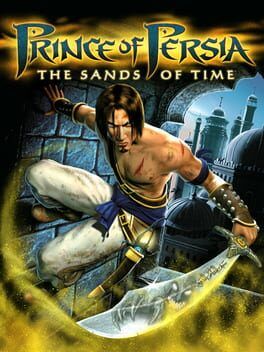

Shadow‑drop rumours, a six‑year reboot, and what fans should actually expect if Ubisoft’s troubled Prince of Persia: The Sands of Time Remake ever lands.
Rumors said Prince of Persia: The Sands of Time Remake would simply appear on digital stores this week. The date came and went. No trailer, no tweet from Ubisoft, no store listing. For a project that has already spent years in limbo, the latest swirl of “shadow drop” talk only added another layer of confusion.
This feature breaks down how the latest reports got so tangled, why this remake keeps slipping away, and what a modern Sands of Time actually needs to do in terms of controls, levels, and visuals to justify the wait.
How the shadow drop story spun out of control
In early January, speculation around Sands of Time Remake hit a new peak. Several pieces fell into place at once and many fans connected them as ironclad proof of a sudden launch.
First came an ESRB rating for the remake and renewed chatter from reliable leaker Tom Henderson, who pointed to January 16, 2026 as Ubisoft’s internal target for release. That alone suggested the game was in a late stage of development and potentially close to a marketing beat.
Then dataminers noticed new assets on what appeared to be a Ubisoft staging site for the remake, including a file literally called “game-release-tomorrow.png.” Articles at sites like VideoGamer spun that into near certainty that a launch was imminent. Others, including Push Square, ran coverage about the sands of time “running out” on the remake, leaning into the idea that Ubisoft might quietly push the game live without a big build up.
On social media and forums, that quickly mutated from “maybe it is close” to “Ubisoft is shadow dropping this on the 16th.” Shadow drops are rare, and rarer still for big third party publishers, but recent surprise releases in the industry have trained players to treat every vague leak as a countdown.
January 16 arrived. Nothing happened.
Conflicting reports once the date passed
Once the non launch became obvious, the narrative fractured. DSOGaming ran a blunt correction: no, Ubisoft had not shadow dropped Prince of Persia: The Sands of Time Remake, and as far as their information went, the project was still targeting a broader 2026 window instead of a specific day.
Push Square followed up with a more reflective piece that acknowledged the date had come and gone without an announcement. Their reporting did not accuse leakers of fabrication, but suggested a more mundane explanation. Either plans inside Ubisoft shifted, or the game simply is not in the shape it needs to be for release.
Notebookcheck, citing yet another trusted insider, added fuel to the other side of the argument. According to that report, the remake “needs more work” and might be further from completion than fans hoped. That painted a picture less of a finished game waiting for a marketing moment and more of a project still wrestling with fundamental quality issues.
Depending on which outlet a fan happened to read, the message was either that the release had narrowly missed a stealth launch window or that launch was never actually close in the first place. What they all agreed on is what players experienced directly. There is no remake on stores, and Ubisoft has not stepped in with clear public messaging to settle expectations.
A quick recap of a very long road
Part of why every rumor hits so hard is that Sands of Time Remake has already had one of the more tortured modern development histories for a high profile Ubisoft title.
The game was first announced in 2020, built by Ubisoft Pune and Ubisoft Mumbai as a mid budget remake of the 2003 classic. The official reveal was met with criticism, particularly around flat lighting and plastic looking character models that clashed with people’s memories of the original’s painterly atmosphere. Ubisoft insisted what was shown was an early build, but the reaction clearly stung.
The remake then hit its first big delay, moving out of its initial 2021 window. Communication slowed to a trickle. Eventually Ubisoft confirmed that development had been handed over to Ubisoft Montreal, the studio that created the original Sands of Time trilogy. That was more than a simple schedule slip. It amounted to a reboot of the reboot.
Since then, the project has gone through long stretches of silence interspersed with small signs of life. A fresh teaser from Montreal that essentially said “we are still working on it.” An updated official website that described the game as “coming back” without committing to a date. Occasional earnings calls where Ubisoft reiterated a broad future release year without specifics.
By the time 2026 rolled around, fans had been waiting roughly six years from announcement, with most of that time defined by uncertainty. In that context, any loose thread becomes a rope for speculation. A file name on a staging server, a rating board listing, or a line in a financial report can easily be misread as the final chapter of a saga that refuses to end.
Why expectations are so high for a modern remake
Sands of Time is often held up as one of the best action adventures of the PlayStation 2 era. It defined a particular blend of acrobatic platforming, light puzzle solving, and lighthearted narration from the Prince himself. Because that core is so beloved, players are demanding more than a resolution bump and marginal texture work.
The years of delay and the switch to Ubisoft Montreal raise expectations that if this remake finally launches, it should feel like a contemporary action game that still respects the original’s design. That breaks down into three big areas.
Controls and feel
The original Sands of Time still plays surprisingly well, but controls that felt tight on a DualShock 2 feel loose by today’s standards. Players expect more responsive input, stronger animation blending, and camera behavior that does not fight them.
A modern remake needs to refine movement without losing its flow. Wall running, vaulting over enemies, and catching a ledge at the last possible moment should all feel smoother. Animations need to respond faster when players change direction, cancel a jump, or activate the Dagger of Time. At the same time, there is a tightrope to walk. Remove too much inertia and weight, and the Prince can start to feel floaty, which undermines the satisfaction of threading through lethal traps.
Combat is another key area. The original’s encounters are simple and sometimes repetitive, focused on crowd control and finishing moves to contain the Sands. Modern players are more used to deeper melee systems with clearer feedback, readable tells, and options for aggressive and defensive play. The remake has room to modernize combat readability, hit reactions, and enemy variety without bloating the game into a systems heavy action RPG.
The Dagger of Time is the real star of the control scheme. Its rewind mechanic gave the 2003 game its identity. In a remake, that power should feel instant and tactile, with clear visual and audio cues, smooth scrubbing of recent actions, and intuitive limits that stop it from feeling cheap. Technical progress since the PS2 era should make those rewinds much more seamless.
Level and encounter design
Level design in Sands of Time revolves around small, bespoke challenge rooms rather than wide open zones. That format has aged well, but players have grown used to more clarity about where they can go and how to experiment.
A successful remake should tighten signposting without turning every room into a glowing path. The iconic palace segments still work, but they could benefit from better silhouettes, improved contrast between interactive and non interactive geometry, and more readable camera framing. Small tweaks like clearer landing spots for wall runs or slightly widened platforms can guide players without making the game trivial.
Encounters also need a second look. Enemy waves in the original often drag on, and camera angles during combat can obscure foes or leave players vulnerable off screen. Updated staging, smarter enemy spawn locations, and camera behavior that respects both platforming and combat can align the experience with modern standards. A few optional side rooms or alternate routes could add replayability while preserving the game’s lean pacing.
The puzzle layer deserves more emphasis too. Sands of Time was never a pure puzzle game, but the best sequences intertwined time powers, traversal, and environmental clues. A remake could dial this up through environmental storytelling and more elaborate multi step rooms, so long as the solutions remain readable.
Visuals and presentation
The first reveal of the remake was criticized heavily for looking too close to a remaster. For a project that has absorbed years of development and a full studio handoff, players now expect a thorough reimagining of the presentation.
That likely means a more dramatic use of lighting and color to sell the fantasy of a cursed Persian palace, updated character models that retain the expressive caricature of the original without veering into uncanny plasticity, and modern effects that accentuate the Sands. Particles, volumetric fog, and time distortion shaders can all elevate the fantasy if used with restraint.
Cutscenes and voice work are another question mark. Some fans want the original performances preserved, especially Yuri Lowenthal’s iconic Prince. Others argue that a from scratch remake should update direction and cinematography. Ubisoft Montreal will have to decide how much to preserve and how much to reinterpret, but whatever they choose needs to feel cohesive with the overall art direction instead of like a higher resolution port.
Accessibility features are also part of visual expectations now. Clearer UI, colorblind friendly effects, customizable subtitles, and camera and shake options can remove friction for a much wider audience than the 2003 release ever considered.
So what should fans expect now?
Based on the latest wave of reporting, the most reasonable expectation is the least exciting one. Ubisoft still plans to release Prince of Persia: The Sands of Time Remake in 2026, but the project is not ready for a shadow drop and might still require substantial polish.
Leakers and rating boards can hint that development has reached certain milestones, and staging site files can reveal marketing beats in advance. None of that guarantees a specific launch day, especially for a remake that has already been rebooted once. Internal milestones change. Quality concerns can trigger more delays. The industry has seen this pattern with other long running projects across multiple publishers.
For players, the healthiest stance is to treat every new rumor as a possibility rather than a promise and to judge the remake on how well it modernizes a genuine classic once Ubisoft finally shows it in full. Sands of Time has already proven it can stand the test of time. The open question is whether this remake can do the same when it finally steps out of the shadows and into an actual, dated release announcement.