
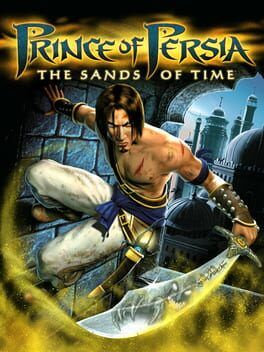

Ubisoft’s cancelled Prince of Persia: The Sands of Time Remake has quietly disappeared from public view, taking years of work with it. What its slow collapse and subsequent erasure reveal about AAA risk management, the preservation of unreleased games, and the human cost for actors and dev teams.
A remake that slowly fell out of time
When Ubisoft announced Prince of Persia: The Sands of Time Remake in 2020, it looked like the safe kind of project big publishers increasingly favor. A beloved classic, a clear blueprint, and a known audience. Four delays, a studio handover, and a full reboot later, the game has now been cancelled outright. What makes this case stand out is not only that a nearly finished remake is gone, but how thoroughly the project is being scrubbed from view.
Leaked internal workshop footage from 2024, swiftly hit with copyright strikes, briefly pulled back the curtain. It showed a game that was very much real. New environments, reworked combat beats, updated cinematics and performances. It was not a pitch deck, it was a production. In parallel, lead actor Eman Ayaz described losing three years of work and finding out about the cancellation the same way everyone else did: through the internet.
Taken together, the disappearing materials and the stories from people who worked on the remake show how fragile the middle of a modern AAA project can be. Not the prototype and not the shipping game, but the long stretch where hundreds of people build something that might never see daylight.
What the quiet collapse says about risk in modern AAA
Officially, Ubisoft has framed the cancellation as a matter of responsible investment. Public statements point to the remake still being “too far away” from release after years of iteration, and requiring more time and money than the company felt it could commit. In the same breath, executives talk about being more selective, resetting portfolios, and focusing on fewer, bigger bets.
The Sands of Time Remake was caught in that filter. First given to Ubisoft Pune and Mumbai, then moved to Ubisoft Montreal, then effectively restarted. Each step added sunk cost and schedule pressure. By the time those internal 2024 materials were created, the project was reportedly close to content complete but still not at the level the company wanted to ship under its current risk tolerance.
The result is a pattern that has become more visible across the industry: projects are allowed to run long enough to consume full production cycles, but are increasingly willing to die in the last third if projections soften or internal confidence dips. The risk profile shifts from “can we build this” to “can this justify its slot in a narrowed slate” and anything that does not look like a future tentpole becomes vulnerable, even if the work largely exists.
From the outside, it is tempting to ask why a nearly finished remake was not simply scaled back and released. From the inside, quality bars tied to brand management, marketing windows, and comparative benchmarks mean a project can be both real and nonviable. The Sands of Time Remake was competing not only with the memory of a classic, but with the performance expectations of modern blockbusters built on much larger budgets.
A game that is being made to disappear
Cancelled games vanish all the time, but Ubisoft’s approach here has been notably thorough. The company has chased down leaked workshop videos, concept art and slides, and has aggressively removed presentation footage that would normally end up as a kind of informal production archive for fans and historians.
The result is a strange contradiction. Internally, The Sands of Time Remake clearly existed as a functioning project, with recorded dialogue, cinematics, marketing material, and at least one near-feature-length internal overview. Externally, it is being curated into something closer to a rumor with a logo.
For game preservation, the case exposes a long-standing weak spot. The industry has built up more robust conversations around saving released games, source code, and server-dependent titles. Unreleased work remains largely undocumented and unpreserved by design. Materials for cancelled projects sit behind NDAs and legal firewalls, and their existence is only acknowledged when something leaks.
The Sands of Time Remake shows what gets lost in that gap. Entire animation passes, performance captures, system redesigns, and art directions are consigned to private archives, if they survive at all. From a craft perspective, that is a huge body of reference for future developers and historians that simply ceases to exist in the public record.
The human impact hidden behind NDAs
The most concrete window into the human cost of the cancellation has come from lead actor Eman Ayaz. Across multiple interviews, she describes the production as a multi‑year commitment. She worked through performance capture, voice sessions, iterative rewrites and reshoots, and even recorded a marketing promo only a couple of months before the public learned the game was gone.
Ayaz’s comments make clear how much creative and emotional weight performers and developers invest in projects that may never ship. She calls it the best work of her career and talks about structuring parts of her life around its eventual release. Without veering into broader labor questions, the situation highlights a narrower, practical issue in AAA production: for many contributors, credit and visibility are tightly coupled to release. If the project vanishes, so does a measurable chunk of their portfolio.
Developers and contractors face similar problems. Designers who owned systems that were rebuilt from the ground up, engineers who modernized a 2003 camera and control scheme, environment artists who brought new visual identity to classic locations all now have to talk around their work in generalities. NDA‑bounded descriptions like “third‑person action platformer for a major publisher” replace specific, demonstrable achievements.
That has downstream effects on hiring, career progression, and even morale on subsequent projects. It is hard to ask teams to take creative risks when their last ambitious effort effectively does not exist on paper.
Lessons in communication and expectation management
One of the starkest details to emerge from reporting is how people on the project learned about the end. Ayaz says she discovered the news via public channels, at the same time as fans. In her telling, nobody sat her down to explain what had happened, why the game was cancelled, or how her work would be handled going forward.
Communication patterns like this are not unique to Ubisoft, but the visibility around this case makes it easier to examine them. Large projects have long, complex chains of approvals and messaging, and there is a tendency to prioritize external investor and marketing beats over internal clarity. The result can be that people closest to the work are the last to receive context, even as their contributions are being frozen in place.
From an industry practices standpoint, this looks less like malice and more like a gap in process. When a game is cancelled at this stage, there is rarely a defined “offboarding” path for collaborators who are not full‑time studio staff, let alone a plan for how their work might be documented or showcased in a way that respects both NDAs and their careers.
What happens to all that work
The Sands of Time Remake is also a case study in how modern AAA development is structured around reusability. Even if the game itself never ships, many of its components are unlikely to be thrown away.
Engine changes, pipelines for animating elaborate acrobatics, tools for time‑manipulation effects, even updated scripting for narrative beats can and almost certainly will be folded into future projects. For a publisher with other action adventure series, that is a way to salvage investment. For the creatives who shaped those systems, the reuse is far less visible.
What rarely survives is the context. Postmortems of released games break down why certain approaches worked or failed. Cancelled projects are more likely to live on as half‑remembered cautionary tales, passed around informally inside studios. Without structured documentation, future teams only see the technology that was carried forward, not the production realities that shaped it.
The leaked 2024 presentation hinted at how thorough that internal documentation already was for The Sands of Time Remake. It walked through combat direction, narrative framing, and visual pillars, the exact kind of material that would usually feed into talks at developer conferences after launch. Instead, it exists as a briefly visible artifact that the rights holder is actively trying to bury.
A fragile blueprint for future remakes
For other studios contemplating remakes of revered classics, the story of The Sands of Time Remake offers a few practical signals.
First, nostalgia does not insulate a project from modern risk calculations. A clear template and existing fanbase can help reduce concept risk, but production risk remains high when expectations are to match contemporary flagship titles. If a remake enters the slate as a mid‑tier project and the bar quietly shifts upward, it can be squeezed out midway through development.
Second, long public timelines amplify perception problems. This remake went from announcement to cancellation over half a decade, with changing studios, reboots, and long stretches of silence. Each delay raised the stakes on what the final product needed to look like to justify the journey. In that context, a publisher deciding that even a nearly complete version no longer fits the strategy becomes more plausible, though no less painful for those involved.
Third, and most importantly for the people making these games, projects need clearer internal agreements about how unreleased work is treated. That can be as simple as codifying how contributors are informed, how credit is handled on CVs and showreels, and what elements of the work can be documented for educational or portfolio purposes if the game never launches.
Sands slipping through the hourglass
Prince of Persia: The Sands of Time Remake will likely be remembered less as a product and more as an absence. A gap in Ubisoft’s catalog, a string of release date graphics that never resolved into a box on a shelf.
For the industry, its disappearance is a reminder that AAA production is not just about the games that ship. It is about the many that almost existed and the people whose best work might be locked away in private repositories and takedown notices. The leaked decks, the struck‑down videos, and the interviews with actors like Eman Ayaz are not just curiosities. They are some of the only visible traces of a fully fledged creative effort that has been removed from the timeline.
If there is any constructive takeaway, it is that studios and publishers can treat these vanished projects as opportunities to improve their internal practices. Better communication around cancellations, more thoughtful policies for preserving and crediting unreleased work, and clearer expectations for contributors would not have saved The Sands of Time Remake. But they might ensure that the next game erased from a roadmap does not also erase three years of someone’s career.