
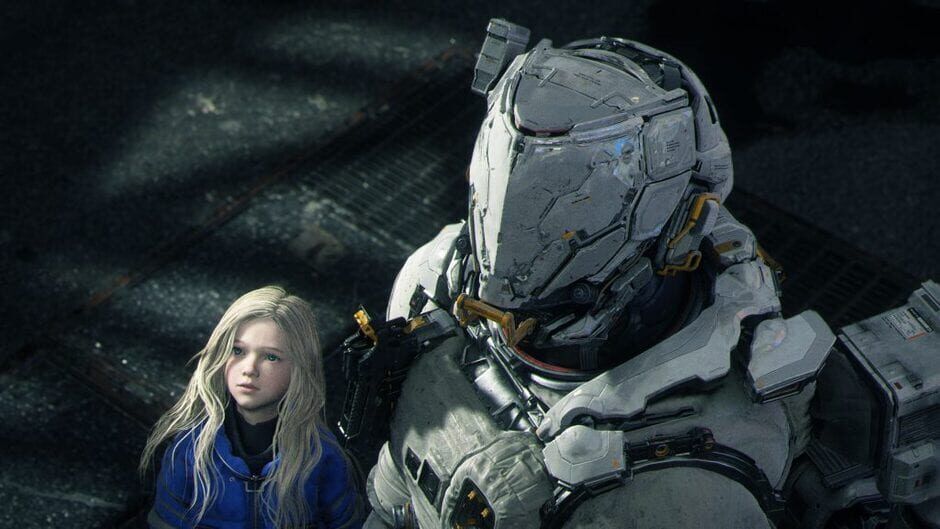

With the Sketchbook Demo on PC and a Switch 2 version confirmed, Pragmata is finally tangible. We dig into the zero‑G combat, slower pacing and early Switch 2 screenshots to see whether Capcom has the foundations for its next major sci‑fi franchise.
Capcom has been talking up Pragmata as a potential new pillar franchise for years, but it never felt real until the Sketchbook Demo quietly dropped on PC and the publisher confirmed a Nintendo Switch 2 version complete with the first screenshots. After multiple delays, a re‑reveal and a long marketing blackout, we finally have something playable and something portable to judge.
On the evidence so far, Pragmata is a curious mix of big‑budget spectacle and almost old‑fashioned pacing. It is not trying to be the next character‑action showpiece like Devil May Cry, nor is it a horror‑leaning Resident Evil spin‑off. Instead, it takes Capcom’s modern engine expertise and funnels it into a slower, more methodical sci‑fi shooter that hinges on zero‑G traversal and a brain‑splitting dual‑character combat system.
A lunar research station that actually feels like a place
The Sketchbook Demo is set entirely on a lunar research station, and even within its brisk 20 to 30 minutes it sells the fantasy of trudging through an isolated, high‑tech facility. Corridors are cluttered with floating debris, maintenance drones skitter across bulkheads and there is a tangible sense of cold metal and recycled air. It feels closer to a grounded sci‑fi thriller than the glossy, cyber‑fantasy tone of something like Final Fantasy VII Rebirth.
Capcom’s RE Engine does most of the heavy lifting. On PC the demo supports ray‑traced reflections, sharp volumetric lighting and richly detailed materials, from scratched visor glass to the fraying fibers on Diana’s coat. What stands out most is how practical the environments look. Rather than endless neon and holograms, you move through cramped airlocks, cluttered labs and industrial hangars. Every room looks like it has a clear function, which helps keep the relatively small demo area memorable.
Story teases are deliberately light, but the setup is intriguing. Human astronaut Hugh and android companion Diana are clearly in a desperate situation, dodging malfunctioning systems and hostile security drones as they search for a way out. Dialogue is minimal in Sketchbook, but the body language and small interactions between the two do a lot of work. Diana’s movements are precise and almost childlike, Hugh is visibly weighed down, and the demo sells them as a team without needing long cutscenes.
Zero‑G traversal that sells the fantasy of the suit
The biggest swing Pragmata takes is its zero‑gravity movement. Hugh’s exosuit can anchor to walls and ceilings, and the level design quickly takes advantage of that. You will often enter a room, see enemies entrenched on what looks like the floor, then realize the safest route is along an overhead pipe or a side wall.
The shift to zero‑G is not just cosmetic. Camera orientation changes as you cling to surfaces, and you have to consciously reorient yourself before you take a shot or a leap. The game wants you to feel like you are really wrestling with a bulky, thruster‑assisted suit rather than an invisible jetpack.
This gives even basic traversal a puzzle‑like quality. You might spot a vent that is only accessible if you sprint along a wall, hop to a ceiling strut, then use a mid‑air dash to land near a latch that Diana can hack. When it clicks, it feels less like a conventional third‑person shooter and more like a hybrid between a platformer and a space sim that just happens to be played from over Hugh’s shoulder.
Some players may find the zero‑G handling slightly disorienting at first. The camera can feel busy when you are flicking between surfaces and lining up shots, and the demo does not hold your hand with elaborate tutorials. But that is also what makes it promising. There is room here for Capcom to build out traversal challenges and multi‑path combat arenas that nothing else in the publisher’s catalog really offers.
A slower, tactical combat loop
If you are expecting fast combo strings or dodge‑cancelling acrobatics, Pragmata will probably surprise you. The Sketchbook Demo makes it clear that this is a shooter where every bullet counts and every action has weight.
Basic firefights often start quietly. You scope out enemy patrols, move Hugh onto an advantageous wall or ceiling, then let Diana set up a hack that destabilizes a foe. Enemies hit hard enough that recklessly soaking damage is never viable. You are encouraged to pick off stragglers, exploit positioning and treat each encounter like a small tactical puzzle.
The shooting itself feels deliberate. Hugh’s weapons have noticeable recoil and longer reloads than you might expect from a pure action game, and his movement speed is tuned to keep you thinking about where you stand rather than trying to circle‑strafe everything into oblivion. Dodges and jumps are available but they are not your primary tools. Cover, angle and timing do most of the work.
That slower pace will be divisive. Some early impressions have complained that fights are too easy or too plodding in the demo, while others praise the focus on ammo management and positioning over reaction‑test parries. The crucial point is that Pragmata clearly wants to create tension not through endless waves of enemies but through making each engagement just dangerous enough that a bad decision really stings.
Two brains in one fight: Hugh and Diana’s multitasking combat
What truly makes the combat feel different is the way Hugh and Diana operate together. On paper, it sounds simple. Hugh handles the physical side of a fight, firing guns and maneuvering around the arena. Diana floats above the battlefield, jacking into enemy systems in real time to disrupt, stun or repurpose them.
In practice it plays more like a light real‑time strategy layer laid over a third‑person shooter. While you guide Hugh with one stick, you flick Diana’s targeting reticle with the other, line up a hack and decide whether you want to overload an enemy’s weapon, turn it temporarily friendly or disable a shield. Even in the short demo there is a constant push‑and‑pull between keeping Hugh safe, feeding him openings and maximizing damage output through hacks.
Capcom has described the system as “engaging both sides of your brain,” and that is not marketing fluff. You are tracking cooldowns, environmental hazards and enemy intent all at once. It can look straightforward in edited trailers, but hands‑on, the flow asks you to plan two moves ahead. Do you slow a turret now to save health, or hold the ability for the incoming mech that clearly has a second phase?
Crucially, the Sketchbook Demo feels forgiving enough to let you find that rhythm. Missed hacks are not instant death sentences, and the early enemies telegraph attacks clearly. The learning curve is gentle, but the potential complexity is obvious once you imagine larger arenas filled with destructible cover, multiple elevation layers and enemies that counter specific hack types.
If Capcom can scale the system without making it overwhelming, Pragmata could carve out a combat identity that is distinct from the melee‑heavy chaos of its other action series.
Boss fights that hint at bigger things
The demo culminates in a hulking mech encounter that feels like a proof of concept for Pragmata’s set‑piece ambitions. The arena is laced with platforms and walls to cling to, and you are encouraged to think vertically instead of just backing away while firing.
The mech moves through clear attack cycles, but your success depends less on reading telegraphs and more on manipulating the arena. You might have Hugh bait a charge along a wall, then slide to a different surface while Diana hacks exposed weak points. The battle lasts long enough to force you to juggle ammo, hacking priorities and positioning as the environment gradually breaks apart.
It is not the most intricate boss fight Capcom has ever designed, and some players will likely find it too drawn out, but as a signal of intent it works. Pragmata wants its big encounters to be about mastering space, not just patterns. That is fertile ground for a series that could grow more elaborate multi‑phase fights across sequels.
Performance and polish on PC
A big question for any new sci‑fi property in 2025 and beyond is whether it ships with the technical chops players now expect. The Sketchbook Demo is encouraging on that front.
On capable hardware, performance is remarkably stable even with ray tracing and high‑end settings engaged. Early tests suggest the demo scales well across a range of GPUs, with high frame rates at 1080p and 1440p and only modest dips when everything is cranked. Load times are brief, animations are clean and the overall feel is of a project that has benefited from a long gestation period.
The demo’s clean performance matters because it lets the slower pacing and methodical combat breathe. Input responsiveness is tight, and there is no sense of latency fighting against the multitasking demands of Hugh and Diana’s systems. If the full release can maintain this level of optimization across all platforms, it will be one more tick in Pragmata’s favor as a potential long‑term series.
First look at the Switch 2 version
Alongside the demo, Capcom and Nintendo have finally shown the first official screenshots of Pragmata running on Switch 2. For a platform that still has a lot to prove in terms of raw power, the port looks encouraging.
The overall impression is of a faithful translation rather than a radically pared‑back spin. The lunar station’s core geometry and layout appear identical to the PC and current‑gen console builds, and the lighting model in the screenshots maintains the stark contrast between bright, clinical lab spaces and oppressive shadowed corridors. Effects like volumetric fog and subtle particle work are still clearly present, even if their density seems tuned down.
The main compromise visible at this early stage is in fine detail work. Character hair, which is a known stress test for the RE Engine, looks a little flatter and less individually defined than on higher‑end platforms. Some texture resolution seems reduced on distant surfaces, and you can spot slightly softer image reconstruction in busy scenes.
None of that undermines the art direction. The clean white panels, cobalt accents and the harsh glow of moonlight bouncing off station surfaces still come through. If anything, the Switch 2 version reinforces how much Pragmata relies on strong visual design rather than sheer polygon counts. If performance targets are sensible, this could be one of the more technically impressive third‑party titles on Nintendo’s new hardware without resorting to cloud streaming.
More importantly, a solid Switch 2 port makes any future Pragmata sequels instantly more viable. Capcom has historically grown its series on platforms where an audience can live with them for years. If the studio can land a good portable version from day one, it will have a much better shot at building the kind of cross‑platform fanbase a sci‑fi franchise needs.
Is there enough here for a full‑blown sci‑fi series?
Judging an entire franchise from a 20‑minute demo and a handful of Switch 2 screenshots is risky, but Capcom’s ambitions are clear. The company has already described Pragmata as a project aimed at becoming one of its “core brands,” and the pieces for a long‑running sci‑fi series are visible even this early.
The setting is versatile. A lunar research station is a perfect starting point, but the wider premise of spacefaring humans and advanced androids practically begs for sequels that jump between planets, stations and derelict constructs. Zero‑G traversal and the dual‑character combat template could slot into everything from tighter, horror‑adjacent sequels to more combat‑heavy follow‑ups without needing a total redesign.
Mechanically, the Hugh‑and‑Diana system is ripe for expansion. The demo barely scratches the surface of what long‑term progression, new hack types, co‑op variations or deeper enemy behavior could do. If Capcom treats Pragmata as a foundation to be iterated on over multiple games rather than a one‑off experiment, it could end up in the same steady‑evolution groove that turned Monster Hunter into a phenomenon.
The risks are just as obvious. The slower, more cerebral pacing may not click with everyone, especially players expecting a bombastic shooter with instant gratification. Balancing the complexity of multitasking combat against accessibility will be crucial, and there is always the danger that later areas become either too chaotic or too trivial if the hacking and shooting layers are not tuned carefully.
There is also the narrative question. Sketchbook smartly keeps its cards close, but a new sci‑fi IP lives or dies on how much players care about its world and characters across multiple entries. Hugh and Diana’s dynamic shows promise, and there are echoes of classic human‑android pairings that could resonate if the writing sticks the landing. A confident, emotionally grounded first game would go a long way toward securing appetite for a sequel.
Verdict: Cautiously excited for Capcom’s next space odyssey
Pragmata is not the explosive, instantly readable crowd‑pleaser some might have expected from Capcom’s first new console IP in years. It is stranger, slower and more experimental than that. But that might be exactly why it has a shot at becoming the company’s next big sci‑fi series.
The Sketchbook Demo shows a game with a distinct identity: zero‑G traversal that actually matters, a dual‑character combat system that rewards multitasking and a commitment to methodical, tactical encounters over sheer spectacle. Early PC performance is strong, and the first look at the Switch 2 port suggests that Capcom is serious about giving Pragmata a wide, technically respectable footprint from day one.
It still has everything to prove in terms of story, encounter variety and long‑term progression, and the slower tempo will not be for everyone. But if Capcom can build on what the demo showcases and keep iterating, Pragmata has all the ingredients of a universe we could be revisiting for years rather than just one more curiosity in a crowded release calendar.
For now, the Sketchbook Demo has done its job. Pragmata is no longer just a mysterious trailer; it is a tangible, playable slice of a thoughtful sci‑fi shooter that feels unlike anything else in Capcom’s stable. That alone makes it one of 2026’s most intriguing prospects.