

Capcom’s sci‑fi puzzle shooter Pragmata has crossed 2 million demo downloads and 2 million wishlists. We break down why the Sketchbook demo is resonating, how its puzzle‑action hook works, how those numbers stack up against other new IP launches, and whether Pragmata is positioned to be Capcom’s first breakout franchise beyond its legacy brands in years.
Capcom has spent most of the last decade turning its legacy series into unstoppable forces. Monster Hunter World rewrote the franchise’s global ceiling, Resident Evil found new life with remakes and Village, and Street Fighter 6 brought the fighting flagship roaring back. The missing piece has been a brand‑new IP that can stand beside those giants.
With Pragmata, that might finally be changing.
The Pragmata Sketchbook demo has now cleared 2 million downloads across PlayStation 5, Xbox Series X|S, Nintendo Switch 2 and PC, alongside 2 million wishlists. For a slow‑burn sci‑fi adventure built around hacking puzzles and third‑person shooting, those are quietly huge numbers. More importantly, they speak to the way the demo is landing with players before launch.
Why Pragmata is resonating before release
On paper, Pragmata is a tough pitch. It is a new IP in a genre already crowded with space shooters, built around a pair of original characters and a chilly lunar research station instead of the safer nostalgia of Raccoon City or Kamura Village. Yet months before release, players are flocking to try it.
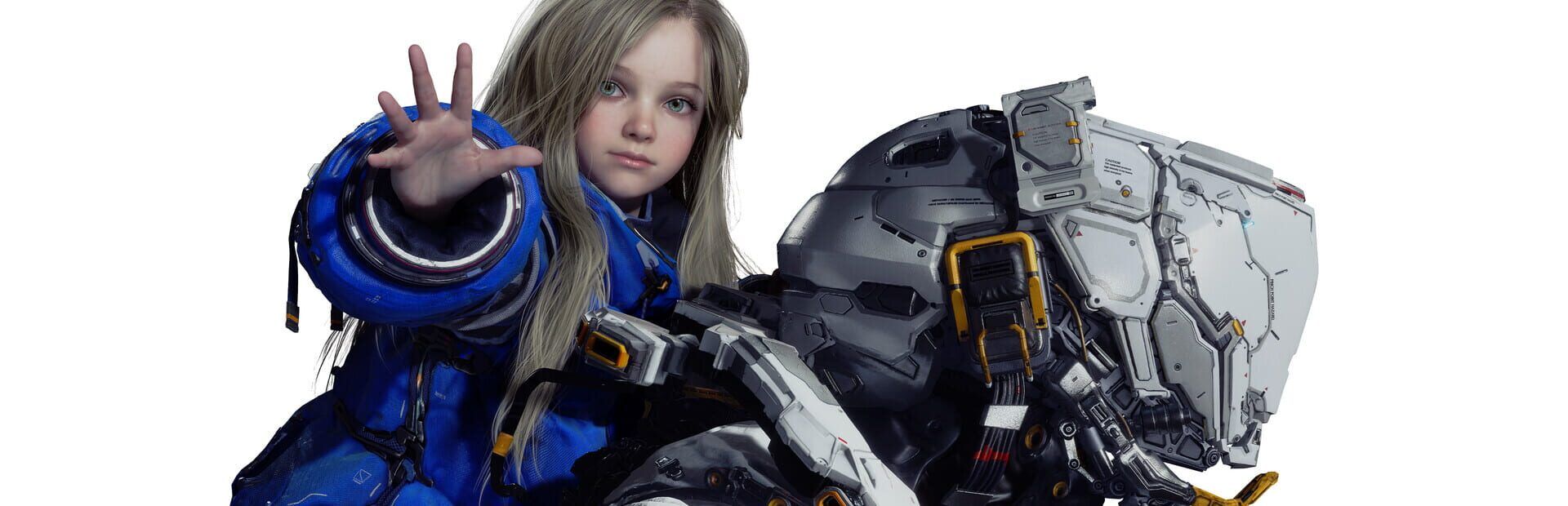
A big part of that comes down to how immediately readable its identity is. Within minutes of booting the Sketchbook demo, you know what Pragmata is about. You are Hugh, a grounded, slightly weary engineer‑type soldier, working in tandem with Diana, an uncanny android child with pastel UI overlays and an almost ethereal presence. The world is stark, metallic and lonely, but pierced by bright UI panels and Diana’s hand‑drawn illustrations. The contrast is striking and instantly memorable.
Capcom has also been unusually clear in its messaging. The official demo page and recent previews all hammer on the same phrase: a combat system that “engages both sides of your brain.” That single idea threads together Pragmata’s look, story and mechanics into one hook, and you can feel that hook taking hold in conversation around the game. Social posts and forum threads are not just saying that the demo is “fun”; they are specifically calling out the way it makes you juggle shooting and hacking under pressure.
Combine that with a low‑friction demo across every major platform, and you get a perfect funnel for curiosity. The result is 2 million people not just wishlist‑ing a cool trailer, but actually playing a slice of the game.
The puzzle‑action hook the demo reveals
Plenty of shooters talk about “using your brain,” but Pragmata’s Sketchbook demo is very literal about it. Every meaningful encounter is built around a two‑layered interaction: Hugh on the ground, dodging, shooting and using thrusters to reposition, and Diana in the network layer, freezing time for a beat while you hack.
When enemies spawn, you do not just aim for glowing weak points. Diana projects a hacking grid into the scene. Time slows, a cursor appears, and you flick between nodes to disable shields, overload armor plates or flip enemy AI behaviors. Clear the puzzle quickly and you drop enemies’ defenses, opening them to traditional gunfire. Fumble your way through the grid and you snap back into real time with enemies already mid‑attack.
The magic of the demo is that neither half works without the other. Staying in shooter mode gets you overwhelmed by shields and armor. Spending too long in the “New York Times games” layer, as one preview called it, leaves Hugh standing still while bullets and energy beams line up. Success comes from rhythm: dash, hack, reposition, finish.
Exploration leans into the same duality. Doors, lifts and side rooms are frequently locked behind small environmental hacks, where you reroute power or brute‑force passcodes while paying attention to what the lunar station is telling you. Hugh’s more physical toolkit, like his thrusters, lets you cross gaps or reach off‑angle terminals that Diana can then exploit. The demo is short, but it is dense with these little interactions, and nearly every hands‑on report highlights how quickly that core loop clicks.
Importantly, Capcom designed Sketchbook to be more than a one‑and‑done vertical slice. There are multiple endings framed as unique drawings from Diana, a detail that has been bubbling up in community reactions. That structure encourages replays, which in turn deepens players’ familiarity with the combat puzzle layer rather than letting it blur into one novelty encounter.
A new‑IP benchmark: 2 million downloads and 2 million wishlists
Raw numbers always need context. A demo hitting 2 million downloads could mean different things depending on platform spread, marketing spend and timing. For Pragmata, there are a few notable comparisons.
For new IP specifically, 2 million wishlists pre‑launch is a serious statement. Smaller breakout hits sometimes cross the million‑wishlist mark right before or shortly after release, but that is usually with heavy social buzz or viral hooks. Capcom has the advantage of name recognition, but Pragmata does not have a famous license or long‑running name to lean on. It is closer to what Dragon’s Dogma was in 2012 than to another Resident Evil.
Then there is the demo itself. Capcom has run plenty of pre‑launch demos over the last generation, from Resident Evil’s time‑limited “Maiden” slices to the Monster Hunter and Street Fighter betas. Most of those hinge on established brands with built‑in audiences. For a brand‑new IP to flirt with those kinds of engagement metrics at the demo stage hints at a surprisingly wide reach.
It also shows the impact of spreading the Sketchbook demo across every major platform, including Switch 2, instead of staggering PC and console access. Curiosity from any corner of the audience translates into a quick download, a few runs at the puzzle‑action combat, and, if it lands, an equally quick wishlist.
Capcom’s messaging around replays and hidden details is another subtle factor. In an age where players are ruthless about deleting demos after one run, Sketchbook is being talked about as something to revisit. That kind of repeated engagement makes the 2 million number feel less like one‑time churn and more like a genuine testbed community.
How Pragmata’s launch posture compares to other Capcom debuts
Capcom’s track record with original series is uneven, which is part of what makes Pragmata’s early momentum stand out.
Dragon’s Dogma grew into a cult classic over time, but it did not look like a pillar at launch. Lost Planet and Dead Rising had strong first entries across the Xbox 360 and PS3 era, then gradually faded without fully anchoring themselves in Capcom’s modern portfolio. More experimental ideas like Remember Me and Onimusha struggled to survive beyond a game or two.
With Pragmata, Capcom is approaching things like it already believes this can be a true tentpole. The broad platform coverage at launch, a demo aimed not just at marketing but at live optimization for PC, and the decision to actually move the release date forward instead of kicking it down the road again all send the same signal. Capcom is confident enough in the state of the game and the strength of the concept to get it in players’ hands sooner.
Preview coverage from events like Summer Game Fest and Gamescom painted Pragmata as “one of Capcom’s most promising upcoming games,” and that narrative has only solidified now that millions of players have tried the combat for themselves. Instead of needing to be convinced, the audience seems to be asking how deep the full game will go with its hacking systems and co‑operative character play.
Has Capcom finally built a breakout fresh franchise?
It is too early to declare Pragmata the next Monster Hunter World or Resident Evil 4, but it is not too early to say it is in the best position of any new Capcom IP in years.
The ingredients are there. The setting is distinct without being impenetrable, a near‑future lunar research station rather than a hard sci‑fi epic. Hugh and Diana already have clear visual silhouettes and a relationship that sticks after a short demo, helped by Diana’s sketches and UI presence. The combat system genuinely feels different from its peers, and its puzzle component is not a bolted‑on minigame but the glue holding every encounter together.
Most crucially, players are responding to the whole package, not just a single viral moment. Wishlists, demo downloads and replay chatter all point to a community that is engaged with Pragmata as an idea. They want to see what else the station hides, how far Capcom can push the hacking layer, and whether the story can pay off the haunting, teaser‑trailer tone that first put the game on radars years ago.
Capcom has been searching for a modern, system‑driven series that can live alongside Resident Evil, Monster Hunter and Street Fighter rather than under them. If Pragmata can convert even a fraction of its 2 million demo players and 2 million wishlist owners into launch buyers, and if the full game sustains the depth teased by Sketchbook’s puzzles and multiple endings, it will finally have that new pillar.
Right now, the momentum is on its side.