
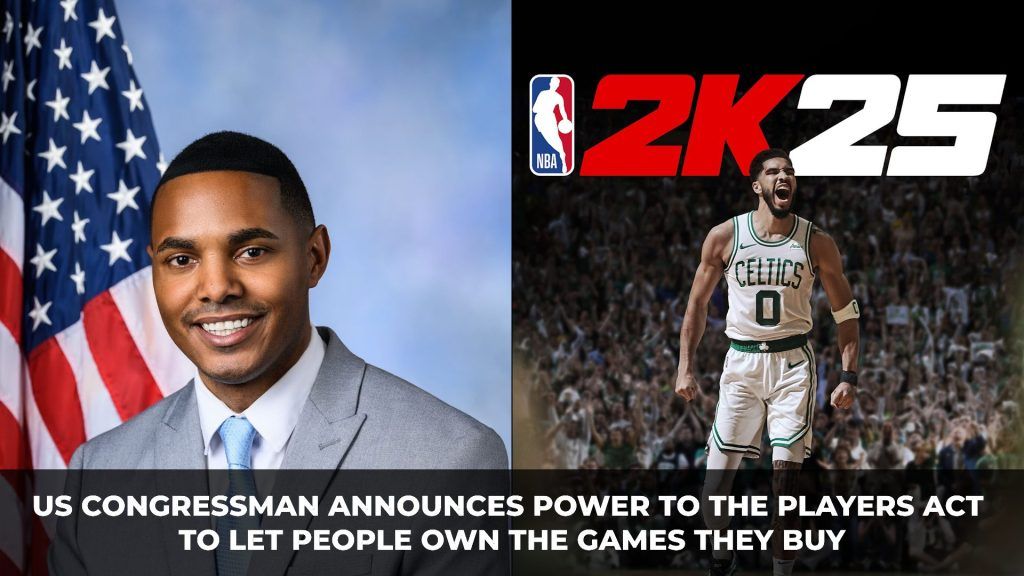

Rep. Ritchie Torres says the Power to the Players Act would push the FTC to protect game ownership, offline access, transfers, and playability after server shutdowns.

Image: keengamer.com
Torres is targeting the gap between buying and owning
Rep. Ritchie Torres of New York announced on Oct. 15, 2026 that he will introduce the Power to the Players Act, a bill his office says would direct the Federal Trade Commission to establish regulations protecting consumers’ ability to own and play the video games they purchase. The immediate tension is simple: the games market has trained players to click “buy,” while the legal and technical structure behind many digital purchases often looks closer to a revocable license.
Torres’ office frames the proposal as a response to an all-digital market in which games can be delisted, access can be narrowed, and servers can be shut down on a publisher’s schedule. In the congressman’s own wording, “When you pay for a game, you should own it.” His announcement says consumers should have “the right to own, the right to play, and the right to transfer the games they buy.”
That is the core of the Ritchie Torres gaming bill: it would not itself publish a new store policy tomorrow, and the source material does not show final FTC rules. The confirmed proposal is that Congress would tell the FTC to write consumer-protection regulations for video game ownership. If the bill advances and the agency acts, the practical effect could be felt wherever digital game purchases depend on account access, server support, storefront listings, or publisher-run authentication.
Plain language version: a purchase would have to behave less like a rental
Torres’ office says that, under the bill, buying a video game would give the consumer ownership of the game rather than a license to play it. Polygon and IGN both report the same broad mechanism from the announcement: the bill would task the FTC with regulations intended to stop companies from easily revoking digital licenses and to protect the ability to keep playing purchased games.
In everyday terms, the Power to the Players Act is aimed at the weakest point in digital game purchases. A physical disc, when fully playable from the media, historically gave players a durable copy they could keep, lend, resell, or revisit years later. A digital purchase is often tied to a platform account, a storefront license, online checks, or live services. Torres’ proposal is designed to narrow that difference by making ownership the default consumer expectation.
There are limits to what is confirmed. The announcement says the bill would preserve consumers’ ability to own and resell games, but the provided source material does not include statutory text defining how transfers would work across Steam, PlayStation Network, Xbox, Nintendo, mobile stores, or publisher launchers. That missing implementation detail matters. A true transfer right for digital games would collide with account-bound libraries, platform terms of service, regional pricing, anti-fraud systems, and key resale markets. The bill’s direction is clear; the machinery is not yet public in the supplied sources.
Shutdowns are the pressure point, and NBA 2K25 is the exhibit
Torres’ announcement singles out NBA 2K25 as the example behind the legislative push. His office says the standard edition retailed for $69.99 and the All-Star Edition for $99.99, and that the game will be delisted from digital storefronts on Oct. 30 before its online servers shut down on Dec. 31, only two years after its initial release. The statement argues that no consumer should have a paid game “pulled out from under them on a company’s arbitrary timeline.”
That example gives the video game ownership law debate a concrete clock. Delisting affects future buyers first: once a game is removed from digital storefronts, new customers generally lose the ability to buy it through normal channels. Server shutdowns hit existing owners harder, especially when a game’s identity, progression, modes, or paid economy rely on publisher infrastructure.
The sources do not describe NBA 2K25’s shutdown in identical practical terms. IGN reports that single-player modes would become inaccessible due to the server shutdown, while NewsCord’s summary of available reporting says offline modes such as Play Now and MyNBA will reportedly remain available for existing owners after online services end. Kotaku describes the shutdown as making the most popular modes impossible to play and the game “mostly useless.” Those differences matter because they show the regulatory challenge. A game can remain technically bootable while losing the modes, progression loops, or purchased ecosystem that made players pay for it.
Torres’ proposed answer is an offline-mode requirement. His office says games with online functionality would have to provide an offline mode before the supporting servers are shut down. That would directly target the scenario where a publisher sells a full-priced game, runs online services for a limited period, then leaves owners with a degraded product or no meaningful access.
An offline mode rule sounds simple until it meets modern game design
From a player-rights perspective, the offline-mode requirement is the strongest part of the proposal. It creates a clear end-of-life obligation: if a company sells a game, it cannot let server shutdown erase the consumer’s ability to play. For strategy-minded buyers, this would change the risk calculation around annualized sports games, online-first racers, co-op shooters, shared-world RPGs, and games with single-player content locked behind server authentication.
The technical and economic details are where the bill would face its first real test. The source material says games with online functionality would be required to provide an offline mode before servers shut down, but it does not specify how much content must survive, whether progression must carry over, how cosmetics or virtual currency would be handled, or whether purely multiplayer games could satisfy the law with bots, peer-to-peer hosting, local servers, or a limited archival build.
That uncertainty is not a small edge case. Many current games are balanced around live economies, seasonal content, matchmaking, anti-cheat systems, cloud saves, and server-side inventories. Converting those systems into an offline mode at the end of service could require planning from the start, not a last-minute patch after revenue falls. If the FTC eventually wrote rules under this bill, the most important language would likely define “playable,” “offline,” “owned,” and “online functionality.” A weak definition could leave players with a menu shell. A strong definition could force publishers to design shutdown plans years earlier.
Refunds are the unanswered consumer-rights question
The assignment players will care about most is also the one the announcement does not clearly answer: refunds. The Power to the Players Act, as described by Torres’ office and the provided reporting, focuses on ownership, playability, transfer rights, delisting, license revocation, and offline access. The supplied source material does not say the bill would create an automatic refund right when a game is delisted or when servers shut down.
That distinction is important for expectations. If the law passed in the form described, the main remedy would appear to be preservation of access rather than reimbursement after access is lost. In other words, the policy goal is to stop the disappearance from happening, or to require a playable offline version before shutdown, instead of promising every owner their money back.
Could FTC rules touch refunds later? Possibly, but that would be interpretation, not a confirmed feature of the bill in the provided sources. The agency already operates in the consumer-protection space, and Torres’ proposal would direct it to establish regulations, but the announcement does not lay out refund windows, pro-rated compensation, virtual-currency reimbursement, or rules for recently purchased games that lose major functionality. For now, players should not read the Power to the Players Act as a refund bill. It is better understood as a proposed access and ownership bill with refund implications still unannounced.
The bill arrives as physical media loses leverage
The timing is part of the story. Torres’ office says video game companies have moved toward digital-only games and consoles, removing the option to buy or use physical games. Polygon reports that digital media currently dominates the market and frames the bill against a broader shift away from discs. IGN’s coverage connects the proposal to controversy around future PlayStation physical media and code-in-box releases, while Kotaku ties it to the Stop Killing Games movement and concerns about the next console generation becoming more dependent on downloads.
NewsCord’s aggregation cites Sony financial reporting that digital downloads account for 82 percent of full-game unit sales across PlayStation 4 and PlayStation 5 for the covered fiscal year, leaving less than 20 percent in physical media form. That figure, if read alongside Torres’ announcement, explains the stakes. The ownership debate is no longer limited to collectors or preservation groups. When most full-game sales are digital on a major platform, license terms become the default ownership experience for mainstream players.
This is also where publisher incentives clash with consumer expectations. Digital storefronts reduce manufacturing and retail friction. Account-bound purchases can limit used-game resale. Online services support live updates, monetization, moderation, and recurring engagement. Those business reasons are real, but they create a meta in which access depends on corporate support long after checkout. Torres is trying to legislate a different endgame: if the industry wants digital distribution to replace discs, digital purchases would need stronger durability.
What players should watch next
The Power to the Players Act is still at the proposal stage in the provided sources. Torres’ office says he announced that he will introduce the legislation. Polygon notes that the bill faces regulatory hurdles and that there is no guarantee it will become law. NewsCord’s summary adds that, at the time of reporting, the bill had not been formally introduced in Congress and no cosponsors were confirmed in available reporting.
The next meaningful milestones are procedural. Players should look for the bill text, committee assignment, cosponsors, hearings, amendments, and any response from the FTC, platform holders, publishers, or trade groups. The final language will matter more than the slogan. A durable video game ownership law would need to answer how digital transfers work, which games qualify for offline preservation, how long publishers must support servers, whether older games are covered, and what happens when a shutdown has already been announced.
For buyers making decisions now, the practical guidance is conservative. Treat always-online and sports titles with short annual cycles as higher-risk purchases unless the publisher clearly states what remains playable after shutdown. Watch delisting notices closely, but do not assume a delisted game will be preserved unless the store or publisher says so. If you care about long-term access, prioritize games with documented offline modes, local saves, and clear post-shutdown support.
The Power to the Players Act has not changed store policies yet. Its significance is that a member of Congress is now framing digital game purchases as a consumer-rights issue rather than a niche preservation complaint. If the bill survives the legislative process and produces enforceable FTC rules, the biggest change may arrive before any shutdown: publishers would have to plan for the day support ends while they are still asking players to pay full price.