
Poncle is turning Vampire Survivors’ runaway success into a full-blown multi-project studio, with new offices in Italy and Japan and more than 15 projects in the works. Here’s what that expansion really looks like, and what kinds of sequels, spin-offs, and collaborations could define Poncle’s post-breakout future.
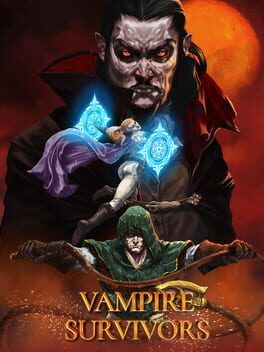
Vampire Survivors is the kind of breakout hit most indie studios never see. A game that started as a one-person project has grown into a 27‑million player phenomenon across PC, consoles, and mobile, with a TV show on the way and constant free updates keeping it in the daily rotation for millions.
Now Poncle is trying to answer the hardest question for any studio built on a single, defining hit: what comes next?
At the London Games Festival, Poncle’s chief strategy officer Matteo Sapio outlined an aggressive expansion plan. The studio is opening new offices in Italy and Japan and has more than 15 projects in the works, ranging from original games to Survivors‑style spins on famous franchises. That is a huge shift for a team that, until recently, was best described as “the Vampire Survivors studio”.
This is what that expansion looks like, and what it might realistically mean for players.
From one surprise hit to a multi-project studio
Poncle has been very clear about one detail that got muddied in early reporting: it is working on more than 15 projects, not strictly 15 full games. That distinction matters.
Some of these projects are traditional game productions that will eventually appear in storefronts. Others are prototypes, collaborations, or experiments that may never release publicly. For a studio trying to grow beyond a single title, spreading effort across many small and mid-sized bets is far safer than chasing one enormous “Vampire Survivors 2” from day one.
Sapio has confirmed that at least two of those projects are completely new original properties. They are not simple reskins or content drops for Vampire Survivors, but new ideas that can stand on their own. At the same time, Poncle is developing Survivors‑style projects based on external IP, some internally and some through partner studios.
The result is a studio that is starting to look less like a boutique outfit and more like a compact portfolio developer, closer to how Supergiant felt in the gap between Bastion and Hades, or how Motion Twin spun Dead Cells into collaborations and offshoots without abandoning the core game.
Why Italy and Japan matter for Poncle’s future
On paper, opening two new studios at once sounds risky. In practice, Poncle’s choices of Italy and Japan are unusually pragmatic.
Italy has an increasingly active indie scene but remains underrepresented compared with other European hubs. Poncle already has roots there and clearly sees a deep enough talent pool to justify a permanent base. For Vampire Survivors’ style of design, which emphasizes iteration, game feel, and content cadence over photorealistic production values, Italy offers a cost-effective environment to grow development capacity without burning through the war chest.
Japan, meanwhile, is a strategic move aimed squarely at collaboration. Sapio has said outright that Japanese companies often prefer to work with Japanese partners, in Japanese, under Japanese contracts. If Poncle wants to turn Vampire Survivors’ formula into spin-offs and licensed projects that play with famous IP, having a studio on the ground in Japan dramatically lowers the friction.
This is especially important when you remember that Survivors‑style gameplay maps cleanly onto a lot of Japanese genres and brands. Top‑down horde survival with auto-attacks and build synergies is a natural fit for action anime licenses, monster-catching universes, and even retro arcade series. A Japanese office means Poncle can work with local studios and publishers in their own time zones and legal frameworks, instead of negotiating everything across language and cultural gaps.
The two offices also help Poncle follow the sun. With teams in the UK, Italy, and Japan, the studio can keep pipelines moving almost around the clock without crunching a single region. For a company trying to run a live hit, incubate original IP, and guide external co-developments at the same time, that coverage has real value.
15-plus projects: what that actually looks like
The phrase “over fifteen projects” can sound like a buzzword, but it maps cleanly onto a few practical buckets.
First there are the core Poncle originals. Vampire Survivors will continue to get updates, experiments, and cross-media work such as the upcoming animated series. Alongside that, the two confirmed new IPs are likely exploring adjacent design spaces where Poncle’s strengths carry over: simple controls, escalating chaos, and meta-progression that turns short runs into long-term hooks.
Then there are the Survivors‑style licensed projects. Sapio has said that some of these are set in “famous franchises,” which almost certainly means brand collaborations where Poncle either leads design or provides the underlying template. Some are being built internally, others by partners with Poncle acting more like a design and systems consultant.
Finally there are experimental and support projects. These include prototypes that test new control schemes, genres, or monetization models, as well as tooling, ports, optimization passes, and platform‑specific versions. For a game like Vampire Survivors, where the Switch, mobile, and console editions all have quirks of their own, each major platform or mode can count as its own internal project.
Taken together, 15-plus projects sounds ambitious but not unrealistic. It resembles how a mid-sized indie publisher operates, except Poncle is largely keeping the work in its own orbit rather than becoming a traditional label.
What a “true” Vampire Survivors follow-up could be
The obvious question is whether Poncle will ever make Vampire Survivors 2. For now, the studio has generally treated Vampire Survivors as a platform, layering on content packs, new characters, secrets, and whole new modes instead of drawing a line and starting fresh.
That philosophy is unlikely to change overnight, but there are several directions a proper follow-up could take without betraying what made the original work.
One option is a more structurally ambitious sequel. The current game is a run-based arcade experience where every match is a self-contained story. A sequel could wrap those runs in a more persistent framework, such as a map the player slowly reclaims, a light narrative roguelite campaign, or a clan-style progression layer that gives group goals and seasonal resets.
Another path is a mechanical evolution. Vampire Survivors already flirts with bullet hell visuals, but a follow-up could lean harder into buildcraft, enemy modifiers, or environmental interactions that go beyond the relatively flat arenas of the original. Verticality, destructible terrain, and enemy factions that fight each other as much as the player are all plausible twists that would turn each run into a more dynamic puzzle while keeping the familiar auto-attacking core.
Poncle could also choose to spin the formula in genre directions instead of naming something Vampire Survivors 2 outright. Think of how Slay the Spire’s DNA spawned a wave of deckbuilding roguelites across different themes rather than a straight numbered sequel every two years. A sci‑fi survival horde game, a modern urban spin, or a superhero swarm defense title from Poncle would read as spiritual successors without needing to carry the exact brand.
Spin-offs that make sense for the Survivors formula
The strength of Vampire Survivors is that its structure is modular. At its core, it is about movement, density, and compounding power. That formula is easy to re-theme, which is exactly why Poncle’s multi-project approach makes sense.
On the most straightforward end, there are character-focused spin-offs. You could imagine a game that zeroes in on a single hero from the Survivors roster and builds a more narrative roguelite around their abilities, with cutscenes, dialog, and a hub town between runs. That sort of spin-off would let Poncle experiment with story and worldbuilding without overcomplicating the main game.
On the more experimental end, the formula could be stretched into genres where auto-attacking horde defense is a layer rather than the whole experience. Strategy-flavored variants, for example, might have players managing multiple Survivors simultaneously on different parts of a map, almost like a real-time tactics game where each unit is essentially a miniature Vampire Survivors run. Another possibility is a cooperative-focused project that builds on the split-screen co-op already in the base game but structures progression around party roles, shared builds, and persistent loot.
Mobile-specific spin-offs are also realistic. Vampire Survivors works extremely well on phones, and Poncle now has enough data on pick-up-and-play sessions to design spin-offs that lean into short, intense bursts or asynchronous competition. Time-limited daily dungeons, global boss events, and social meta layers could all live more comfortably in a dedicated mobile title than in the core game.
Collaborations with famous franchises: what feels realistic
Sapio has confirmed that some of the 15-plus projects involve working with “well-known IP.” Even without names, it is possible to sketch what these collaborations are likely to look like, based on the realities of licensing and the constraints of the Survivors formula.
One likely pattern is the reskinned or themed Survivors variant: a self-contained game or substantial mode in which the enemies, characters, and weapons are drawn from a partner franchise, but the underlying systems are clearly built on Poncle’s expertise. Because Vampire Survivors is mechanically light on buttons and heavy on spectacle, it is particularly well suited to brands that want something immediately readable by fans across all skill levels.
Another realistic direction is cameo content and cross-promotional events. Instead of building full-scale licensed games from scratch, Poncle can integrate a handful of recognizable characters or stages from a partner franchise into Vampire Survivors itself, much like how fighting games or live-service titles run seasonal crossovers. For licensors, this is lower risk and faster to execute. For Poncle, it is a way to test the waters with an IP before committing to a full spin-off.
Finally, there is the possibility of quietly powering other studios’ Survivors‑style games from behind the scenes. Not every licensed project has to advertise Poncle’s name front and center. With its new Japan and Italy presence, Poncle can consult on design, share tech, or co-develop prototypes that eventually become licensed horde survival titles under another publisher’s label. In return, the studio gets revenue, design learnings, and proof that its formula scales across audiences it may not have reached on its own.
Why Poncle is stepping back from publishing
Interestingly, Poncle is not leaning into the one expansion path many breakout indies take: becoming a full-fledged publisher. Under the Poncle Presents label, the studio experimented with publishing smaller titles like Kill the Brickman and Berserk or Die, but that initiative is now on hold.
Sapio has been candid about why. The team felt it could not give external games the level of hands-on support and visibility they deserved. At the same time, Poncle’s focus is not on maximizing short-term profit but on building and sustaining a community. That community primarily gathers around Vampire Survivors and whatever directly extends from it.
Putting publishing on pause is a recognition that the studio’s real leverage lies in design and production of tightly scoped, highly replayable games, not in building a broad catalogue of third-party titles. It also frees Poncle to put more energy into its 15-plus internal and partnered projects rather than overextending on marketing and support structures it does not yet have.
The risk and reward of life after a phenomenon
The history of the industry is full of studios that never escaped the shadow of their first hit. Others managed to parlay their breakout into a sustainable identity. Mojang built an empire almost entirely on Minecraft but diversified around it with educational and spin-off projects. Supercell turned a few mobile hits into a portfolio of live games, each tuned to a specific audience but sharing a design philosophy.
Poncle seems more interested in the second path. By scattering its bets across original IP, Survivors‑style licensed experiments, and geographically distributed teams, the studio is trying to make sure it is not dependent on a single sequel hitting enormous numbers.
There are real risks. Too many small collaborations could dilute the Vampire Survivors brand if players feel they are being sold the same idea repeatedly. An overly ambitious new IP could burn resources without finding a niche. Cultural and logistical challenges in scaling to three countries could slow decision-making or fragment the studio’s identity.
But there is a counterpoint. The core loop of Vampire Survivors is resilient enough to survive a lot of remixing, and Poncle has already shown a willingness to say no to paths that do not fit its strengths, as the publishing pause demonstrates. If the studio can keep its scope tight and its projects focused, the Italy and Japan expansions and the 15-plus project pipeline could turn out to be less about chasing the next phenomenon and more about building a stable ecosystem around the one it already has.
In other words, Poncle’s best chance at staying relevant long after Vampire Survivors’ peak is not to find a new identity, but to keep iterating on the one it accidentally discovered and export it, carefully, into as many different contexts as it can sensibly manage.