

How upgraded visuals, smarter poker, and ex‑Telltale devs are giving Poker Night at the Inventory a second life while quietly doing vital game preservation work.
When Poker Night at the Inventory first shuffled onto PC in 2010, it felt like one of those weird one-off experiments the industry occasionally stumbles into. A casual Texas Hold’em game where your opponents were Max from Sam & Max, Strong Bad, Tycho from Penny Arcade, and the Heavy Weapons Guy from Team Fortress 2 sounded like a licensing nightmare and a fan-fiction prompt rolled into one. It spent nine years on digital storefronts, built a cult following, then vanished in 2019 when rights and storefront realities quietly caught up with it.
Now it is back as a full remaster from Skunkape Games, a studio made up of former Telltale staff who actually worked on the original. That detail matters more than nostalgia alone. Poker Night at the Inventory Remaster is not just a sharper version of an old joke; it is a small but important example of how modern re-releases can keep digital-only cult games from being lost to time.
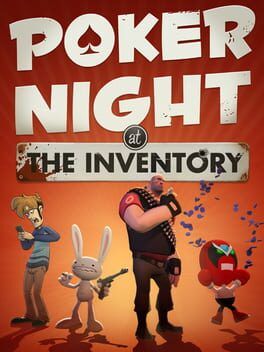
The first thing you notice in footage of the remaster is the upgraded presentation. The smoky underground club of the Inventory still feels like a private speakeasy for misfit mascots, but the lighting is richer, character models are cleaner, and animation reads more clearly. The original’s charm was always in the conversations rather than pure visual fidelity, yet technology has moved so far that returning to the 2010 release now feels like pulling an old CRT out of storage. The remaster gives those same scenes fresh life without rewriting them.
For a game that lives on extended banter and character acting, that extra clarity goes a long way. Max’s wild gesturing, Strong Bad’s smug posture across the felt, and the Heavy’s looming presence all land harder when subtle facial animations and lighting are not fighting decade-old constraints. The Inventory’s background details are easier to appreciate too, from the cluttered bar shelves to the jumbled assortment of trophies hinting at a wider universe beyond the table. It is not a radical reimagining, but it feels like someone turned the dimmer switch from nostalgic haze to warm spotlight.
Behind the scenes, though, the biggest change is not something you can screenshot. Skunkape has updated the poker logic, one of the most frequent criticisms of the original release. In 2010, plenty of players were there for the crossover dialogue, but serious poker fans could easily spot when the AI fell into predictable patterns, got too loose in odd spots, or failed to sell the illusion that these characters understood pot odds and table position.
The remaster tackles that directly. Updated AI means opponents respond more believably to changing table states, push edges more convincingly, and fold when the math says they should. The personalities still shine through their betting styles, but the underlying decision-making feels aligned with a modern understanding of poker design rather than a one-off licensed experiment from the early 2010s. This is especially important on Nintendo Switch, where a fresh audience will come to Poker Night looking for both comedy and a legitimately engaging card game.
There is a quiet elegance in the way Skunkape is handling this. They are not treating Poker Night as a museum piece that must be sealed in amber, but they are also not rewriting history. The cadence of jokes, the rhythms of table chatter, and the specific mix of characters are preserved, while the underlying systems are brought up to present-day standards. The result feels like a preservation-minded remaster instead of a replacement or reboot.
That makes sense when you look at who is behind it. Skunkape Games is not an outside studio that licensed an old Telltale property; it is made up of former Telltale developers who have already proven their approach to resurrecting their own back catalog with the Sam & Max remasters. Those earlier projects showed a willingness to polish visuals and clean up rough edges while protecting the pacing and spirit that fans remember.
With Poker Night at the Inventory, that same mindset takes on a different kind of importance. This is a game that already slipped through the cracks once. It was delisted after rights arrangements expired, leaving even PC players who were curious about its oddball premise with no legitimate way to buy it. For a digital-only, dialogue-driven title tied to multiple licenses, that might easily have been the end of the road.
Instead, the people who made it in the first place are the ones prying it back open and putting it in front of new audiences. That has both creative and archival value. Creatively, it means the original intentions are respected; archival-wise, it means the game is not relying on fan-patched executables and YouTube compilations to survive. The remaster restores the Inventory to active circulation rather than letting it fade into footnote status.
The Nintendo Switch release is particularly significant. This is the first time Poker Night at the Inventory has appeared on a Nintendo platform, which instantly broadens its reach beyond the PC-focused audience that picked it up the first time around. Bringing a once-delisted, PC-centric cult classic to a wildly popular hybrid console fills a gap that only preservation-minded re-releases can address.
For most players, game preservation is an abstract concept until something they love disappears. Poker Night at the Inventory was exactly that kind of title. It occupied an odd space: too small and conversational to be treated like a blockbuster, too heavily licensed to be easily reissued, yet culturally important for fans of early 2010s internet and PC culture. You did not play it for graphics or progression systems. You played it for the experience of hearing Max needle the Heavy after a bad beat, or watching Strong Bad downplay a reckless all-in.
Games built around conversation and personality age differently from pure mechanical showcases. The references and sensibilities baked into Poker Night at the Inventory make it a snapshot of a very specific era, when webcomics, early streaming culture, and Valve’s dominance on PC collided. Preserving that mix, awkward edges and all, has value that goes beyond simple nostalgia. It is an interactive time capsule of what counted as gaming celebrity and comedy in 2010.
Yet without remasters like this, that history quietly vanishes. When licenses lapse or platform priorities shift, digital-only titles evaporate from storefronts. Unless rights holders decide there is enough demand to bring them back, the only way to experience them is through secondhand accounts and low-res footage. The return of Poker Night at the Inventory Remaster is a small but pointed argument that cult games do not have to meet that fate.
There is a wider conversation here about how many digital-only cult favorites sit in similar limbo, especially those tied to specific partners, crossovers, or storefront deals. Poker Night’s comeback shows what can happen when original creators retain both the motivation and the technical ability to revisit their work. Ex-Telltale staff have already invested time in keeping Sam & Max playable and attractive on new hardware. Extending that same care to Poker Night suggests a more holistic view of their history, one where the side projects and experiments are treated as worth saving alongside the marquee episodic adventures.
On a practical level, remasters like this also introduce younger players to a style of character crossover that feels unusual in today’s more tightly managed brand collaborations. Seeing Max, Strong Bad, Tycho, and the Heavy casually share a table is a reminder of a looser, stranger moment in gaming culture, where improbable mash-ups were more about making something funny than maximizing cross-promotional synergy. Preserving that tone is part of the preservation work too.
For returning fans, Poker Night at the Inventory Remaster offers a chance to revisit familiar stories under better conditions. For new players, it is an accessible entry point to characters they might know only through memes or legacy collections. For the medium as a whole, it stands as a case study in why bringing back a delisted cult game is worth the effort. The improved visuals and smarter poker logic are easy to market, but the real victory is simpler: one more once-lost game is playable again, on modern hardware, under the care of the people who made it.
In an industry that often chases the next big thing at the expense of its own past, that is a win worth going all-in on.