
Reintroducing Pokémon XD: Gale of Darkness ahead of its Nintendo Switch Online debut on Switch 2, why it became a cult favorite, what this means for Colosseum, and what new players should know before diving into Orre.
Pokémon XD: Gale of Darkness is about to do something it never had a fair shot at during the GameCube era: reach a large, active Pokémon audience at the exact same time.
With the RPG spin‑off joining the Nintendo Classics GameCube app for Nintendo Switch Online subscribers on Switch 2 this March, a game that lived in the shadow of the handheld mainline series is suddenly in the spotlight. It is arriving before its own predecessor, Pokémon Colosseum, and that unusual release order is about to reshape how a whole generation meets Orre, Shadow Pokémon and one very ominous Lugia.
What Is Pokémon XD, Really?
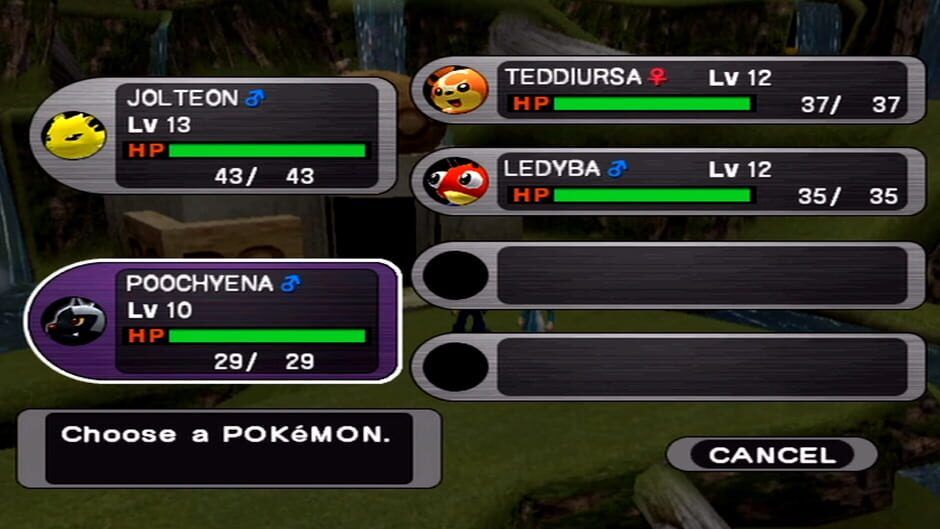
Originally released in 2005 for GameCube, Pokémon XD: Gale of Darkness is a full single‑player RPG built around double battles and a fixed party instead of wild encounters. You play as Michael, a young trainer working with the Pokémon HQ Lab to stop Cipher, a crime syndicate that mass‑produces Shadow Pokémon: creatures whose hearts have been sealed away to turn them into living weapons.
Unlike the mainline games, you do not wander tall grass waiting for random encounters. Almost every battle is trainer‑initiated, and nearly every new team member is a Shadow Pokémon that you snag from enemy trainers using a Snag Machine. Progress is about methodically expanding your roster, purifying those Shadow Pokémon and pushing Cipher back across the Orre region.
Set five years after Colosseum, XD refines that original concept into something tighter and more approachable without losing its darker tone. It is still a story about stolen Pokémon, corporate‑backed villainy and the ethics of weaponizing creatures the series usually treats as friendly partners.
Why It Became A Cult Favorite
XD did not have the raw commercial reach of the Game Boy Advance or DS titles, but the players who found it tended to hold onto it. That loyalty turned it into one of the most expensive Pokémon games to buy second‑hand, and there are a few clear reasons why.
First is the tone. Orre is a harsh, mostly desert region filled with scrapyard towns, shady casinos and half‑collapsed industrial facilities. NPCs talk about kidnapping, corporate corruption and ecological damage in more direct terms than you see in most mainline entries. It feels like a late‑GameCube answer to the question of what a slightly older Pokémon story could look like without abandoning the series’ sense of adventure.
Second is the combat focus. The entire game is built around double battles. Movesets, partner synergy and battlefield positioning matter much earlier and far more often than in contemporary handheld games. Players who love team‑building and strategy frequently describe XD as one of the best ways the series has ever forced them to think about pairs, not solo sweepers.
Third is the Shadow Pokémon system itself. Every Shadow Pokémon comes with unique Shadow moves that work differently from standard attacks and often carry powerful side effects. Using them accelerates a hidden “heart gauge” that eventually lets you purify the Pokémon back to normal, but you are constantly balancing raw power against the long‑term goal of recovery. XD expanded the roster far beyond Colosseum’s initial experiment and made the central gimmick feel like a real, system‑wide identity.
Finally, XD is dense. It adds the Purification Chamber to streamline purifying multiple Shadow Pokémon, folds what was previously the separate Orre Colosseum endgame into the main story’s post‑credits content, and offers a steady trickle of side battles, rematches and optional challenges. For many players, it was the first time a home console Pokémon adventure felt like a self‑contained RPG instead of a spin‑off side mode.
Coming To Switch 2 Before Colosseum
Nintendo has confirmed both GameCube story RPGs for the Nintendo Classics lineup, but XD is hitting the Switch 2 GameCube app first. That means a lot of players will meet Orre through Gale of Darkness rather than Colosseum, despite the latter being set earlier in the timeline.
There are a few practical reasons this works.
For one, XD is easier to onboard with. The early hours are more structured, tutorials are clearer, saving is more convenient and the Purification Chamber keeps busywork down. Someone used to modern quality of life touches in Pokémon Scarlet and Violet or Legends: Arceus will find XD surprisingly comfortable for a 2005 title.
It also acts as a better showcase for the concept. The Shadow roster is broader, enemy AI is slightly more forgiving early on and the game eases players into its darker moments rather than hitting them all at once. As a first taste, it should convert more curious NSO subscribers into longer‑term fans of the Orre subseries.
That, in turn, sets the stage for Colosseum. Once players finish XD and see direct references to Cipher’s earlier operations and to characters who originated in Colosseum, it becomes easier to sell them on going back when the prequel finally lands on the service. NSO thrives on this kind of curiosity loop, and XD is suddenly the most accessible entry point.
How NSO Could Fuel Demand For Colosseum
Pokémon Colosseum has already enjoyed years of online discussion as the “grittier GameCube one,” but actual access has been limited by scarcity and collector pricing. Putting XD in front of millions of Switch 2 subscribers tears down that barrier.
If enough players latch onto XD’s tone and systems, it is not hard to imagine a spike of interest around where it all began. Colosseum is rougher around the edges, but it features some of the series’ most memorable character designs, a more rebellious protagonist and the original Shadow Pokémon epidemic that XD constantly references.
Nintendo and The Pokémon Company have rarely revisited Orre in any medium. NSO changes that dynamic by lowering the cost of sampling both games to the price of an online subscription. Discovering XD free with a membership is likely to recalibrate expectations. A game that used to sit in YouTube retrospectives and high‑priced eBay listings becomes a shared, active talking point.
If that conversation is strong enough, it can do more than lift Colosseum. It can signal that there is appetite for a modern console‑scale Pokémon RPG that is not strictly mainline, perhaps nudging the door open for new sideline projects from studios like Genius Sonority.
What New Players Should Know Going In
Players coming from recent Switch entries will notice immediately that XD plays differently, even when the core battle rules are familiar.
There are no wild Pokémon in the traditional sense. You build your team primarily by snagging Shadow Pokémon from opposing trainers. Every potential teammate is a fixed resource tied to a particular battle, so missing a snag usually means waiting for a later rematch rather than just searching another patch of grass.
The game is almost entirely double battles. This encourages different team structures compared to handheld mainline titles from the same era. Moves that support allies, spread damage or control the field are often more valuable than single target raw power. It is worth thinking about partners in pairs from your very first catches.
XP, money and healing require planning. Orre is more linear than an open world region, and visitable healing points or Poké Mart equivalents are spaced out. Before pushing into a new facility or dungeon, it is smart to stock up and commit to a core squad instead of constantly rotating every new Shadow Pokémon you snag.
Shadow moves are strong but temporary. Early on they hit hard, often without regard for type matchups, but your long‑term goal is to open each Shadow Pokémon’s heart. Spending time in battle, walking around, using purification spots and eventually the Purification Chamber chip away at that darkness until the Pokémon can return to its normal type and moveset.
Difficulty sits a notch higher than most contemporary mainline games. Trainers routinely use full parties, enemy levels do not lag far behind and bosses lean on status effects, spread moves and smart targeting. It is fair but expects you to build coherent pairs instead of relying on one overleveled lead.
Story matters more than in many spin‑offs. Characters from Colosseum reappear, Cipher’s plans escalate, and Shadow Lugia itself is treated less like a simple legendary cameo and more like the centerpiece of a sci‑fi plotline. Paying attention to dialogue and side quests makes the post‑game Orre Colosseum and mop‑up objectives more satisfying.
Why Pokémon XD Still Deserves Your Time
In a series defined by its handheld roots, Pokémon XD: Gale of Darkness stands out as a rare attempt to build a self‑contained, console‑first RPG that is neither a stadium simulator nor a mini‑game collection. Its cult status came from scarcity, but its staying power comes from how confidently it leans into a different vision of Pokémon.
The Switch 2 Nintendo Classics release finally lets that vision live beyond memory and collector shelves. New players will discover a desert region full of strange characters, tense double battles and Shadow Pokémon that feel dangerous in a way the series does not often allow. Longtime fans get the chance to revisit Orre without digging out a GameCube or paying inflated prices.
More importantly, a strong response here could show Nintendo and The Pokémon Company that there is room again for console‑scale side stories with bolder tones and tighter combat focus. If you have ever wanted Pokémon to challenge you a little more, or to explore a world that treats its monsters as something other than endlessly safe companions, Gale of Darkness is worth queuing up on your Switch 2 as soon as it hits Nintendo Switch Online.