
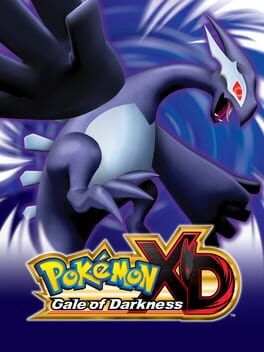

Pokémon XD: Gale of Darkness finally hits Switch 2’s GameCube Nintendo Classics app. Here’s why it’s a big win for Pokémon preservation, how it stacks up next to Colosseum, what still holds up in 2026, and whether NSO’s retro catalog is now worth subscribing for.
Pokémon XD: Gale of Darkness has finally broken out of GameCube jail.
Now part of the Nintendo GameCube Nintendo Classics library on Switch 2 for Nintendo Switch Online + Expansion Pack members, the 2005 RPG spin off is no longer locked behind aging hardware, rare discs, and finicky memory cards. For a series that has often struggled to keep its own history playable, XD landing on a current system is a surprisingly important moment.
This is not just another retro drop. It is one of the last major home console Pokémon RPGs that had no modern port, and it arrives ahead of its own predecessor, Pokémon Colosseum. If you are eyeing that Expansion Pack fee and wondering whether this is finally the time to jump in, XD is one of the clearest arguments yet.
Why Pokémon XD on Switch 2 actually matters for preservation
For years, Pokémon XD has lived in an awkward spot. It is a cult favorite, frequently recommended by fans, but hard to legally access. Original GameCube copies are expensive on the secondhand market, GameCube hardware is long out of production, and the game never came to Virtual Console.
Bringing XD to Switch 2 solves several long standing problems for Pokémon preservation.
First, it rescues a specific flavor of Pokémon design. XD and Colosseum sit apart from the handheld mainline games, with their confined Orre region, dense string of battles, and the Shadow Pokémon snagging system. These games are a snapshot of a time when The Pokémon Company was willing to experiment on home consoles with darker tones, heavier focus on double battles, and more distinct villains. Without re releases, that branch of the series risks vanishing into YouTube videos and fan wikis.
Second, it standardizes a way to play. On Switch 2, XD runs in the GameCube Nintendo Classics app with save states, suspend resume and portable play. You no longer need to worry about failing memory cards or disc read errors. For a game that encourages long purification grinds and repeated rematches, features like instant suspend are more than quality of life; they actively change how approachable the game is in 2026.
Third, it fills an obvious hole in NSO’s Pokémon catalogue. Switch already has access to early handheld generations through the Game Boy and Game Boy Advance apps and modern entries are stuck on their native carts. XD joining the GameCube line up means one more era of Pokémon is officially represented, and it does it with a game that was previously stranded.
None of this fixes the broader problems around older Pokémon titles, especially those stuck on 3DS and DS, but it is a meaningful step. XD going from ultra niche to one menu icon away on a current console sends a welcome signal about how Nintendo and The Pokémon Company are willing to treat the series’ spin offs.
How it compares to Pokémon Colosseum
XD is technically a sequel to Pokémon Colosseum, but the way it lands on Switch 2 flips the usual recommendation order. Colosseum is confirmed for the GameCube Classics line up, though it arrives later, so many players will meet Orre through XD first.
Mechanically, the two games share a lot. Both are built around double battles, both focus on stealing corrupted Shadow Pokémon from enemy trainers and both deliver a more linear, battle dense adventure than the handheld routes-and-gyms formula.
Where they diverge is in tone and structure.
Colosseum plays like a punchy, rough edged experiment. You start as a former villain who quite literally blows up his old base, your first partner is Espeon and Umbreon, and the world has a desolate, strange feel. The story is more aggressive and the difficulty curve hits harder. It can feel like a prototype in places, with uneven pacing and a roster that asks you to live with a high ratio of Shadow Pokémon for long stretches.
XD softens and polishes that formula. You play as Michael, a more traditional young trainer, and you start with an Eevee instead of fully evolved partners. The plot leans closer to standard Pokémon storytelling, even as Cipher and Shadow Lugia give it a memorable hook. The structure is smoother, with more side activities, more approachable difficulty and a larger pool of regular Pokémon you can integrate into your team.
On original hardware, that shift made XD controversial. Some fans loved the refinement and extra content, others missed Colosseum’s weird, harsher edge. On Switch 2, that same shift makes XD a much easier entry point. It is the more welcoming game to revisit in 2026, while Colosseum can play the role of an interesting, spikier prequel once it finally arrives.
If you care about narrative tone and challenge, you will probably still find Colosseum more striking. If you want a better paced adventure with more to do, XD holds up as the more complete package.
What still holds up in 2026
Two decades later, XD is not just coasting on nostalgia. There are several elements that still feel unique in the modern Pokémon landscape.
The Shadow Pokémon system remains the centerpiece. Battling with Shadow Pokémon to reduce their heart gauge, deciding when to keep them in their volatile state for raw power versus when to prioritize purification, and building teams around those tradeoffs gives XD a rhythm mainline games still have not really replicated. On Switch 2, the ability to suspend mid grind makes the purification loop less of a chore and more of a background activity you chip away at whenever you have a spare few minutes.
The commitment to double battles also continues to stand out. Modern Pokémon frequently dips into doubles for raids and specific fights, but XD forces you to think in pairs almost all the time. Moves like Protect, Light Screen and spread attacks become vital tools instead of occasional utility options. If you have come to the series through games like Scarlet and Violet, XD can feel like a crash course in the tactical side of doubles.
Visually, the GameCube art direction scales better than you might expect. The resolution bump from Switch 2’s emulation cleans up the character models and the industrial, dusty Orre backdrops still carry atmosphere. It is not a remake and textures are flat by modern standards, but the art is stylized enough that it feels more like an intentional retro look than a relic.
Structurally, the game’s focus on battles over exploration has aged fairly well. With so many modern RPGs ballooning in scope, XD’s tight, combat heavy run time can be refreshing. You move between distinct hubs, knock out chains of battles, and push the story forward at a steady clip. It is very 2005 in how it handles tutorials and cutscenes, but the Switch 2’s sleep and save state options blunt some of the friction.
There are dated bits. Interface responsiveness is slower than current Pokémon titles, the writing leans on repetition, and expectations about connectivity have shifted now that the original GBA link features are unavailable. On NSO, those hardware based transfer and battle options are effectively gone, so what remains is a single system RPG with local multiplayer. If you are coming in hoping to shove your XD team into Pokémon Home, that bridge does not exist.
Even so, as a self contained campaign, XD still works. In some ways it feels more cohesive now, because you are no longer thinking about how it plugs into a wider ecosystem of hardware and cartridges.
Is NSO’s retro catalog finally a reason to subscribe?
Pokémon XD does not arrive in a vacuum. It joins a GameCube lineup that has been quietly growing since Switch 2 launched, and it lands soon after the announcement that Pokémon Colosseum is following later. At the same time, Pokémon FireRed and LeafGreen returning via other channels round out the feeling that this year is about reconnecting with the series’ past.
From a pure value perspective, NSO + Expansion Pack is easier to justify if you care about Nintendo’s back catalogue. GameCube Classics are exclusive to Switch 2, and XD is already one of the headliners alongside titles like Fire Emblem: Path of Radiance and classic first party picks. The more it starts to feel like a curated slice of early 2000s Nintendo history, the more it becomes a selling point rather than a bonus.
For Pokémon specifically, XD’s arrival helps NSO in two ways.
First, it adds a unique RPG that you simply cannot replicate with any modern entry. There is no current equivalent to a home console story driven Pokémon game that leans this hard into doubles and Shadow mechanics. If you are a fan who skipped the GameCube era, NSO is now the easiest legal way to see what the fuss is about.
Second, it hints at Nintendo’s willingness to treat spin offs as part of the preservation effort, not just mainline episodes. If XD can make the jump, and Colosseum is already in the queue, it is easier to imagine other cult favorites finding a second life in these apps. For players who have been hesitant to subscribe because their favorites felt too obscure to ever return, that matters.
The usual caveats remain. NSO games are tied to your subscription, not owned outright, and Pokémon’s catalog is still incomplete. If you only care about the newest generation, XD by itself will not change your mind. But if you are even a little curious about Pokémon’s stranger console experiments, the Expansion Pack tier just became a much stronger recommendation.
Who should play Pokémon XD on Switch 2
If you are a lapsed fan who bounced off the newer games but has fond memories of the Game Boy and DS era, XD on Switch 2 functions like a time capsule. It has the slower pacing and more rigid structure of older Pokémon without the grind of hunting down old hardware.
If you are a newer player whose first mainline entry was on Switch, XD is your best chance to see what a console focused Pokémon RPG looked like before the modern open world experiments. Its commitment to doubles and Shadow mechanics can even sharpen your battle fundamentals.
And if you are already paying for NSO + Expansion Pack, there is little reason not to at least sample it. The service model means you can treat XD like a long demo. Dip in for a weekend, see how you feel about Orre’s brand of Pokémon, and if it clicks, settle in for one of the more distinctive campaigns in the series.
Pokémon XD: Gale of Darkness arriving on Switch 2 does not fix every gap in Nintendo’s retro strategy, but it is an important proof of concept. For once, a beloved, hard to access Pokémon spin off is not something you read about; it is something you can download tonight.