

A reported arrest after a viral Target confrontation shows how Pokemon 30th Celebration TCG demand is turning retail access into a safety problem, with key details still unconfirmed.
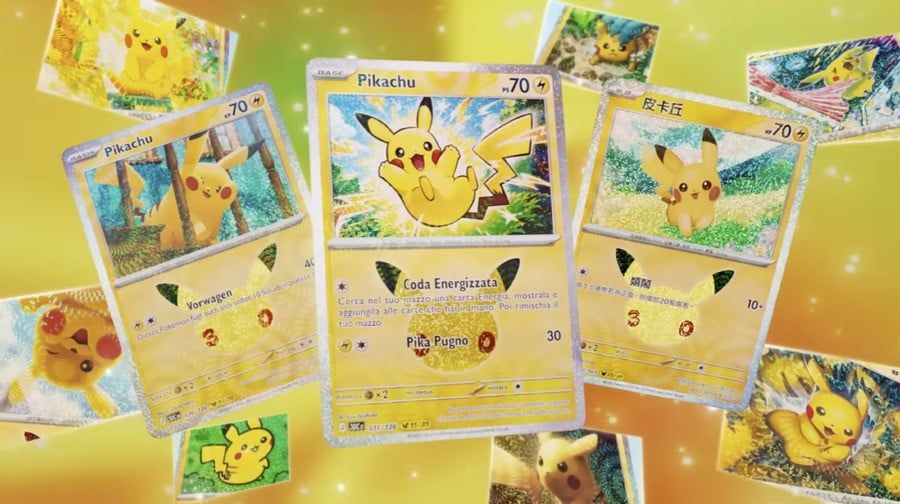
Image: nintendolife.com
A reported arrest turns a card drop into a safety story
A man described by PokéStreetz, IGN, Nintendo Life, Dexerto, and Yahoo as a Pokémon TCG scalper was reportedly arrested and trespassed from a Target in Lisbon, Connecticut after a confrontation over a Pokémon card restock turned physical. The viral footage, first circulated by PokéStreetz and later covered by multiple outlets, shows two shoppers with a cart full of Pokémon merchandise being confronted over an apparent purchase-limit dispute before one person is punched at a self-checkout area. A child can be heard crying after the camera drops.
That is the concrete shape of the story. The more careful version matters because the strongest claim, that the alleged attacker was arrested, is still based on PokéStreetz’s account rather than a located public arrest report. Dexerto specifically reported that no suspect had been publicly identified and that no charges or arrest report had been found. IGN and Yahoo repeated that the man was reportedly arrested and trespassed after returning to the Target for a wallet allegedly left behind. Nintendo Life also framed the arrest as reported, citing the viral video and IGN.
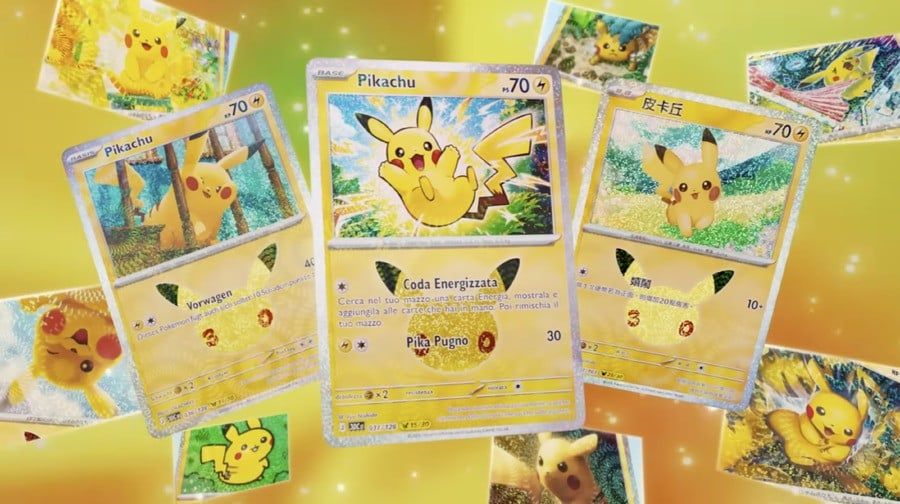
The incident has spread because it sits at the nastiest intersection of the Pokémon 30th Celebration TCG launch: high demand, limited retail supply, purchase limits that customers say were ignored, and a resale culture that turns a toy aisle into a checkpoint. For players and parents, the important question is no longer whether Pokemon card scalping is annoying. It is whether trying to buy Pokemon cards in 2026 at a big-box store now carries enough risk that retailers have to treat a restock like crowd control.
The Lisbon clip is also a reminder that virality is not the same thing as a police blotter. The video appears to show a confrontation and a punch, while the details about the child’s injury, the alleged flight from the store, the wallet, the police call, and the arrest come from PokéStreetz’s description of the submission and from outlets reporting that account. Until police, Target, or court records publicly fill in the gaps, the responsible way to describe the event is as a reported arrest tied to a documented retail confrontation.
What the Lisbon Target footage and reports actually support
According to IGN’s account of the footage, the incident took place at a Target store in Lisbon, Connecticut on August 28, 2026, with the video spreading more widely in September. IGN reported that two shoppers were seen with a cart full of Pokémon merchandise as they moved toward self-checkout. The person filming, along with his girlfriend, confronted them about the amount of product in the cart and the store’s stated two-per-person limit. IGN wrote that the shoppers openly acknowledged they were checking out with the merchandise and warned the couple not to touch the cart.
Dexerto’s account adds a narrower caution: PokéStreetz warned that the recording begins during the confrontation and does not show the alleged shelf-clearing or the full lead-up. That distinction is important. The footage can document the visible argument and the punch described by the outlets, but it cannot independently prove every earlier step in the reported chain, including how products were gathered or whether they had been hidden elsewhere in the store.
The most disturbing part of the report concerns the four-year-old girl. PokéStreetz claimed that after the man filming was punched, he fell into the child, that she fell and hurt her elbow, and that he immediately checked on her. Nintendo Life noted that someone crying can be heard in the footage. IGN and Yahoo also reported PokéStreetz’s claim that the child was hurt in the chaos. None of the supplied source material includes a medical record, police report, or statement from Target confirming the injury.
The arrest claim has the same status. PokéStreetz said the alleged attacker fled after the punch, left his wallet behind, then returned and was arrested. IGN reported that the man was arrested and trespassed, citing the account and a Dexerto link. Dexerto said police were reportedly called by the child’s father after the incident and that PokéStreetz claimed police arrested the man when he came back for the wallet. But Dexerto also wrote that no suspect had been publicly identified and no charges or arrest report had been located.
A local Facebook group post cited by IGN and Dexerto gives the story another community-level data point. IGN reported that a local TCG player in a Pokémon drops and restocks Facebook group called the Lisbon Target situation a “nightmare” and said someone became violent after being recorded. That does not replace official confirmation, but it does show the incident was discussed locally as a serious disruption rather than only as a viral content clip.
The 30th Celebration set is creating pressure at the exact point retail is weakest
The Pokemon 30th Celebration TCG launch has become a stress test for physical retail. Kotaku reported that stock has been stripped from stores within minutes of hitting shelves, while different retail outlets and even individual branches are trying different crowd-control methods. That inconsistency is part of the problem. When buyers do not know whether a store will use a line, a queue, a wristband, a purchase limit, or a scramble at opening, the system rewards people willing to camp, hover, argue, and test boundaries.
Kotaku described several examples gathered from PokéStreetz’s social channels. At a Target in Northridge, California, the outlet reported that customers were made to wait away from the store in a parking lot before an employee shouted “GO,” prompting a dash toward the store-side line. Kotaku said footage showed children in the mix, with kids getting shoved against a wall by adults. In Gilroy, California, Kotaku reported an overnight campout outside a Target where accusations about line-jumping escalated and it was alleged that a knife was pulled before a parking-lot fight broke up when sirens were heard.
Those incidents are not the same as the Lisbon report, and they should not be blended into one nationwide crime narrative. But together they show the retail mechanics driving the chaos. Limited drops create a race. Purchase limits create enforcement pressure. Social media turns each bad actor into a spectacle. Resale expectations encourage some shoppers to treat sealed product like a short-term commodity instead of a game piece, collectible, or gift.
There is also a strange tension in the current market. Kotaku reported that the 30th Celebration set might be hurting scalpers because of strong pull rates and low resale prices, yet crowds are still behaving as if every drop is a jackpot. That gap between perceived value and actual resale upside is where a lot of ugly behavior lives. People line up for hours, see a cart full of product moving toward checkout, and assume the entire event has been rigged against them. Anger builds before any cashier or manager has a chance to intervene.
For ordinary players, this is the least playful version of collecting. Pokémon TCG is built around discovery: cracking a pack, finding a favorite monster, trading with someone who values a card differently than you do. The 30th Celebration demand spike has turned that loop inside out at some stores. The first “mechanic” many buyers encounter is not deckbuilding or collecting, but access denial.
Retailers are experimenting, but every system has a failure point
The sources show retailers trying to solve the same problem from different angles. Target’s reported two-product limit at the Lisbon store is the most familiar approach. It is easy for customers to understand, but only works if it is consistently enforced before a cart reaches checkout. Once shoppers believe someone has bypassed the rule, the aisle becomes a courtroom with no judge. That appears to be the spark in the Lisbon footage, where the argument centered on the amount of Pokémon merchandise being purchased.
Best Buy is being positioned as a cleaner alternative for some buyers, though the available source needs a careful reading. IGN published a sponsored article, with an editor’s note disclosing that the piece was sponsored by Best Buy and that IGN may earn an affiliate commission. In that article, IGN described Best Buy as a reliable option for Pokémon TCG Best Buy shoppers because of MSRP pricing, authentic stock, broad selection, purchase limits, digital queues, invitations, and surprise drops. The piece says popular releases may let customers request launch-day access through a Best Buy account using an “Invite to Purchase” system, with selected customers receiving a secure link and a 24-hour purchase window.
Because that article is sponsored, it should be read as a commercial presentation of Best Buy’s approach rather than independent proof that every drop will be calm or available. Still, the mechanics it describes address the specific failure points seen in physical store chaos. A digital waiting room reduces the parking-lot sprint problem. Account-based invitations can make botting harder. MSRP pricing narrows the gap that scalpers try to exploit. Purchase limits matter more when the checkout flow enforces them automatically.
Kotaku’s reporting suggests that branch-by-branch improvisation remains a major weakness elsewhere. A store that tells people to race from a parking lot has created a safety hazard before any cards are sold. A store that allows overnight camping inherits all the problems of line disputes, unattended “ghost chairs,” weather, fatigue, and territorial behavior. A store that posts limits but does not enforce them early invites customers to confront each other.
The practical lesson is not that one retailer has solved Pokemon card scalping. It is that systems beat vibes. If a store’s process depends on shoppers being polite under scarcity, it has already failed the families, kids, and casual collectors the hobby needs.
What remains unconfirmed, and why that uncertainty matters
The most widely shared version of the Lisbon story is emotionally clear: an alleged scalper tried to buy too much product, punched a man who confronted him, caused a child to get hurt, fled, then returned and was arrested. Parts of that version are supported by footage as described by IGN, Nintendo Life, Yahoo, and Dexerto. Other parts remain reported claims from PokéStreetz and the submitter.
Confirmed through the supplied reporting: there is viral footage of a confrontation at a Lisbon, Connecticut Target tied to a Pokémon TCG restock; the video shows two shoppers with a large amount of Pokémon merchandise; the confrontation involved a dispute over purchase limits; outlets describe one shopper punching the man filming; the phone drops and a child can be heard crying; the incident has been discussed by a local Pokémon drops and restocks Facebook group.
Reported but not independently confirmed in the supplied material: that the child was four years old, that her elbow was injured, that the alleged attacker fled specifically after causing that injury, that he left his wallet behind, that he returned to recover it, that police arrested him, that both shoppers were trespassed, and that Target staff declined to act before the child’s father called police. Dexerto’s note that no public suspect identification, charges, or arrest report had been located is the key caveat.
This uncertainty does not make the incident harmless. It changes how it should be discussed. Calling someone a criminal based solely on a viral clip can outrun the record. Ignoring the clip because official paperwork is not yet public can minimize a real safety failure. The middle lane is the journalistic one: describe what is visible, attribute what is alleged, and keep asking for confirmation from the institutions with records.
It also matters for the broader Pokémon TCG community. Viral accounts that document bad behavior can pressure stores to change policies, but they can also flatten every buyer with a full cart into a villain. Some people in these lines are resellers. Some are collectors. Some are parents. Some are players trying to get product before the shelf is bare. The behavior matters more than the label. In Lisbon, the behavior described by multiple outlets crossed from hoarding accusations into alleged violence, and that is why the story has traveled beyond normal restock frustration.
Safer ways to chase Pokemon cards in 2026
For readers trying to buy Pokemon cards in 2026, the safest advice is painfully practical: avoid turning a restock into a confrontation. If a shopper appears to be violating a store limit, document only if you can do so safely, then take it to staff or leave. The Lisbon footage shows how quickly a purchase-limit argument can become a physical risk for bystanders, including a child who was not part of the dispute. No booster pack is worth being in the middle of that.
Use retailer systems that reduce face-to-face scarcity when possible. The sponsored IGN article about Best Buy describes account-based invitations, digital queues, secure purchase links, purchase limits, and MSRP pricing as part of Best Buy’s Pokémon TCG approach. Treat those tools as useful when available, while remembering that availability can vary and sponsored retail coverage is still marketing-adjacent. If a product page offers an invite or waiting room, that is usually safer than gambling on a crowded aisle.
If shopping in person, call ahead only for policy information, not for a promise that stock will be waiting. Ask whether the store uses a line, a customer-service desk release, an online order pickup system, or per-SKU limits. Bring patience, leave kids out of dense launch crowds when possible, and walk away if the line starts acting like a scrum. A well-run drop feels boring. Boring is the goal.
For collectors, the 30th Celebration set may require a mindset shift. Kotaku reported that strong pull rates and low resale prices may be limiting scalper profits, even as stores still sell through quickly. That means panic buying may be feeding a market that is less lucrative than the crowd assumes. Waiting for a calmer restock, using digital queues, or buying from a retailer with clear anti-scalper enforcement may cost you less than chasing the first chaotic wave.
The Pokémon TCG has always had a little treasure-hunt energy, and that is part of its charm. The current 30th Celebration chaos shows what happens when the hunt is allowed to overpower the play. Retailers need systems that protect access. Buyers need to stop rewarding dangerous behavior. And until the Lisbon case is confirmed by public records, the story should be treated as a serious reported incident with visible warning signs, not as a fully closed police file.