
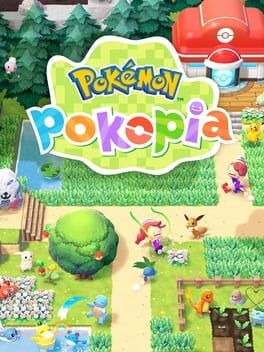

Pokémon Pokopia has passed five million sales on Switch 2, and its reported 21% attachment rate shows how strong demand is for cozy Pokémon spin-offs.
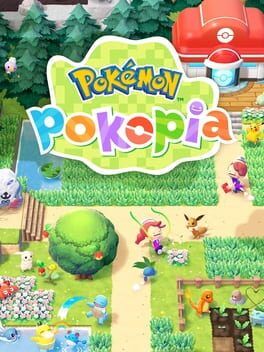
Image: IGDB
Pokémon Pokopia has crossed a rare Switch 2 threshold
Nintendo and The Pokémon Company have confirmed that Pokémon Pokopia has sold more than five million units worldwide, a figure that includes both physical and digital versions, according to reporting from Nintendo Life, Eurogamer, VGC, Polygon, Noisy Pixel, and OtakuKart citing the companies’ announcement. The milestone arrives just over four months after the life-simulation spin-off launched for Nintendo Switch 2 on March 5, 2026.
The sharper story is the attachment rate. VGC reports that Nintendo Switch 2 has a 23.68 million installed base, which places Pokémon Pokopia at roughly 21% of Switch 2 owners. Shane the Gamer reaches the same approximate figure by dividing the five million sales milestone by Nintendo’s 23.68 million hardware total as of June 30, 2026. In practical terms, about one in five Switch 2 owners has bought a cozy Pokémon game built around rebuilding an island as a humanoid Ditto.
That is unusually strong positioning for a Pokémon spin-off on a young platform. VGC reports that Pokémon Pokopia is now the second-best-selling Switch 2 game, behind Mario Kart World and ahead of Donkey Kong Bananza. VGC lists Mario Kart World at 15 million sales and notes that it was bundled with the console at launch, while Eurogamer cites 15.39 million sales for Mario Kart World. VGC places Donkey Kong Bananza at 4.78 million sales. Those comparisons matter because Pokopia is not a traditional battle-first Pokémon release, and its sales suggest a large early Switch 2 audience was ready to treat a life sim as a core purchase rather than a side curiosity.
The attachment-rate math is strong, but the estimates differ by hardware date
There is a small but important difference in how outlets frame the Pokémon Pokopia attachment rate. VGC uses the 23.68 million Switch 2 installed base and arrives at 21%. Polygon also reports that five million copies translates to 21% of Nintendo Switch 2’s 23.68 million owners. Shane the Gamer describes the same result as roughly one in five Switch 2 owners.
Eurogamer frames the milestone as roughly one in four Switch 2 users, using Nintendo’s previously reported figure of more than 20 million Switch 2 units sold as of May 2026. Eurogamer also notes that the console launched on June 5, 2025, placing Pokopia’s success early in the system’s lifespan. The difference is not a contradiction in the sales milestone itself. It comes from which hardware denominator is being used. Against a 20 million install base, five million copies looks like 25%. Against 23.68 million, it is closer to 21%.
For readers tracking Pokemon Pokopia sales, the 21% figure is the cleaner current attachment-rate estimate from the provided reporting because it uses the larger 23.68 million Switch 2 base cited by VGC, Polygon, and Shane the Gamer. The bigger takeaway is that Pokopia is performing like one of the platform’s defining early games, even under the more conservative calculation.
A cozy Pokémon spin-off is competing with console anchors
Pokémon has always had room for spin-offs, but Pokémon Pokopia’s five million sales put this particular experiment in a different class. VGC reports that the game is already among the best-selling Pokémon series spin-offs ever. It also identifies Pokopia as the second-best-selling Switch 2 title at this stage, behind Mario Kart World and ahead of Donkey Kong Bananza.
The comparison with Mario Kart World needs context. VGC notes that Mario Kart World was bundled with the console at launch, which changes how its 15 million sales should be read. Pokopia’s sales, by contrast, are being discussed as a standalone software result, though Nintendo Life reports that a Switch 2 Pokémon Pokopia bundle was announced in May. The sources provided do not break down how many Pokopia units came through that bundle, nor do they split physical and digital sales.
Eurogamer adds another useful comparison: Pokémon Legends: Z-A has a dedicated Nintendo Switch 2 Edition that has sold 3.99 million units according to Nintendo’s reporting, while its original Switch sales likely raise its total above Pokopia overall. That makes the Switch 2-specific comparison more interesting than a simple franchise ranking. On Nintendo’s new hardware, a cozy construction-and-community Pokémon title is reportedly ahead of a Switch 2 Edition of a more conventional Pokémon release, at least when looking only at Switch 2 software figures cited by Eurogamer.
For a series often measured by mainline launches, competitive battling, monster rosters, and generational sales curves, Pokopia’s early result points to another kind of demand: players buying Pokémon for progression loops built around habitat building, resource gathering, friendship, customization, and slow-burn discovery.
Ditto, building, and Omega Force gave Pokopia a different progression shape
The premise matters to the sales conversation because Pokémon Pokopia is selling a different fantasy from the usual badge route. VGC reports that players control a Ditto that takes on the appearance of a human, befriends Pokémon, and uses their abilities to rebuild an island. Noisy Pixel describes a broader set of systems, including crafting, farming, town-building, furniture construction, vegetable cultivation, home design, a real-time day-night cycle, dynamic weather, and biomes. OtakuKart similarly reports that players gather resources, create furniture, develop habitats, and work alongside Pokémon while reshaping a deserted world.
From a systems perspective, that makes Pokopia closer to a long-tail progression game than a short campaign purchase. Its loop appears to be built around unlocking moves, improving spaces, attracting Pokémon, and expanding what the island can support. VGC reports that Pokémon abilities are central to rebuilding the island, while Noisy Pixel says befriending Pokémon lets trainers learn new moves that shape environments and draw in different species. That is the kind of structure that can sustain both cozy-game players who enjoy routine and Pokémon players who respond to collection goals.
The developer context is also notable. VGC reports that Pokémon Pokopia was mainly developed by Koei Tecmo’s Omega Force team and led by directors behind Dragon Quest Builders 2. Polygon describes Pokopia as effectively blending Animal Crossing with Dragon Quest Builders 2, while VGC says its review called the game “Pokémon’s best spin-off” and praised it as a life simulation game that draws from genre leaders, while noting late-game grind. Polygon reports that Metacritic lists an 89 critic average and 8.7 user score, and that OpenCritic says 97% of critics recommend it. Those reception notes are not sales data, but they help explain why the game may have held momentum beyond launch week.
The Game-Key Card detail makes the five million figure harder to unpack
Nintendo Life reports that Pokémon Pokopia was made available in-store as a Game-Key Card, requiring a download, and digitally through the eShop. VGC describes the Game-Key Card format as essentially a digital download code on a physical game card. Nintendo Life also reports that the official sales figure includes both “physical and digital versions.”
That matters because five million global sales does not tell us how Switch 2 owners chose to buy the game. The provided sources do not include a physical-versus-digital split, nor do they specify how Game-Key Card copies are categorized in Nintendo and The Pokémon Company’s announcement beyond being part of the combined physical and digital total. For collectors, preservation-minded buyers, and players with storage concerns, the Game-Key Card format is a practical distinction from a conventional fully stored cartridge.
The lack of a split also limits how much can be said about retail demand versus eShop demand. The safest reading is that the Pokémon Pokopia Switch 2 audience accepted both channels at scale. The stronger sales claim is confirmed. The format-level behavior behind that claim is still unreported in the provided material.
Post-launch support gives Pokopia room to keep converting Switch 2 owners
Pokémon Pokopia’s next phase is already underway. Nintendo Life reports that Version 2.0.0 added free content, including the new move Dive. The paid Expansion Pass content Part 1, Bubbly Basin, is also available and adds a new underwater area. Eurogamer reports that Bubbly Basin includes an underwater town, more Pokémon to discover, new furniture to build, new food to prepare, and more. OtakuKart says the free update allows Ditto to explore underwater areas, while the paid content adds an underwater town, new Pokémon, furniture, and additional customization options.
The roadmap extends well beyond the five million milestone. VGC reports that a free update and paid expansion were recently released, with a second expansion due in late 2026 and a third and final expansion in 2027. Nintendo Life adds that Part 2 is scheduled for late 2026 with additional features, while Part 3 is planned for 2027 and will add an additional new town. Polygon reports that the second DLC will introduce clothing and accessories for Pokémon. Noisy Pixel also reports that the second part of the Expansion Pass will introduce new wearable accessories, followed by a third part in 2027.
For anyone deciding whether to buy now or wait, the confirmed practical picture is straightforward. Pokémon Pokopia is available exclusively on Switch 2. It is sold digitally and in-store as a Game-Key Card that requires a download. The base game has already received a free update and the first paid Expansion Pass release. Two more paid expansion parts are scheduled, one in late 2026 and one in 2027. The provided sources do not include pricing, performance details, file size, or a physical-versus-digital sales breakdown.
The demand signal is bigger than one milestone, but still bounded by what Nintendo has shared
The Pokemon Pokopia five million milestone is clearest when read as a demand signal for cozy Pokémon spin-offs on Switch 2. A reported 21% attachment rate means Pokopia has reached a sizable share of early hardware owners, while competing near the top of the console’s software chart. It also shows that a Pokémon game centered on rebuilding, routines, habitats, and relationships can sit beside Mario Kart and Donkey Kong as an early platform pillar.
There are still limits to what the number proves. Nintendo and The Pokémon Company have confirmed the global sales threshold and the inclusion of physical and digital versions, but the provided reporting does not give regional splits, sell-through versus shipment language beyond the outlets’ summaries, bundle contribution, digital ratio, expansion pass sales, or active-player retention. We can say that Pokémon Pokopia sales are high. We can say the reported Pokemon Pokopia attachment rate is unusually strong for a Switch 2 Pokemon game with a cozy life-sim structure. We cannot yet say how much of that audience will stay through the 2027 expansion roadmap.
Even with those caveats, the early evidence is hard to ignore. Pokémon Pokopia has not merely found a niche within the Switch 2 launch window. According to the reported sales and install-base figures, it has turned a slow-life Ditto fantasy into one of the system’s most widely adopted games.