
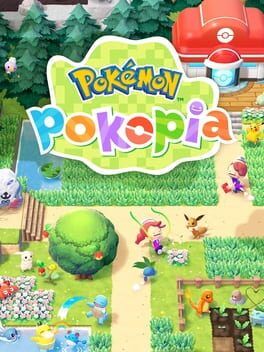
Koei Tecmo aimed for Pokemon Pokopia to become the best selling Pokemon spin off. The benchmark is high, but early sales, DLC, and its crafting loop explain the ambition.
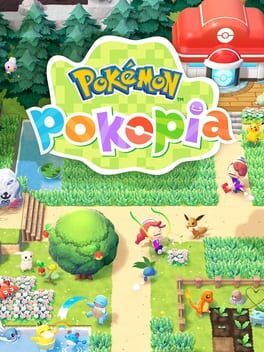
Image: IGDB
Koei Tecmo aimed at a record most spin-offs never approach
Koei Tecmo president and CEO Hisashi Koinuma says the company worked on Pokemon Pokopia with the aim of making it the best-selling Pokemon spin-off, a target that immediately puts the Switch 2 life sim in unusually rare company.
In a Famitsu interview translated and reported by NintendoEverything, Koinuma said he felt a strong sense of accomplishment among Koei Tecmo’s spin-off projects and added that the team worked with the goal of making Pokopia the best-selling spin-off game. He also acknowledged that before launch there “weren’t any real expectations,” then credited strong overseas media impressions shortly before release with helping the game spread.
That contrast is the story around Pokemon Pokopia right now. The goal was enormous, the public expectation was apparently muted, and the early sales pace has made the target look plausible rather than ceremonial. NintendoEverything notes that Pokemon Mystery Dungeon: Red Rescue Team and Blue Rescue Team are currently the highest-selling Pokemon spin-offs at 5.85 million copies. The same report says Pokopia had sold more than four million copies through its first five weeks, based on earlier information shared at the start of May.
No current lifetime total is provided in the source material, so the record should not be treated as confirmed. NintendoEverything’s reading is that Koei Tecmo will likely reach the goal soon, if it has not already. That is an informed expectation from the outlet, not a newly announced sales milestone from Koei Tecmo, Nintendo, or The Pokemon Company.
The Mystery Dungeon benchmark is a heavier lift than it sounds
Calling something the best selling Pokemon spin off can make the target sound like a side prize next to the mainline RPGs. In practice, the stated benchmark is steep because Pokemon’s strongest side projects have had long lives, broad audiences, and clear identities outside the gym-badge structure.
The named number in NintendoEverything’s report is 5.85 million copies for Pokemon Mystery Dungeon: Red Rescue Team and Blue Rescue Team. That pair matters because it represents a different kind of Pokemon attachment. Mystery Dungeon asked players to live as Pokemon, build a rescue-team routine, and progress through dungeon structure rather than collect badges as a human trainer. Pokopia’s central fantasy also shifts the player away from the standard trainer role. Its public listing describes the game as starring a Ditto that transforms to imitate a human, then uses that ability to cultivate a post-apocalyptic world and help other Pokemon it finds.
That comparison is useful because both games sell a premise, not simply a logo. Mystery Dungeon had roguelike rescue structure. Pokopia has social simulation, sandbox building, habitats, furniture, resources, and village-style growth. The Pokemon brand opens the door, but the spin-off record belongs to games that give players a complete routine they can return to for dozens or hundreds of hours.
Pokopia reaching more than four million copies in five weeks, as previously reported by NintendoEverything, would put it within roughly two million of the Red and Blue Rescue Team total cited by the outlet. That is still a large gap by normal game standards. For Pokemon spin-off sales, though, it suggests Pokopia entered the conversation quickly rather than slowly accumulating there over multiple years.
Pokopia fits Koei Tecmo’s newer systems profile
Koinuma’s explanation also frames Pokemon Pokopia as part of a broader Koei Tecmo shift. Asked by Famitsu whether this was fertile ground for these kinds of spin-off games, he pointed to the company’s work with Square Enix on Dragon Quest Builders 2. According to NintendoEverything’s translation, Koinuma said Koei Tecmo experimented through trial and error on that project to see whether its crafting elements could be smoothly added to the game. He said that experience helped the Omega Force brand grow beyond the Warriors series and into crafting games.
That detail is easy to miss if Pokopia is treated only as a Pokemon headline. Omega Force is widely associated with large-scale action through Warriors, and GameRant describes the studio as the developer behind Dynasty Warriors and Pokopia while also noting Koei Tecmo’s history of crossover work with Nintendo franchises such as The Legend of Zelda and Fire Emblem. Pokopia, by contrast, asks for a different discipline: long-tail progression, readable crafting requirements, clear environmental growth, and a cozy loop that remains legible after the novelty of seeing Pokemon furniture wears off.
The available guide material supports that shift. Game8’s Pokemon Pokopia guide for the Cute Sofa says the item can be crafted at a Workbench using Fluff and Lumber, with the recipe available from the Bleak Beach PC Shop after reaching Environment Level 10 and costing 1,000 Life Coins. That is a small furniture example, but it reveals the shape of the game’s progression economy. Items are tied to materials, shops, local environment levels, and currency. The player is improving a place, not simply unlocking a menu.
For an RPG-minded player, that is the difference between a decorative sandbox and a progression game with build order. If a sofa requires local development and resource planning, then habitats and towns can support longer-term goals. Koinuma’s Dragon Quest Builders 2 reference is therefore more than corporate name-dropping. It identifies the craft-and-settle lineage Koei Tecmo believes helped it make a Pokemon spin-off with record-level potential.
The Switch 2 platform choice raises the sales stakes
Pokopia’s public listing describes it as a Nintendo Switch 2 game published by Nintendo and The Pokemon Company, co-developed by Game Freak and Koei Tecmo’s Omega Force, and released worldwide on March 5, 2026. That platform detail makes the early sales claim more striking. A spin-off selling more than four million copies in five weeks on a new-generation Nintendo system would point to a broad audience arriving quickly, assuming the earlier sales report cited by NintendoEverything is accurate.
The listing also classifies Pokemon Pokopia as a social simulation and sandbox game with single-player and multiplayer modes. Those labels matter because they shape the kind of sales curve the game can have. A single-player story spin-off may peak around launch and then depend on discounts or sequels. A social sim with crafting and multiplayer can keep surfacing through seasonal events, guides, screenshots, shared builds, and DLC updates.
That is where Pokopia’s record chase differs from a conventional launch-window success. The five-week number shows early demand, but the best selling Pokemon spin off benchmark depends on continued conversion: players who waited for reviews, families buying into the Switch 2 ecosystem later, and lapsed Pokemon fans attracted by a gentler life-sim structure. The sources do not provide performance data, hardware bundle details, regional splits, or digital-versus-physical breakdowns, so the sales mechanics remain opaque.
What is confirmed is narrower and more useful: Pokopia has a Switch 2 release, an early multi-million sales report, and a public statement from Koei Tecmo’s CEO that the company aimed for the top of the spin-off category. The missing information is equally important. There is no confirmed updated total in the provided material and no publisher statement saying the Mystery Dungeon record has been passed.
Events and DLC are now part of the record chase
Pokopia’s post-launch plan helps explain why Koei Tecmo’s target has not ended with the first five weeks. IGN reported that the game’s “Wish Upon a Jirachi” event was scheduled to begin June 23 at 5am local time and run for two weeks until July 8. According to IGN, the event lets players meet the Mythical Pokemon Jirachi and exchange event currency for exclusive decor at completed Pokemon Centers, following a structure similar to prior events.
IGN also reported a $34.99 Pokemon Pokopia expansion pass, with content drops beginning in summer 2026 and continuing into 2027. The public Wikipedia page for Pokopia lists a three-part paid DLC plan and names the first part as Bubbly Basin, described there as an underwater explorable town planned for August 2026, with later parts in late 2026 and 2027. Because that Bubbly Basin detail comes from a public encyclopedia listing rather than the quoted IGN report, it should be read with that attribution in mind.
The DLC strategy is relevant to Pokemon spin off sales because life sims thrive on reasons to reopen the save file. A Mythical event creates a time-limited appointment. Furniture gives completionists a checklist. A paid expansion pass gives builders new biomes, species, and layouts to plan around, if the future content delivers on that promise.
There is also speculation around what comes next. IGN wrote that retailer artwork, spotted by Serebii, appeared to show Pokemon species not currently available in the base game, existing creatures wearing costume accessories, and familiar-looking sparkles that fans associate with Shiny Pokemon. IGN was careful that no Shiny Pokemon are available in Pokopia yet and that more details will be announced later by Nintendo. So the confirmed part is the Jirachi event and expansion-pass roadmap. Shiny Pokemon and broader costume systems remain fan interpretation of promotional art until Nintendo, The Pokemon Company, Game Freak, or Koei Tecmo says otherwise.
The ambition now looks less surprising than the timing
The most interesting part of Koinuma’s comment is not that Koei Tecmo wanted a hit. Every major licensed collaboration wants that. The sharper point is that the company aimed directly at the top Pokemon spin-off sales record while also, by Koinuma’s account, facing little expectation before launch.
That tells us how Pokopia likely read inside the company: a project with unusually strong systems pedigree but uncertain public framing. It combined Game Freak’s Pokemon stewardship, Omega Force’s post-Builders crafting experience, a Ditto-led premise, and a Switch 2 life-sim structure. On paper, that is a complicated pitch. In practice, it seems to have found the cleanest possible sales language: build habitats for Pokemon, decorate spaces, meet creatures, and keep improving the world.
The comparison with Mystery Dungeon also clarifies the challenge. The older record holder is remembered because it gave Pokemon fans another way to inhabit the world. Pokopia is attempting the same category of transformation through crafting and social simulation instead of dungeon rescue teams. Its sales pace, DLC support, and event cadence all point toward a game designed for persistence rather than a short crossover novelty.
For readers deciding whether to jump in now, the confirmed practical picture is straightforward. Pokemon Pokopia is listed as a Nintendo Switch 2 game released worldwide on March 5, 2026, with single-player and multiplayer support. Its expansion pass has been reported by IGN at $34.99, with content planned to continue into 2027. The Jirachi event window reported by IGN ran from June 23 to July 8, so latecomers should check in-game availability and official channels before assuming event content can still be obtained. If your interest is tied to rumored Shiny Pokemon or expanded costume options for non-Ditto species, waiting for a formal announcement is the safer move.
As a sales story, Pokemon Pokopia is now balanced between fact and threshold. Koei Tecmo aimed to make the best selling Pokemon spin off. NintendoEverything says the standing benchmark is 5.85 million copies for Red Rescue Team and Blue Rescue Team, and that Pokopia had already cleared four million in its first five weeks. Until an updated total is announced, the record remains an open question. The reason the question is credible is that Pokopia appears to have turned a niche-sounding Pokemon side project into a systems-driven routine with enough momentum to challenge the franchise’s biggest spin-off success.