
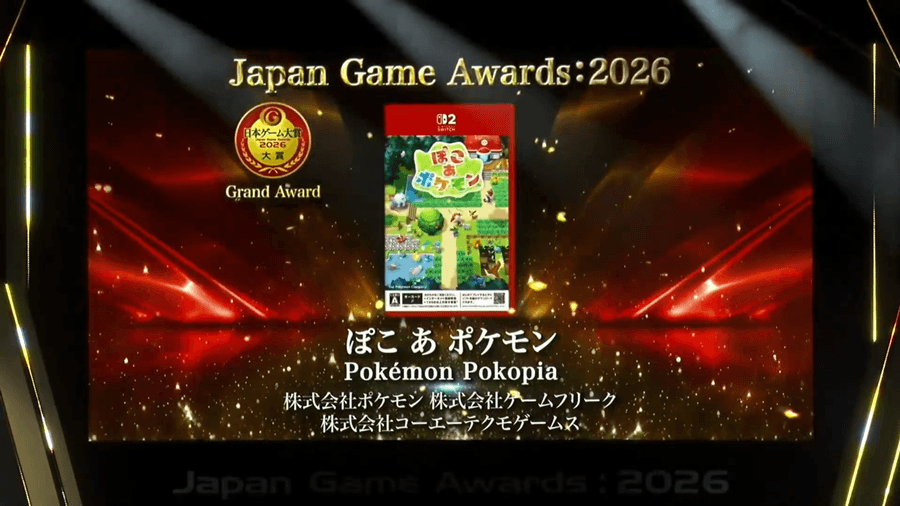

Pokemon Pokopia won the top prize at the Japan Game Awards 2026, capping a 30th anniversary year in which Pokemon also earned the METI Award.
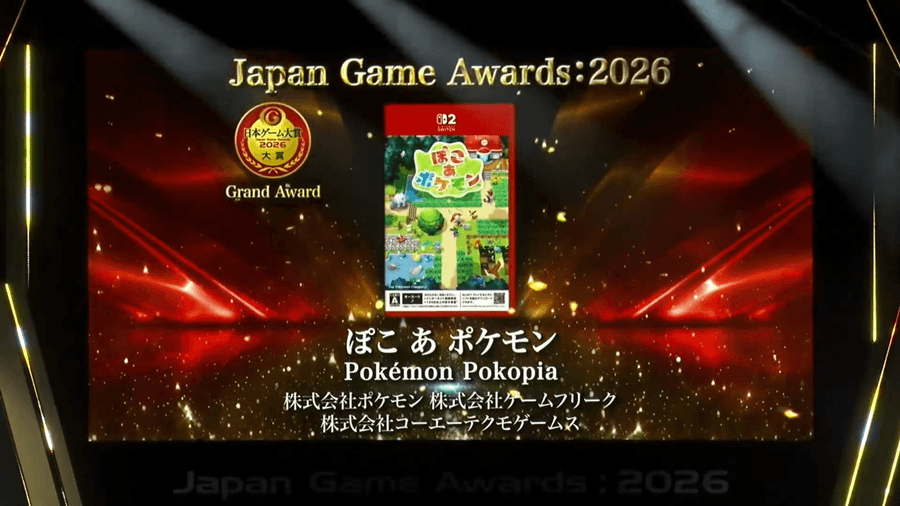
Image: invenglobal.com
Pokemon Pokopia takes the top Japan Game Awards prize
Pokemon Pokopia has won the top honor at the Japan Game Awards 2026, giving Pokemon a headline victory during the franchise’s 30th anniversary year and turning an already successful Switch 2 release into one of Japan’s defining awards stories of 2026.
The award was announced on September 15, according to Siliconera, Polygon, Nintendo Everything, Inven Global, and other coverage of the Japan Game Awards. The naming varies slightly across reports: Siliconera and Polygon describe Pokemon Pokopia as winning Game of the Year, while Nintendo Everything and Inven Global identify the same top result as the Grand Award or Grand Prize. The practical point is the same, but the wording matters for readers tracking the Japan Game Awards 2026 winners across English-language coverage.
Siliconera, citing Famitsu, reports that the awards considered games released in Japan from June 1, 2025 through May 31, 2026, with winners chosen through both a selection committee and public vote. That eligibility window is the first important wrinkle. This is a 2026 award, but it also includes major late-2025 releases, which means Pokemon Pokopia did not win in a thin field or a purely calendar-year race. It beat a slate that included heavy studio contenders, Nintendo staples, horror sequels, RPGs, and smaller design-led surprises.
The full winners list shows how crowded the field was
Pokemon Pokopia’s win sits at the top of a broad Japan Game Awards 2026 slate rather than apart from it. Siliconera lists the Award for Excellence recipients as Death Stranding 2: On the Beach, Digimon Story: Time Stranger, Donkey Kong Bananza, Ghost of Yotei, Inazuma Eleven: Victory Road, Kirby Air Riders, Magical Girl Witch Trials, Paranormasight: The Mermaid’s Curse, Pokemon Pokopia, Pragmata, Resident Evil Requiem, and Silent Hill f. Nintendo Everything reports the same group in its winners list, with minor title-format differences common across regional coverage.
The specialty awards add texture to the result. According to Siliconera and Nintendo Everything, Pragmata won the Breakthrough Award, Word Game won the Game Designers Award, Meccha Chameleon won the Movement Award, and The Super Mario Galaxy Movie received the Special Award. Pokemon as a franchise, separate from Pokemon Pokopia as an individual game, received the Minister of Economy, Trade, and Industry Award.
Inven Global provides more detail on several of those categories, attributing the Minister of Economy, Trade and Industry Award to Pokemon’s influence in Japan and globally. It also describes Pragmata’s Breakthrough Award as recognition for making hacking a core pillar of combat rather than a side mechanic, and says Word Game was honored for a puzzle structure built around characters and written symbols. For a year with blockbuster sequels and brand power everywhere, the judges still carved out room for mechanic-first work. That makes Pokemon Pokopia’s top prize more interesting, because it was not the only winner with a strong design identity.
A cozy Pokemon sandbox won against prestige sequels and genre heavyweights
The clearest tension in this year’s result is genre. Based on the public descriptions available in the supplied source material, Pokemon Pokopia is a social simulation and sandbox spin-off for Nintendo Switch 2, co-developed by Game Freak and Koei Tecmo’s Omega Force and published by Nintendo and The Pokemon Company. Its premise stars a Ditto that imitates a human, then helps cultivate a damaged world and assist other Pokemon along the way.
That places Pokemon Pokopia closer to habitat-building, social play, and environmental craft than the traditional badge-and-battle spine of mainline Pokemon. Polygon reports that the game has sold over 5 million copies since its March release and identifies it as the Switch 2’s second-best-selling game behind Mario Kart World, which Polygon notes was bundled with the console at launch. Those reported sales help explain how a gentler, systems-driven Pokemon spin-off could carry enough public momentum to withstand competition from Resident Evil Requiem, Pragmata, Death Stranding 2: On the Beach, Ghost of Yotei, Kirby Air Riders, and other Award for Excellence winners.
From a design perspective, that is the part worth lingering on. Pokemon has always thrived on collection and affection, but Pokopia appears to have translated those instincts into a different loop: building places where Pokemon can live, changing a world over time, and making the player’s relationship with creatures visible in the landscape itself. The sources here do not provide enough for a review judgment, and this article is not a review. Still, the awards result signals that the Japan Game Awards electorate responded to Pokemon when it stretched toward simulation and sandbox structure rather than relying only on legacy RPG form.
The 30th anniversary turned this from a win into a statement
Pokemon Pokopia’s Game of the Year win lands in the middle of a heavily marked anniversary year. Siliconera reports that Shigeru Ohmori of Game Freak, accepting the award, said he was extremely happy to win in 2026 because it is Pokemon’s commemorative 30th anniversary. According to Siliconera’s account, Ohmori credited everyone’s love for Pokemon as the reason Pokemon Pokopia won.
That anniversary context is not decorative. Pokemon also received the Minister of Economy, Trade, and Industry Award at the same ceremony, which Inven Global describes as a category for games, individuals, organizations, or hardware that have significantly contributed to the development of the Japanese game industry. Inven says the franchise was recognized for its IP influence in Japan and globally. So the night split Pokemon into two kinds of winner: Pokemon Pokopia as the year’s top game, and Pokemon as a long-running industrial and cultural force.
Polygon’s separate reporting on the anniversary year shows how broad that celebration has become. The outlet reports that Game Freak revealed cover art for official 30th anniversary art books spanning material from Pokemon Red, Blue, and Green through Pokemon Legends: Z-A. Polygon says the release is planned as three full-color volumes totaling 1,500 pages, set for December 18, 2026 in Japan, priced at ¥5,500 each, with no English translation announced in that report. Polygon also points to other anniversary products, including a special trading card game set, a Game Boy jukebox with 45 Pokemon music cartridges, and a premium character guide released in August 2026.
Against that merchandise and archive push, Pokemon Pokopia gives the anniversary a current-game anchor. It is one thing to celebrate 30 years through books, cards, logos, and collectibles. It is another for a new release to win Japan Game Awards Pokemon recognition at the top level during the same year.
Nintendo and Pokemon had a strong night, but the awards were not a sweep
Some regional coverage frames the ceremony as a major Nintendo and Pokemon showing, and the winners list supports that reading with limits. Nintendo Everything notes that Pokemon Pokopia was the biggest winner and that The Super Mario Galaxy Movie received the Special Award. Nintenduo, covering the awards in Spanish, says Nintendo and Pokemon took four awards, pointing to Pokemon, Donkey Kong Bananza, Kirby Air Riders, and the Mario movie among the highlighted results.
That does not mean the Japan Game Awards 2026 were only a Nintendo story. Capcom’s Pragmata won the Breakthrough Award and also appeared among the Awards for Excellence. Kojima Productions’ Death Stranding 2: On the Beach, Konami’s Silent Hill f, Bandai Namco’s Digimon Story: Time Stranger, Level-5’s Inazuma Eleven: Victory Road, and other third-party or non-Nintendo-associated projects were also recognized. Inven Global describes Meccha Chameleon as a major indie hit and says the Movement Award recognized its body-paint camouflage twist on hide-and-seek play, while Word Game’s Game Designers Award points to the continuing value of small, legible mechanical ideas.
That mix is healthy for the credibility of Pokemon Pokopia GOTY discussion. A franchise this large can win because of affection, sales, and visibility, but the surrounding list makes clear that the award show was also looking at novelty, social momentum, and craft. Pokemon Pokopia’s victory is strongest when read inside that field, not as an isolated popularity contest.
What readers can actually take from the result
If you are searching for Pokemon Pokopia Game of the Year details because you are deciding whether to buy in, the sources here confirm a few practical points and leave others open. Polygon reports that Pokemon Pokopia launched in March and has sold more than 5 million copies, and the publicly listed platform in the supplied material is Nintendo Switch 2. Polygon also reports that the first expansion added the water-themed Bubbly Basin region and new Pokemon to befriend, while a second expansion is planned for release sometime this year with new Pokemon and many accessories.
The supplied reporting does not include current pricing, performance analysis, file size, upgrade path details, or whether later content changes the best time to start. It also does not provide enough first-hand testing to say how Pokemon Pokopia runs across every Switch 2 play condition. Those are the remaining buyer questions, especially for players who treat social sims as long-term routines rather than weekend campaigns.
What the Japan Game Awards result does clarify is standing. Pokemon Pokopia is no longer only a successful anniversary release or a commercially strong Switch 2 title. It is now the top winner at Japan’s 2026 awards under an eligibility period that included many of the most visible Japanese-market releases of late 2025 and early 2026. For a series turning 30, that is a rare kind of renewal: a familiar world earning its biggest applause for letting players build, tend, and discover at a softer pace.