
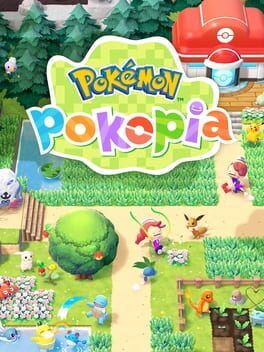
Pokemon Pokopia has passed 5 million worldwide sales as Game Freak’s new development footage explains the NPC design behind Peakychu, Professor Tangrowth, and the cozy spinoff’s battle-free appeal.
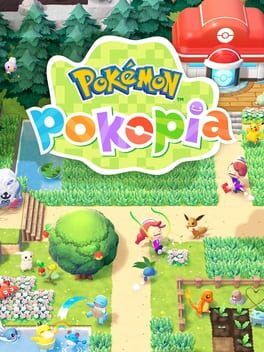
Image: IGDB
Pokemon Pokopia clears 5 million as its softer design pitch comes into focus
Pokemon Pokopia has surpassed 5 million worldwide sales across physical and digital editions, according to Nintendo and The Pokemon Company as reported by Game Developer, Nintendo Everything, Anime News Network, Pixelkin, and Playasia. That is the concrete business headline. The more interesting tension is that the milestone belongs to a Switch 2 exclusive life sim built around a premise Pokemon games usually orbit rather than abandon: no battling.
The timing gives the number extra shape. Siliconera reports that Game Freak has released a behind-the-scenes development video for Pokemon Pokopia in which Shigeru Ohmori, credited there as senior director, general producer, and concept designer on the game, discusses the base concept and the design of new NPCs including Peakychu, Mosslax, and Professor Tangrowth. Siliconera notes the video is available on Game Freak’s official YouTube channel, though its subtitles are auto-generated, so any fine-grain wording should be treated with care unless officially localized.
Placed side by side, the sales figure and the development footage make the same argument from different directions. Pokemon Pokopia is finding a large audience because it turns Pokemon identity into progression, place-making, and companionship rather than competition. The new NPC design details help explain how Game Freak and Omega Force made that shift legible: by building characters who feel like Pokemon after time has passed, after habits have changed, and after the world has settled into a gentler kind of ruin.
The 5 million figure is firm, but the timeline needs careful reading
The sales milestone itself is well supported. Game Developer reports that Nintendo and The Pokemon Company said Pokemon Pokopia surpassed 5 million worldwide sales, counting both digital and physical editions. Nintendo Everything quotes the announcement similarly, saying global sales passed 5 million units across physical and digital versions. Anime News Network attributes the figure to Nintendo and The Pokemon Company and frames Pokopia as a cozy-style life simulation crafting game.
There is a small but worth-noting wrinkle in how the timing is being described. Nintendo Everything’s quoted announcement says the milestone came “just over four months” after Pokopia’s March 5, 2026 launch, while Anime News Network says “about four months.” The provided dates put the announcement coverage in mid-August, which is a little over five months after March 5. The supported facts are the launch date, the mid-August reporting, and the 5 million sales figure. The exact “four months” phrasing should be read as press-release language rather than a precise calendar calculation.
Even with that caution, the scale is significant for a genre pivot. Game Developer reports that Pokopia launched March 5, 2026 for Nintendo Switch 2 and describes it as one of the system’s top-selling titles. The same outlet notes that Switch 2 had sold 23.68 million units globally as of June 30, 2026, and calculates that around one in five console owners have purchased Pokemon Pokopia. That comparison is not a lifetime attach-rate analysis, since the console install base may have changed after June 30, but it does show how strongly Pokopia has attached to the early Switch 2 audience.
A cozy spinoff succeeding by refusing the usual Pokemon combat loop
The official description quoted by Playasia lays out the structure cleanly: players control a Ditto that has taken the appearance of a human, befriend Pokemon, learn their moves, and use those moves to shape the land. Bulbasaur’s Leafage can make wild grass grow, Squirtle’s Water Gun can keep it healthy, and as nature flourishes, more Pokemon appear. The loop is resource gathering, farming, construction, restoration, and social expansion rather than trainer progression through battles.
Pixelkin describes the setup as a desolate world where Ditto restores biomes by building habitats and structures so Pokemon gradually return. Nintendo Everything’s quoted announcement calls Pokopia a relaxing life simulation game devoted to crafting and building, with players restoring a desolate land through Ditto’s transformation skills and crafting abilities. That gives the game a clear progression spine: restore land, meet Pokemon, learn abilities, unlock broader forms of building and traversal.
For RPG players, that matters because Pokopia still has a build-like logic even without combat stats. The “party” is effectively a web of relationships and learned utilities. Progress is expressed through environmental reach, town function, crafting options, and who has been brought back into the world. Pokemon have always been collectible companions, but Pokopia’s design makes their moves into verbs for settlement and repair. That is a different kind of mastery, and the sales figure suggests a large audience was ready for Pokemon as a systems-driven comfort game on Switch 2.
Professor Tangrowth shows how NPC design sells the premise
Siliconera’s report on the Game Freak video gives the strongest design clue: Professor Tangrowth began as a Tangela early in development and was not originally a professor. According to the report, after someone suggested that the character should have evolved into Tangrowth after so much time, and that making it a professor would be more interesting, the team arrived at the Professor Tangrowth seen in Pokemon Pokopia.
That is a small anecdote with large consequences for the game’s tone. Professor characters in Pokemon are traditionally human authority figures who formalize the player’s entry into the world. Making a Tangrowth into the professor reframes expertise as something that has grown out of the world itself. In a game about a Ditto restoring a place with the help of Pokemon, that choice supports the fiction better than another familiar lab-coated human would.
Siliconera reports that, after Professor Tangrowth, the team applied the idea of “how Pokemon would look after a long time” to other Pokemon. That approach helps Pokopia’s supporting cast avoid feeling like simple regional costumes. It ties their appearances and roles to history, aging, damage, adaptation, and accumulated habits. In life-sim terms, the NPCs become environmental storytelling with faces. They imply that this peaceful world has a past, and that restoration is also a process of understanding what happened to the Pokemon who remained.
Peakychu turns a Pikachu variant into a progression-era character
Peakychu is the clearest example of Pokopia’s character-first approach. Siliconera reports that Peakychu is a Pikachu that used too much electricity and short-circuited, leaving it unable to produce electricity in Pokemon Pokopia. The report also notes that one version of Peakychu’s concept art showed it glowing. Siliconera adds that the Japanese word “hakkou” can mean “glowing” or “giving off light,” but can also mean “unfortunate,” which is why Peakychu is described as having the feel of a tragic heroine. The outlet cautions that this pun explanation could have been a joke for the video.
For a series built on type identity, that is a striking turn. Pikachu is the franchise’s most recognizable Electric-type mascot, and Peakychu’s premise is about the loss or exhaustion of that defining trait. In a battle game, that would raise questions of movesets, balance, and viability. In Pokopia, it becomes characterization. The value of the NPC is not whether she can win a fight, but what her condition says about this world and how the player relates to Pokemon who are changed by time.
That is where Pokemon Pokopia NPC design connects directly to the sales story. Cozy games live or die on whether their townsfolk become memorable routines rather than decorative quest dispensers. Peakychu, Professor Tangrowth, Mosslax, and Smearguru, all named in source reporting as new variations, give Pokopia a cast that can carry curiosity between building tasks. Players may arrive for farming, crafting, and Pokemon collecting, but the long tail depends on whether they want to check in with the inhabitants they helped gather into a livable place.
The no-battle rule is a risk, but also a clean audience signal
Siliconera reports that Ohmori described Pokopia’s concept as a “positive apocalypse,” with Pokemon living optimistically in a peaceful world. The same report says he wanted to focus on kindness and was adamant that Pokemon Pokopia should not have battles. That design boundary is important because it removes the franchise’s most durable mechanical pillar and forces every other system to justify the game’s rhythm.
The sales number suggests the risk has not blocked broad adoption. Pixelkin, while noting that 5 million is modest compared with recent mainline Pokemon launches, frames Pokopia as a relatively big success for a new spinoff that shifts genres. Pixelkin compares it with Pokemon Legends: Z-A, which it says sold over 5 million within a single week, and with Pokemon Scarlet and Violet, which it says sold over 10 million copies within days in 2022. Those comparisons keep the milestone in proportion: Pokopia is not behaving like a mainline launch, but it does appear to be performing strongly for a life-sim spinoff on new hardware.
The Switch 2 exclusivity also matters. Game Developer identifies Pokemon Pokopia as a Switch 2 exclusive, and Nintendo Everything’s quoted announcement says the same. A cozy, E-rated Pokemon life sim gives early Switch 2 owners a family-friendly, long-session alternative to action-forward launch-window software, while giving Nintendo and The Pokemon Company a way to broaden the console’s software identity. The game’s success is tied to that positioning: accessible enough for younger players and families, systems-rich enough for players who enjoy incremental restoration and collection.
Current availability, DLC, and whether new players should wait
Pokemon Pokopia is available on Nintendo Switch 2, according to Game Developer, Nintendo Everything, Siliconera, Pixelkin, and Anime News Network. Pixelkin reports that it is rated E for Everyone. Anime News Network adds that the game launched with a Game-Key Card physical release, meaning the cartridge functions as a key to unlock and play the digital version from Nintendo’s eShop rather than containing the full game on the card.
The game is already in its post-launch expansion phase. Nintendo Everything’s quoted announcement says a free software update is out now for all players, adding a Dive move that lets Ditto explore underwater. Anime News Network reports that the free update also allows players to explore and build underwater in existing towns, and lists newly added Pokemon including Manaphy, Popplio, Mudkip, Chinchou, Lanturn, Buizel, Corphish, Totodile, Dhelmise, Golisopod, Corsola, Frillish, Lumineon, and Sharpedo.
For paid content, Part 1 of the Pokemon Pokopia Expansion Pass, Bubbly Basin, is available now. Nintendo Everything says it adds an underwater town, more Pokemon to discover, new furniture, new food, and more. Anime News Network reports that Part 2 will add accessories in late 2026 and Part 3 will add another town in 2027, with Expansion Pass purchasers receiving a Dynamic Ditto print recipe and Rare Pokemetal bonus. If you are waiting for the complete package, the sourced schedule points to 2027 for the full pass. If your interest is in the core restoration loop, the current version already includes the base game, the Dive update, and the first underwater expansion.
The new development footage does not change the buying facts, but it clarifies the design bet behind those 5 million sales. Pokemon Pokopia is succeeding because its systems, NPCs, and tone are aligned around the same fantasy: rebuilding a world where Pokemon are companions, teachers, neighbors, and occasionally strange survivors of time.