
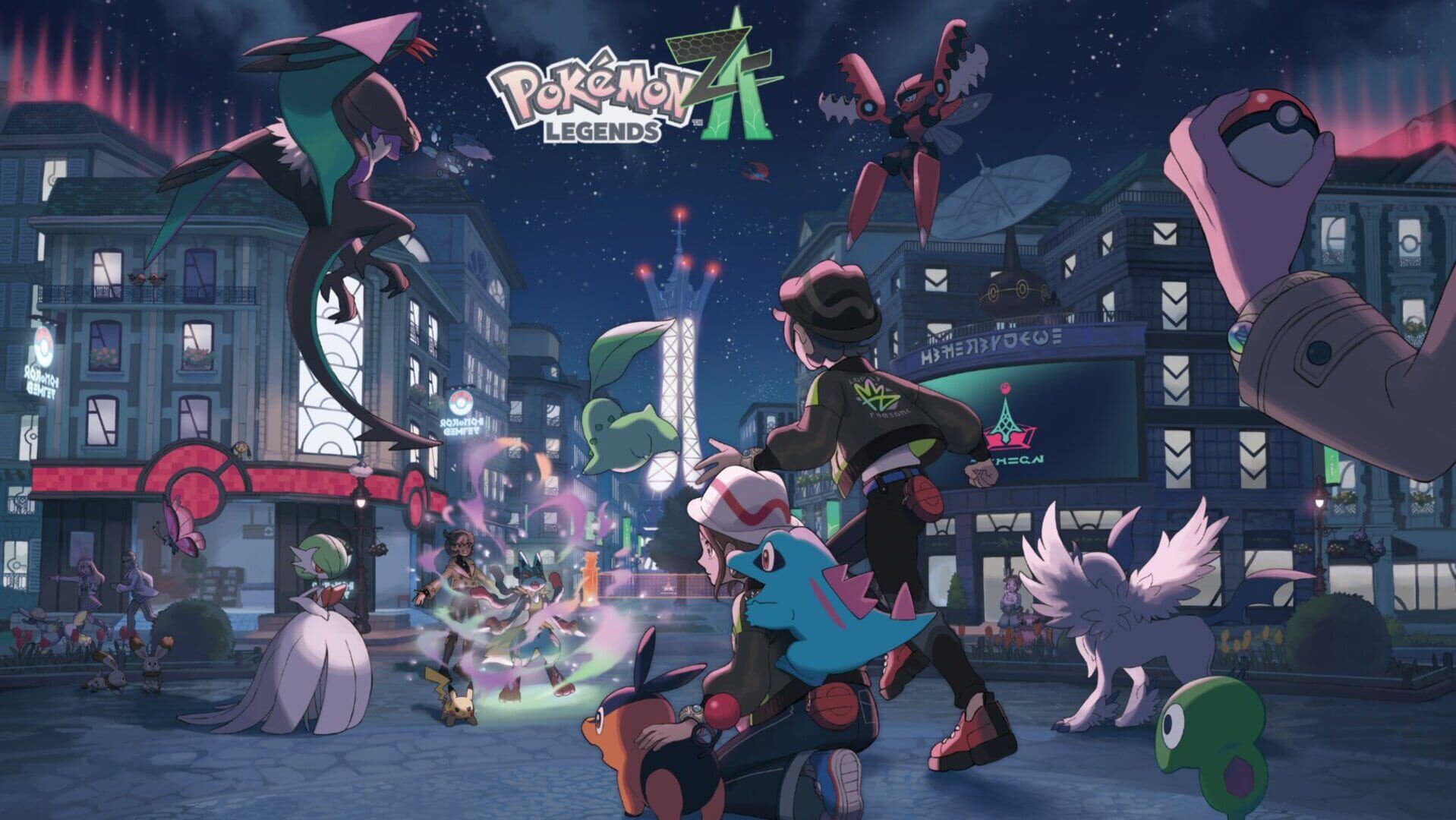

The newly announced five-disc Pokémon Legends: Z-A Complete soundtrack collects 148 tracks from the base game and Mega Dimension DLC. We dig into standout themes, how the score reshapes Lumiose City, and why a YouTube jazz arranger is the perfect symbol of Pokémon’s evolving sound.
Nintendo and Game Freak are treating Pokémon Legends: Z-A’s music like an event. The newly announced Pokémon Legends: Z-A Complete is a five disc, 148 track soundtrack that gathers every cue from the base game and the Mega Dimension DLC, wrapped in a deluxe 36 page booklet. For a series that used to tuck its music away on limited club releases, this bulky set feels like a statement about how important sound has become to Legends.
With that in mind, it is worth looking at how Z-A’s score reshapes Lumiose City, what makes the Mega Dimension material feel so distinct, and why bringing a long running fan arranger onto the team quietly marks a turning point for Pokémon music.
A five disc love letter to Lumiose City
If you only know Lumiose City from Pokémon X and Y, you remember brightness. The original theme is airy and major key, all café bustle and carousel charm. In Legends: Z-A the same streets are wrapped in scaffolding and urban debates over what the city should become, and the soundtrack mirrors that shift. The Complete set exists largely to showcase how many different ways the team can reinterpret one location without losing its identity.
Early game exploration themes lean on softer instrumentation and more patient tempos than X and Y ever did. Piano and woodwinds trace out fragments of the old Lumiose melody, but they rarely land where your ear expects. Even when horns and percussion push the pace, there is a subtle restraint, like the city is holding its breath during redevelopment. Hearing these tracks in sequence on the soundtrack album underlines how the score charts Lumiose’s mood swings from cautious optimism to full on celebration.
Combat music takes the opposite tack. Trainer battles in the inner districts punch harder than previous generations, layered with syncopated drums, distorted synth bass and chopped vocal samples that feel closer to modern action RPGs. The throughline is that everything still folds back to Lumiose’s core motif. You can hear it tucked in the bassline or rising briefly in the strings before the arrangement spins off in another direction. The album format makes that game of musical hide and seek more obvious and more fun to follow.
Standing out on disc one: arrivals, avenues and anxiety
A handful of early tracks help define Z-A’s identity very quickly.
The opening “arrival” theme into Lumiose City sets the tone with its careful balance of nostalgia and newness. A clean electric piano introduces a slowed down fragment of the classic Lumiose melody, but the harmony immediately sidesteps into unexpected chords. Light electronic percussion and filtered ambient noise imitate traffic, crosswalks and distant construction. It feels like stepping into a place you have seen in postcards a hundred times that is suddenly in flux.
From there, the main daytime city exploration track pivots into something more energetic. The tempo climbs, acoustic guitar doubles the melody and a brushed drum kit hints at the jazz tradition that fans associate with Kalos. The key is how sparsely the arrangement is written. There is more space between lines than in X and Y, which gives room for environmental sound to breathe when you are actually playing. On the album, that space makes the track easy to loop without fatigue.
In contrast, the urban planning committee and story event pieces lean into tension. Plucked strings and tense, pulsing synths create a documentary like tone while a distant, reverb heavy trumpet quotes hints of the city theme from far away, like memory intruding into a boardroom. These cues are short on their own, but on the soundtrack they form a miniature suite charting Lumiose’s political debates, rising from cautious strings to full ensemble as stakes escalate.
Night in Lumiose and the sound of a living city
As day slides into night, the Lumiose soundscape transforms without discarding its hooks. Nighttime themes lean harder on jazz harmony, with warm upright bass, brushed drums and extended piano chords, but electronics never entirely vanish. Soft synth pads smear around the edges of the band and subtle sidechain compression causes the ambience to gently pulse, matching the neon signage and tram lights that define Z-A’s night aesthetic.
What stands out most on the album is how the sound design blurs into the score. Field recordings of fountains, traffic hums and arcade bleeps sit low in the mix under certain tracks, then fade away as you transition into battles or indoor spaces. It is less about realistic ambience and more about treating Lumiose as an instrument. On headphones you can trace the invisible geography of the city purely by ear, guided by how buskers, plazas and highrise corridors each get their own tint.
The Pokémon Center and shop themes crystallize this approach. Rather than the peppy, toy like jingle that older generations used, Z-A opts for softer synth bells and lo fi drum loops that feel like the city has wrapped a blanket around you. It is a small example of how the soundtrack uses familiar functional music to sell the idea that Lumiose is a place people live in, not just pass through.
Mega Dimension’s musical fracture
The Mega Dimension DLC gives the composers license to bend the rules they have carefully established in the base game. Where Lumiose is built on city jazz, street pop and environmentally blended soundscapes, Mega Dimension rips that foundation apart.
Across the DLC tracks you hear more aggressive synth design, harsher percussion and a heavier lean on chiptune flourishes that call back to Pokémon’s Game Boy roots. The core Lumiose motif still appears, but it is filtered, detuned or rhythmically distorted, often pushed into the background behind menacing new melodies.
Boss encounters in the Mega Dimension are where the soundtrack feels closest to a crossover between Pokémon and a modern indie action title. Gated choir pads, glitchy breakbeats and sudden dynamic drops sell the sense that this is a parallel version of Kalos where familiar rules have been scrambled. When you return to the original city after a long stretch in the DLC, the comparatively gentle soundscape of regular Lumiose comes across as relief.
On the Complete soundtrack those contrasts are magnified. Hearing a reflective rooftop theme from the base game abruptly give way to a jagged Mega Dimension battle track is like flipping channels between two timelines. It reinforces what the DLC is trying to say about alternate futures and the cost of unrestrained urban experimentation.
From fans to the official credits: a new era for Pokémon music
One of the most fascinating angles on Z-A’s soundtrack is who is making it. In the past few generations, Pokémon has gradually opened doors to outside composers. Toby Fox’s work on Pokémon Sword and Shield, then Scarlet and Violet, marked an early shift. With Legends: Z-A that door opens wider.
Musician and YouTuber Carlos Eiene, better known as Insaneintherainmusic, revealed after launch that he worked on Legends: Z-A as an arranger. For more than a decade he has been posting jazz and fusion covers of Pokémon tracks on YouTube, including a beloved Nimbasa City saxophone arrangement that helped define a fan driven image of Pokémon as fertile ground for jazz improvisation.
Bringing that sensibility inside the studio is more than a fun easter egg. Z-A might be the first mainline style Pokémon game where the music sounds like it grew up on its own remixes. You can hear that in the way certain Lumiose themes are structured. Rhythm sections lock into grooves that feel designed for live performance. Harmonies wander a bit further from the simple diatonic progressions the series relied on in its Game Boy and DS days, landing on the kind of colorful chords that fan arrangers have been using for years.
From a production angle, the overall mix on Legends: Z-A is denser and more contemporary than earlier generations. Sidechain compression, gentle saturation on drums and a more cinematic low end give the score a weight that sits comfortably next to modern open world adventure soundtracks. Yet it rarely loses the clear melodic lines that make classic Pokémon themes so hummable.
How music reshapes the feel of exploration
Pokémon Legends: Arceus already proved how much music matters to an open world Pokémon, but Z-A goes further by making Lumiose itself the star. The city is not just a backdrop of models and textures. Its personality lives in shifting layers of music that respond to where you are, what time it is and how far the redevelopment plan has progressed.
Early on, when districts are rough around the edges and construction dominates the skyline, many area themes are sparse. Instruments sit high in pitch and are peppered with percussive clanks and reversed samples that hint at tools and machinery. As you unlock new zones and see the plan evolve, arrangements fill out with warmer strings and fuller drum kits, as if the city is musically growing into its new identity.
The result is that your emotional map of Lumiose ends up tied more to songs than street names. Players might not remember which boulevard houses a specific café, but they will remember the way the music softens as you cut through quieter alleyways or how the main square theme slowly layers in extra instruments as crowds build at different story beats.
This design also helps short sessions feel satisfying. Because each small task or detour often carries its own musical twist, dropping in for 20 minutes can still deliver a complete little arc of exploration and resolution, framed by sound.
Why the Complete soundtrack matters
For dedicated listeners, the five disc Pokémon Legends: Z-A Complete set is more than a collectors’ trophy. It is a chance to study how Game Freak’s audio team and their collaborators tell a complex story almost entirely through motifs, texture and contrast.
Having every track, including short event stings and the full suite of Mega Dimension cues, lets you hear decisions that are easy to miss in the moment. You can trace how the Lumiose motif gradually becomes more stable and confident across story milestones, or how the DLC deliberately corrupts that material before returning to something more hopeful.
It is also a time capsule for a particular moment in Pokémon’s musical evolution. The series has moved from simple chip melodies through orchestral hybrids to this current, more flexible palette that can accommodate jazz, EDM, ambient sound design and nostalgic chiptune within a single project. Legends: Z-A stands near the center of that evolution, and its soundtrack release preserves that turning point in high fidelity.
Whether a Western print ever materializes or fans have to rely on imports and digital storefronts, Pokémon Legends: Z-A Complete deserves attention from anyone who cares about how game music shapes virtual spaces. Lumiose City may be pixels and polygons, but on these five discs it feels like a real place, reconstructed note by note.