
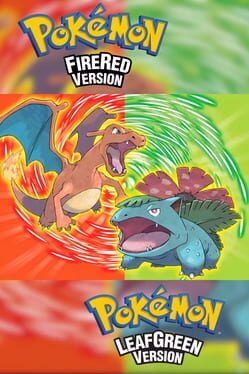

A clear, consumer-first breakdown of the new standalone Nintendo Switch ports of Pokémon FireRed and LeafGreen: what’s in the package, how trading works, what’s going on with Pokémon HOME, why they’re not part of Switch Online, and what it could mean for future classic Pokémon rereleases.
Nintendo is finally bringing Pokémon FireRed and Pokémon LeafGreen to Nintendo Switch, but not in the way many fans expected. Instead of showing up in the Game Boy Advance – Nintendo Classics app for Switch Online, both games are being sold as separate $19.99 digital releases.
If you’re trying to decide whether they’re worth it, or how they actually work in 2026’s Switch ecosystem, here’s everything you need to know.
What’s actually in these new Switch versions?
On a basic level, these are straight ports of the original Game Boy Advance releases. You are getting the classic Kanto remakes with the Sevii Islands post-game and all the same story beats, trainers, and mechanics that defined the third generation versions of Red and Blue.
Nintendo’s own FAQ is explicit that the core games are unchanged. There are no difficulty options, no modern quality-of-life features like autosave, speed-up, or adjustable EXP share, and no new content beyond what was in FireRed and LeafGreen on GBA. Balance, encounter tables, and post-game are all preserved.
The main differences are purely hardware-related. Anywhere the original games used a Link Cable or Wireless Adapter, the Switch versions substitute local wireless communication between consoles. On Nintendo Switch 2, you also get system-level GameChat support while playing, but the games themselves do not gain extra features.
Outside of that, these are the original GBA builds running under Nintendo’s emulator. Performance and visuals are in line with other retro offerings on the system, just without the extra emulator features Switch Online users might be used to, like universal rewind or save states.
One important quirk is language. The ports preserve the way the original cartridges were split by language. In the Americas, FireRed and LeafGreen each come in separate English, European French, and European Spanish versions, with no in-game language toggle. You must pick the correct language SKU on the eShop, and Nintendo is warning buyers to double-check before purchasing.
How does trading and battling work on Switch?
The headline: link features are back, but they are local only.
FireRed and LeafGreen on Switch keep the original multiplayer structure. You head to the second floor of a Pokémon Center to enter the Pokémon Wireless Club, where you can connect with other players, trade, battle, and access the classic minigame. The ports support up to four players over local wireless, mirroring what the Wireless Adapter did on GBA.
There is no online functionality at all. You cannot trade or battle over the internet, and you do not need a Nintendo Switch Online subscription for anything in these games. Communication is console-to-console over local wireless, and that is the full extent of connectivity.
Practically, that means these releases are best suited to households with multiple Switch systems or friend groups that can meet in person. If your nostalgic fantasy was rebuilding a living Pokédex through global trades, that is not what Nintendo is selling here.
What about Pokémon HOME support?
This is the big question for series collectors, and it is also the area with the most caveats.
Early listings for the games mentioned future Pokémon HOME compatibility, and outlets like Nintendo Everything and Newsweek reported that support would be “added at a later time,” allowing transfers from these versions of FireRed and LeafGreen into your modern HOME collection.
Shortly after the announcement, however, players noticed references to HOME quietly disappearing from some regional eShop descriptions. As of Nintendo’s official FAQ, HOME integration is not detailed and no date is given.
The most conservative way to read the situation is that Nintendo and The Pokémon Company intend to support HOME eventually, but are not ready to lock themselves into specifics. Given how complex the existing transfer path from Game Boy Advance to current generations already is, and the fact that these ports preserve Generation 3’s mechanics and move data, it will likely require bespoke handling.
For now, you should treat HOME support as a possible future bonus rather than a guaranteed launch feature. If being able to send your Kanto team forward into modern games is the primary reason you are interested, it is safer to wait for a clear statement and updated documentation before buying.
Why are FireRed and LeafGreen not part of Nintendo Switch Online?
This is where Nintendo has been surprisingly direct. In its official Q&A, the company confirms that FireRed and LeafGreen are considered “special standalone releases” and are not planned for the Game Boy Advance – Nintendo Classics library that comes with a Switch Online + Expansion Pack subscription.
Nintendo’s stated logic is that these ports are a way to celebrate Pokémon’s 30th anniversary by spotlighting what it calls the “ultimate versions” of the original Kanto adventure. In other words, instead of adding the Game Boy Red and Blue cartridges to the Switch Online apps, it chose to reissue the later remakes as premium digital titles.
At the same time, the FAQ goes out of its way to reassure players that the broader strategy for classic software is still centered on Nintendo Switch Online. The company lists existing Pokémon-related offerings in the subscription catalog, like Pokémon Trading Card Game on Game Boy, Pokémon Mystery Dungeon: Red Rescue Team on GBA, and several Nintendo 64 spin-offs, and then repeats that there is “nothing to announce” regarding Red, Blue, or other mainline entries joining those apps.
In plain terms, FireRed and LeafGreen are exceptions. Most other classics, Pokémon or otherwise, are still expected to show up through Switch Online’s libraries. These two Kanto remakes are being treated as direct-purchase, anniversary products instead.
Are the $20 standalone releases worth it?
From a value perspective, the pricing sits in an awkward middle. On one hand, $19.99 is cheaper than the $59.99 packages Nintendo often charges for remastered compilations, and a legitimate, portable version of third generation Kanto has historically been locked to aging GBA cartridges. On the other hand, they are far more expensive than the “free with subscription” positioning of other retro titles, and you have to buy FireRed and LeafGreen separately if you want both sets of version-exclusive Pokémon.
Whether that feels fair depends entirely on what you want out of these games. If you are chasing a nostalgic, authentic GBA experience with original mechanics, offline trading with a tight circle of friends, and the full Sevii Islands arc, these ports deliver exactly that in a convenience-first package on modern hardware. If you were hoping for a feature-rich anniversary remaster with speed options, visual filters, robust online, and guaranteed HOME integration, this offer will likely feel barebones.
One subtle upside is ownership. Because these are not tied to Switch Online, you are purchasing specific titles that remain playable on your account regardless of your subscription status. For players who dislike rental-style access or who do not want to maintain an NSO membership just to keep playing older games, that is a meaningful difference.
What does this signal for future classic Pokémon rereleases?
The biggest question around FireRed and LeafGreen on Switch is what they represent going forward. Do they mark a quiet return to the Virtual Console model, where classic games are sold à la carte, or are they one-off exceptions meant to mark a major anniversary?
Nintendo is already trying to manage expectations. In its support FAQ and in comments highlighted by outlets such as IGN and My Nintendo News, the company explicitly says that these releases should not be read as a broad shift away from the Switch Online model. It reiterates that the focus remains on delivering most classic content through the subscription service.
At the same time, these ports do break precedent in a few important ways.
First, they show that Game Boy Advance mainline Pokémon titles are not automatically destined for the Nintendo Classics apps. The fact that Red Rescue Team is on the GBA Switch Online app while FireRed and LeafGreen are being sold separately suggests that The Pokémon Company may treat core entries and spin-offs differently, especially when it sees a clear opportunity to sell a beloved generation outright.
Second, the way Nintendo describes FireRed and LeafGreen as the “ultimate” versions of Kanto could provide a template. It is not hard to imagine, for example, future ports of HeartGold and SoulSilver, Platinum, or even Black and White getting similar à la carte treatment while earlier, more limited versions of those regions remain either unported or limited to subscription services.
Finally, the muddled messaging around Pokémon HOME hints at another potential direction. If these ports do end up supporting transfers into HOME, that immediately makes them more than just nostalgia pieces. They become alternate, paid entry points into the modern ecosystem for competitive players and collectors, which gives The Pokémon Company a strong incentive to keep treating them as premium products rather than subscription freebies.
Right now, the safest assumption is that FireRed and LeafGreen are test cases. They let Nintendo and The Pokémon Company gauge appetite for direct-purchase classic Pokémon titles on modern hardware, experiment with how far fans are willing to go for version exclusives and potential HOME links, and still keep the subscription catalog as the main destination for most of the back catalogue.
Should you buy FireRed or LeafGreen on Switch?
If you want a faithful, portable version of third generation Kanto with local multiplayer and you are comfortable paying $20 for a single classic RPG, FireRed and LeafGreen on Switch do what they promise. They are clean, no-frills ports with the full original content and the convenience of modern hardware, decoupled from any subscription requirement.
If you care more about online play, robust emulator features, or guaranteed integration with Pokémon HOME, there is good reason to wait. Watch for Pokémon Company updates about HOME support and keep an eye on how these releases perform. Their success or failure could shape how the rest of the classic Pokémon library makes the jump to current and future Nintendo systems.