
A practical guide to the new Pokémon FireRed & LeafGreen releases on Switch and Switch 2, breaking down what’s changed from GBA, how one-way Pokémon HOME transfers actually work, and why these ports are a huge deal for long-term series preservation.
The Return To Kanto On Switch And Switch 2
The Game Boy Advance remakes of Pokémon Red and Green are finally on modern hardware. Pokémon FireRed and LeafGreen have arrived as separate digital releases on Nintendo Switch, with forward compatibility confirmed for Switch 2 as part of Nintendo’s broader cross‑gen rollout.
These are not new remakes. They are authentic, emulated versions of the 2004 GBA games tuned for contemporary hardware and services. Think of them as how Nintendo has treated classic Mario or Zelda reissues, but with a crucial twist: support for Pokémon HOME.
For anyone who skipped the GBA era or lost access to their cartridges, this is now the most straightforward way to play a classic, pre‑physical‑special split Kanto on a TV or handheld, without hunting down aging hardware.
What’s Actually Changed From The GBA Originals
Nintendo and The Pokémon Company have been clear that these releases are “broadly the same” as the originals. Under the hood, they are GBA builds running via an internal Switch‑side emulator. That means the core experience is preserved: the battle system, the level curve, the map layouts, and the FireRed / LeafGreen Pokédex all behave exactly as you remember.
The meaningful changes sit around the edges in how you access and interact with the games, not in the design of Kanto itself.
First, you now get modern system‑level conveniences. The games benefit from the Switch’s suspend and resume, so you can instantly sleep the console mid‑route and pick up where you left off without worrying about saving at a Pokémon Center. You also no longer depend on tiny GBA cartridges and an aging handheld screen, which is an accessibility win as much as an aesthetic one.
Second, multiplayer has been translated into a local wireless model. Where the GBA versions used link cables for trades and battles, the Switch ports support trading and battling between local consoles. Functionally the experience is the same: you still use the in‑game facilities in Pokémon Centers, you still assemble link parties, but the physical connection is abstracted away to Switch’s wireless layer.
Third, event content that once relied on one‑off distributions has effectively been normalized. Original FireRed and LeafGreen required rare physical events or E‑Reader style distributions to obtain some Mythical Pokémon or key items. The new ports integrate those event Pokémon or unlock conditions in‑game rather than expecting you to chase long‑dead promotions. You are still playing within the original Gen 3 rule set, but without the brick wall of 20‑year‑old event logistics.
Outside of that, FireRed and LeafGreen “on Switch” is deliberately conservative. There is no Fairy type, no Gen 4+ moves, no retrofitted abilities from later generations, and no modern convenience features like infinite TMs or reusable Hidden Machines. It is classic Gen 3 Kanto, preserved as a time capsule.
Visuals And Performance On Modern Hardware
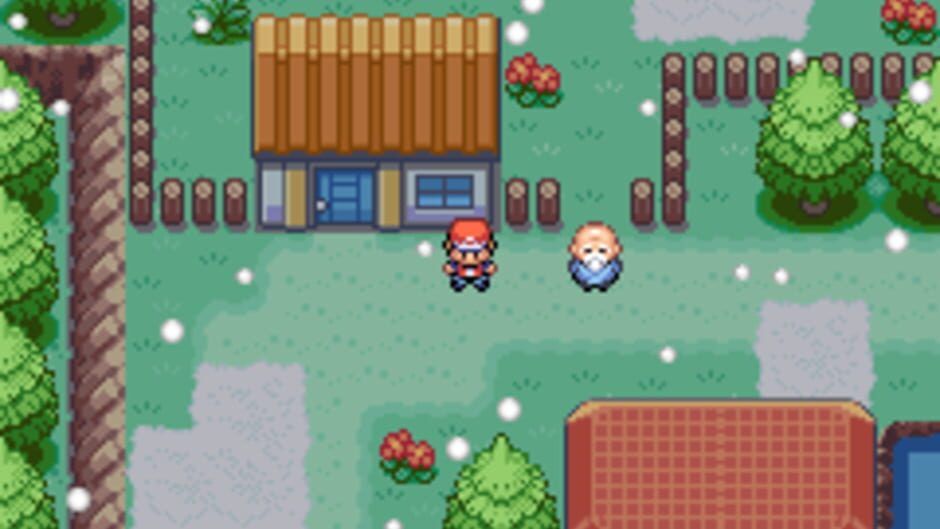
Since the ports are using emulation rather than a rebuilt engine, the visuals are authentic pixel art, simply output at higher resolutions. Sprites, tilesets, and battle animations are the same assets seen on GBA, but scaled cleanly for HD displays.
On Switch and Switch 2, there is no performance concern. The games run at a stable framerate with input latency dictated mostly by your display rather than the software. This reliability matters for things like tight movement in the Game Corner or reacting to battle text, but the real advantage is preservation: the game logic behaves identically to GBA, which is important for long‑term compatibility research and for players who care about glitches, speedrunning, or old link battle metas.
How Pokémon HOME Support Works
The standout feature that makes these ports more than nostalgia pieces is integration with Pokémon HOME. It took a brief detour through confusion, with HOME mentions temporarily removed from store listings before Pokémon Day 2026, but The Pokémon Company has now confirmed support.
HOME connectivity is not available immediately at launch. It arrives via a post‑launch update to Pokémon HOME itself and a small patch to the FireRed and LeafGreen apps on Switch. Once the feature goes live, you get a defined path to move Pokémon you catch in these GBA‑style ports into the modern ecosystem.
One‑Way Only: From Kanto To HOME, Not Back Again
The first rule to understand is direction. Transfers with these ports are one‑way.
You can move Pokémon from FireRed and LeafGreen on Switch into Pokémon HOME. Once a Pokémon leaves Kanto and arrives in HOME, it cannot be sent back down into the FireRed or LeafGreen apps. The ports do not implement full two‑way synchronization.
This mirrors the logic of Bank‑to‑HOME transfers and most modern compatibility paths. Once a Pokémon crosses that generational barrier, it is effectively remade under the most modern data schema. For series preservation, this restriction is acceptable because the point is being able to rescue and centralize your collection rather than round‑trip them back to older rule sets.
What You Can Send From FireRed & LeafGreen
Anything that was legally catchable or obtainable in the original GBA releases, plus the now‑integrated event Pokémon, is eligible to enter HOME, with a handful of usual modern caveats.
Regional forms and new evolutions from later generations obviously do not exist in these games. When these Pokémon are moved into HOME and then into titles like Scarlet, Violet, or Legends Z‑A, their movepools and other data update to match the destination game’s rules. A Kanto Vulpix from LeafGreen, for instance, will become a standard Kantonian Vulpix with a moveset trimmed or remapped if certain moves do not exist anymore.
Ribbons and previous non‑existent metadata are generated according to HOME’s existing logic for “virtual origin” GBA transfers. The ports emulate the behavior of original cartridges being brought up through the legacy Pal Park and Bank paths, but in a streamlined, digital‑only form.
Where Those Pokémon Can Go Next
Once your LeafGreen or FireRed Pokémon live inside HOME, they follow the usual branching rules.
Pokémon that are registered in the destination game’s regional Pokédex can be transferred from HOME into current titles. At the time of confirmation, that includes paths into Pokémon Scarlet and Violet and into the upcoming Legends Z‑A, with additional support for new releases like Pokémon Champions.
The key detail is that FireRed and LeafGreen port Pokémon participate in the same ecosystem as creatures from earlier Virtual Console releases and modern titles. They are not walled off in a special “classic” silo. For competitive and collection‑focused players, this means you can create challenges like a “pure Kanto Gen 3‑origin” living dex and still end up with everything safely parked in HOME.
How To Use HOME With FireRed & LeafGreen In Practice
Once the compatibility update lands, the process will feel familiar if you have used HOME with other titles.
You boot Pokémon HOME on your Switch, log into the same Nintendo Account that owns FireRed or LeafGreen, and then select the new GBA Kanto game from the list of connected titles. HOME reads a representation of your game’s save data and exposes eligible Pokémon boxes on a grid interface. From there, you drag and drop Pokémon into HOME’s cloud boxes.
There is no mini‑game like Pal Park’s catching fields or Poké Transporter’s old UI. The transfer is abstracted to a simple management screen. Once completed, those Pokémon appear in your HOME collection with their original game of origin marked as FireRed Version or LeafGreen Version (Nintendo Switch), making them easy to track for challenge runs or bragging rights.
Because transfers are one‑way, it is worth planning ahead. Many players will maintain a “challenge file” on the FireRed or LeafGreen side for nostalgic Nuzlockes or monotype runs, and a separate file whose primary purpose is to farm or breed specific Pokémon for upward transfer. With only one save slot per game, that planning becomes a matter of when, not if, you are ready to push your team forward.
Why These Ports Matter For Long‑Term Pokémon Preservation
Beyond the excitement of revisiting Kanto, FireRed and LeafGreen on Switch and Switch 2 are important for how they address series preservation. Historically, Gen 3 has been one of the most fragile eras in the franchise. Original cartridges rely on internal batteries and aging handhelds, and the official path to move these Pokémon forward once depended on physical hardware chains that are now impractical for most players.
By placing FireRed and LeafGreen on a current storefront, at a fixed digital price, Nintendo and The Pokémon Company are stabilizing access to a key part of the series’ history. Players no longer need to pay inflated second‑hand prices for GBA cartridges just to experience Gen 3 Kanto, and they no longer have to maintain a stack of legacy consoles in working order to migrate their teams.
The HOME connectivity closes a loop that was in danger of being permanently broken. Previous attempts at preservation, like the 3DS Virtual Console releases of the original Red, Blue, and Yellow, introduced modern transfer paths but were trapped behind a dying storefront. When the 3DS eShop closed, so did the official way to bring those specific virtual Kanto Pokémon forward.
With FireRed and LeafGreen on Switch, the preservation story is cleaner. The games live on active platforms, tied to Nintendo Accounts rather than a single device, and they plug directly into HOME, which itself has been positioned as the long‑term “box in the sky” for the franchise. As long as HOME is maintained and the Switch and its successor platforms remain supported, Kanto‑origin Pokémon have an official bridge into whatever comes next.
It also sends a signal about how The Pokémon Company may treat other generations. If these ports succeed, it strengthens the case for similar treatment of games like Emerald, Platinum, HeartGold and SoulSilver, or even the GameCube RPGs, all brought forward intact but connected to a living storage service.
Playing FireRed & LeafGreen In 2026: Who Are These For?
On one level, they are for everyone who grew up with GBA and wants an easy way back into that version of Kanto. The games still hold up as linear, well‑paced RPGs with brisk battles, tightly tuned gym progression, and a postgame that pushes you into deeper team building.
For competitive players and collectors, the ports are also a tool. They offer a sanctioned context in which to catch or breed Gen 3‑era Kanto Pokémon under authentic rules, then promote them into HOME to join modern collections. A competitively bred Charizard with a FireRed origin tag carries a certain intangible prestige, and the ports make that hunt practical again.
And for preservation‑minded fans, these releases demonstrate a concrete, if imperfect, template for how to safeguard two decades of design history. The games remain faithful to their 2004 selves, even where that means embracing friction or archaic design, but they gain the single most valuable modern affordance: a door to the future.
If you want a pure snapshot of Gen 3 Kanto that also connects to Scarlet, Violet, Legends Z‑A, and whatever Pokémon Champions turns out to be, the Switch and Switch 2 ports of FireRed and LeafGreen are now the definitive way to play.