

A newly surfaced internal Game Freak documentary has given fans a rare look at Diamond and Pearl beta Pokemon, including unused evolutions, alternate starters, and a yellow Shellos idea with surprising modern relevance.
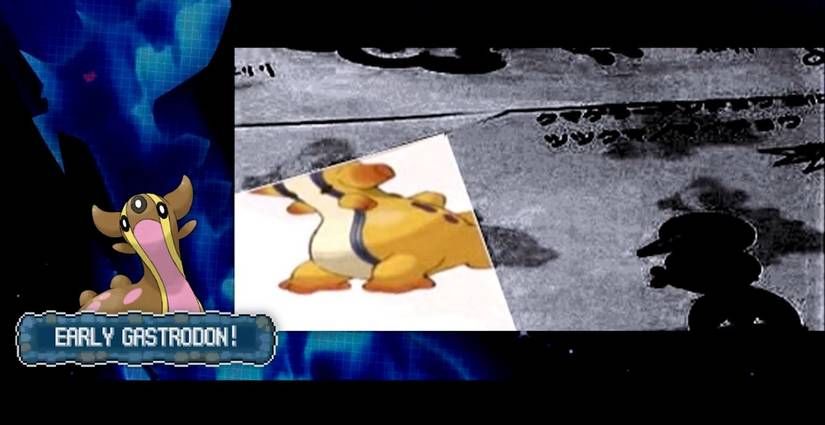
Image: polygon.com
A private Game Freak documentary has opened a rare Sinnoh design vault
The strongest confirmed development is also the reason this story needs careful handling: footage from an internal Game Freak documentary about the making of Pokémon Diamond and Pearl has surfaced online, giving fans a rare look at early monster concepts, scrapped Pokemon designs, and apparent unused Pokemon evolutions from the Nintendo DS era.
Polygon, IGN, Nintendo Everything, Kotaku, and Game Rant all identify the source as Pokémon Diamond and Pearl: Behind the Scenes DVD — Make All, a 43-minute documentary produced for Game Freak staff rather than public release. Polygon reports that the DVD was acquired by fans, ripped, and uploaded to the Internet Archive. IGN describes it as a staff documentary originally handed out internally, while Kotaku updated its story to clarify that the documentary was obtained legitimately via a DVD copy rather than through an illicit hack.
That distinction matters. This Pokemon development leak is not an official archival release from Nintendo, The Pokémon Company, or Game Freak. It is a public surfacing of internal material whose images are being interpreted by archivists, fans, and reporters. The footage appears to show real development artifacts, but many individual creature identifications remain provisional because the documentary is in Japanese, some art appears only briefly, and several background images are low-resolution or partially obscured.
What the Diamond and Pearl beta Pokemon footage reportedly shows
Across the newly surfaced footage, outlets and archivists have identified a broad set of early Gen 4 creature work. IGN reports that fans are celebrating the unofficial reveal of more than 100 previously unseen designs, including early drafts of known Pokémon, numerous scrapped species, and cut evolutions. Nintendo Everything similarly says the DVD footage brought forward scrapped Pokémon and beta designs from Diamond and Pearl’s development.
The reported finds range from alternate versions of the Sinnoh starters to creatures that look like they may have been abandoned entirely. Polygon notes early designs for Turtwig, Piplup, and Chimchar, including a Chimchar with flaming-red butt cheeks, a Turtwig that may have begun as a more armadillo-like creature, and Piplup evolution line colors that make Empoleon look as if it may once have been considered for a Water and Ice direction rather than its final Water and Steel typing. Those are visual readings of concept material, not confirmed type documents.
IGN lists evidence of discarded evolutions or pre-evolutions connected to Delibird, Kecleon, Stantler, Lapras, Plusle, and Minun, along with completely cut creature concepts based on cranes, crickets, snails, molluscs, goats, mice, a platypus, a swordfish, beansprouts, and clover. Polygon also points to a scrapped “Foam Dog” water starter, a gnome-like Delibird evolution, and an early version of Sandyghast. Nintendo Everything’s roundup names yellow Shellos, beta Arceus, beta Dialga and Palkia, beta starter lines, and possible scrapped evolutions for Glameow and Lumineon.
The result is less a clean alternate Pokédex than a glimpse into a branching design process. Some sketches appear to be early versions of monsters players eventually caught in Sinnoh. Some may be ideas revisited much later. Others may have died in preproduction without ever becoming battle-ready species, final typings, move pools, animations, or Pokédex entries.
Unused evolutions are the clearest window into Game Freak’s progression choices
From an RPG systems perspective, the most revealing discoveries are the apparent missing evolutions and pre-evolutions. A scrapped monster can be a one-off concept, but a cut evolution changes how a species functions in a party, how it fits into encounter pacing, and how the player reads long-term investment.
IGN reports that the footage includes evidence of discarded Delibird and Kecleon evolutions, Stantler and Lapras pre-evolutions, and what look like baby Plusle and Minun. Game Rant also points to reported scrapped evolutions for Lumineon, Glameow, and Delibird, based on material circulated from the documentary and CentroLeaks posts. These identifications should be treated as reported readings of visible development art, not as official confirmations from Game Freak.
Even with that caution, the implications are interesting. Delibird, Kecleon, Stantler, Lapras, Plusle, and Minun occupy very different mechanical niches. A Delibird evolution could have turned a novelty Ice and Flying Pokémon into a more conventional late-game option. A Kecleon evolution might have expanded the role of a gimmick-driven ability user. A Lapras pre-evolution would have changed when the line could enter a player’s journey, potentially making a famously strong standalone Pokémon part of a longer growth arc.
That is why unused Pokemon evolutions matter to Pokémon history. Evolution is one of the series’ central reward structures. It is how a cute early catch becomes a mainstay, how a weak oddity earns a second chance, and how regional Pokédex planning controls power curves. When development art suggests that Game Freak considered adding or removing links in those chains, it shows how fluid Sinnoh’s creature economy may have been before Diamond and Pearl locked into their final roster.
Yellow Shellos connects an old Sinnoh idea to current Pokémon lore
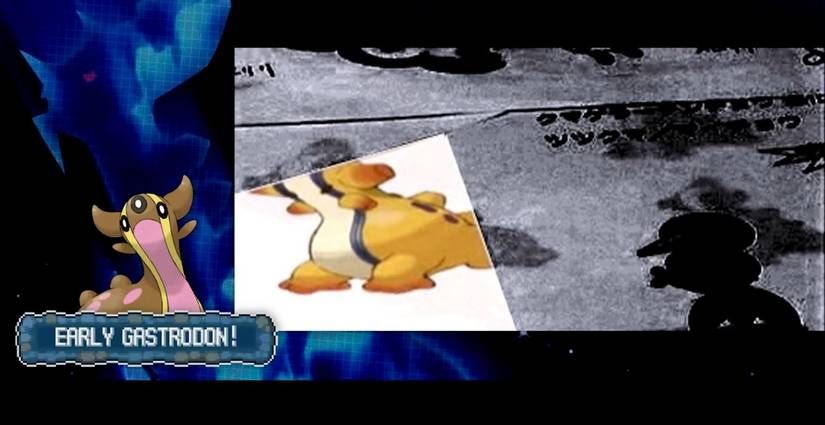
The yellow Shellos and Gastrodon material has become the most lore-charged part of the Pokemon Diamond and Pearl leak because it appears to connect an abandoned Gen 4 concept with a modern Pokémon reference. Polygon reports that archivist Lewtwo noticed background papers in the documentary that showed an early yellow Gastrodon design. According to Polygon, the footage was only 480p, the papers were not the documentary’s focus, and archivists spent hours boosting contrast to read small portions of the designs.
In the released Diamond and Pearl games, Shellos and Gastrodon have regional color forms tied to Sinnoh’s West Sea and East Sea. Polygon notes that Game Freak director Junichi Masuda had conceptualized the broader regional-appearance idea during the creation of Pokémon Ruby and Sapphire, but it was not implemented until years later through Shellos and Gastrodon in Diamond and Pearl.
The newly discussed wrinkle is that Pokémon Pokopia reportedly references researchers searching for a yellow Shellos, even though Polygon says Shellos is not in Pokopia. If that reference is accurate, it suggests Pokopia’s writers may have pulled from old Game Freak concept history rather than inventing a random color gag. Polygon frames this as a possible full-circle moment for the Sinnoh line, with Lewtwo calling it “mind-bendingly unbelievable.”
The future-facing part remains speculation. Polygon mentions rumors that Pokémon Winds and Waves will introduce 300 new monsters and says many are rumored to be regional variants, which would fit Shellos thematically. Polygon also reports that the Switch 2 Pokémon games will introduce 3D ocean exploration. None of the provided source material confirms that yellow Shellos or yellow Gastrodon will appear in Winds and Waves. For now, the safe conclusion is narrower: the documentary appears to show a yellow Shellos or Gastrodon concept, and Pokopia appears to acknowledge that color in lore.
The documentary is valuable because it shows process, not because every sketch was almost playable
One trap with Diamond and Pearl beta Pokemon is treating every piece of concept art as a “lost Pokémon” that narrowly missed release. Development rarely works that cleanly. Creature design, especially in a collection RPG with hundreds of combatants, is an iterative system. Shapes, color palettes, animal bases, typings, animations, and roles can split apart and recombine before a final species exists.
Polygon reports that fans on ResetEra have been comparing the documentary’s images to later Pokémon, including designs that look as if they could have evolved into Scarlet and Violet’s Chien-Pao or a black woodpecker that may have influenced Starly. Polygon’s wording is careful: these are fan comparisons, not confirmed lineage charts from Game Freak. Kotaku similarly describes stills that look like a proto-Bidoof, a yellow Gastrodon, and a Delibird evolution, while emphasizing that the untranslated documentary leaves much of the spoken context unavailable.
That uncertainty does not make the material unimportant. It makes it archival rather than definitive. The documentary reportedly shows Game Freak’s offices, staff at work, and the process used to design Sinnoh through sketches, paper maps, and real-world block models, according to IGN. Nintendo Everything says the footage covers a two-year development history from Game Freak. For players who think about Pokémon as routes, party slots, HM-era traversal, gym sequencing, and late-game identity, that production context is as useful as the monster silhouettes themselves.
A starter that begins as a foam-headed Water-type dog, a Grass-type wolf, or an armadillo-like Turtwig concept tells us that the Sinnoh starters were not inevitable. Empoleon’s apparent early color direction raises questions about how typing and royal penguin imagery settled into the final Water and Steel design. Beta Dialga and Palkia sketches matter because legendary Pokémon carry box-art, lore, and mechanical weight. These are not trivia scraps alone. They are evidence of how a generation’s progression fantasy was narrowed into a coherent final game.
Preservation, secrecy, and the limits of fan interpretation
The story also exposes a tension around Pokémon history. IGN notes that Game Freak guards its design process with significant secrecy and says it is unlikely this kind of internal documentary would be made today. Kotaku’s updated framing is important here: the material was reportedly uncovered through a legitimate DVD copy, not through a hack, but it was still created for internal use and was not released through official Pokémon channels.
That leaves readers in a middle position. The Internet Archive upload and YouTube copies make the documentary watchable, and Lewtwo’s archive and analysis have become central resources for fans trying to catalogue the footage. Polygon credits Lewtwo, Neos, and other archivists with helping bring the documentary to light, while IGN points readers to Lewtwo’s archive as the best collection of the material. At the same time, Nintendo, The Pokémon Company, and Game Freak have not provided an official annotated version, translation, or confirmation list in the supplied sources.
So the responsible way to read the Pokemon development leak is to separate the layers. It is confirmed by multiple outlets that an internal Diamond and Pearl documentary DVD has surfaced publicly. It is reported by IGN that more than 100 unseen designs appear in or around the footage. It is visible enough for outlets to identify many early and scrapped concepts, but individual claims such as “this became that later Pokémon” or “this would have had this typing” often remain interpretation unless the documentary text or official materials explicitly say so.
For fans, the practical advice is simple: enjoy the archive, but do not treat every social media crop as canon. If you want the strongest context, watch the 43-minute documentary through the Internet Archive or the KASHIWA 3RD YouTube upload identified by Polygon and IGN, then compare it with Lewtwo’s breakdown. Remember that the documentary is entirely in Japanese in the versions described by outlets, and many of the most exciting creature shots appear fleetingly. The material is historically rich, but it is still development material, not a hidden Pokédex awaiting release.
Sinnoh looks less fixed, and that is the real historical find
Diamond and Pearl were released in Japan in September 2006 and came to Western markets in 2007, as noted by Polygon and Game Rant. Nearly 20 years later, the newly surfaced Make All documentary reframes Gen 4 as a far more fluid project than the final DS cartridges suggest. The Sinnoh players remember was built from decisions that left behind alternate starters, possible baby forms, cut evolutions, unused regional variants, and legendary designs that did not survive to the box art.
That is the lasting value of this Pokemon Diamond and Pearl leak. The scrapped Pokemon designs are fun to catalogue, but the deeper lesson is about selection. Pokémon’s identity depends on what Game Freak chooses to elevate into a route encounter, a starter, a rival’s ace, a legendary myth, or a regional form. The unused designs show how many viable-looking ideas can sit outside that final structure.
For completionists, lore readers, and team builders, the footage adds texture without rewriting the games. Delibird did not gain that reported Sinnoh evolution. Lapras remained a standalone line. Shellos and Gastrodon launched with two sea forms, not three. Empoleon became Water and Steel. Those final choices still define Diamond and Pearl as shipped.
The documentary’s gift is that it lets players see the roads Game Freak did not take. Treated carefully, with attribution and skepticism, it is one of the clearest public looks yet at how a Pokémon generation sheds possibilities before becoming history.