
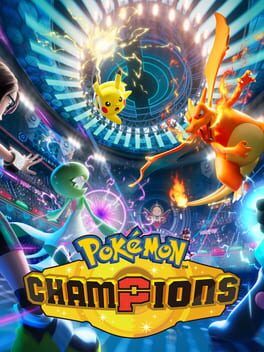
With Pokémon VGC officially moving off the mainline RPGs and onto Pokémon Champions, competitive play is entering its first true live‑service era. Here is what that means for players, onboarding, monetization expectations, and the future of Pokémon esports.
A New Home For Competitive Pokémon
For the first time since VGC began in 2009, the official Pokémon video game championships are no longer tied to the latest mainline RPG. With the 8 April 2026 launch of Pokémon Champions on Nintendo Switch, Play! Pokémon is transitioning VGC to a single, dedicated platform that will serve as the standardized stage for regional, international and World Championships play.
According to The Pokémon Company’s own announcement, Champions will be the required platform for all official VGC matches once it is fully rolled into the 2026 Championship Series calendar, starting with events like the Indianapolis Regional Championships. Nintendo Life’s reporting frames this as the end of the Scarlet & Violet era and the beginning of a new, more centralized approach to competitive battling.
Rather than being rebuilt around each new set of mainline games, VGC is being pulled into a persistent, live‑service style product that can evolve on its own schedule. That might sound like a simple logistics tweak, but for players it changes almost every part of how competitive Pokémon is experienced.
From Side Mode To Primary Product
Historically, VGC has lived inside whatever the current pair of mainline games happened to be. Ranked Battle and live tournaments had to share space with story campaigns, casual online features and the long tail of a traditional boxed release. Once a new generation arrived, the competitive rulebook was effectively reset and the community had to migrate again.
Champions flips that relationship. VGC is no longer a competitive mode bolted onto an RPG, it is the entire proposition. The game is built from the ground up as a battle client, tuned for spectating, matchmaking and balance updates. That means:
Players can expect more stable rulesets and formats that run for longer stretches without being interrupted by a new cartridge launch. Balance patches, content drops and ruleset changes can happen on a timeline that suits tournaments rather than retail.
Organizers gain a single unified client to run events on, from online Global Challenges to the Pokémon World Championships. That should reduce technical variance between events and allow features like standardized time controls and spectator tools to reach parity worldwide.
Developers can decouple metagame evolution from story content. Mega Evolution’s return in Champions’ first regulation set is a strong early signal that the design team wants the freedom to craft formats that are fun to play and watch, regardless of what the next mainline RPG looks like.
Onboarding A New Wave Of VGC Players
The other big shift is accessibility. Champions is officially described as “free‑to‑start,” and modern reporting around the game consistently positions it as a low‑friction entry point into competitive Pokémon.
The biggest barrier to entry for VGC has never been learning type charts. It has been team building. In the mainline games, creating a single optimized team could take dozens of hours of breeding, training and item grinding. That cost gatekept new players and made it difficult for casual fans to casually dip a toe into tournaments.
Champions is designed to flatten that curve. Storage, team slots and tools like Training Tickets suggest a system where building and iterating on teams is closer to deck building in a digital card game than breeding in an RPG save file. Combined with HOME integration, that means:
New players can get into actual battles quickly. A free client on hardware many players already own gives curious fans a way to try laddering without committing to a 60‑hour story playthrough first.
Returning veterans no longer need to restart from scratch with every generation. If Champions does become a long term hub, time invested learning the systems and climbing the ladder should carry forward for years instead of resetting when the next region drops.
Tournament pathways can be surfaced inside the game itself. Expect clearer in‑client links to online events, leaderboards and Worlds qualification tracks, which is a big step up from the current reliance on external websites and social media.
If Pokémon can turn Champions into a “download, play, understand the scene in an evening” product, it has the chance to expand VGC beyond its current core audience and closer to the accessibility of titles like Pokémon Unite or even mobile gacha battlers.
Monetization Without Turning Into A Gacha
Nintendo Life’s follow‑up coverage digs into reported early pricing details that surfaced from PAX East. The headline is that Champions will be free‑to‑start with optional paid layers, namely a one‑time Starter Pack, a free and premium Battle Pass and a yearly membership. None of those figures are finalized by The Pokémon Company yet, but even at the concept level they paint a picture of how VGC is likely to be funded.
The Starter Pack concept points to quality of life being one of the main paid levers. More box space and extra tickets are convenience and progression accelerators. For a serious competitor who spends hundreds of hours theorycrafting and testing cores, paying once to avoid storage friction is an easy sell that does not directly affect battle outcomes.
Battle Passes are now standard in live‑service games and here they make sense as the primary cosmetic progression track. The free tier gives every active player a reason to log in, while a premium tier offers additional outfits, music and other flavor. The key for competitive integrity will be that these passes remain cosmetic or convenience focused rather than locking staple competitive pieces behind time limited tracks.
The 12‑month membership is the most interesting layer because it resembles a hybrid of Pokémon HOME and an MMO subscription. Extra team slots and missions that encourage regular play can keep tournament hopefuls engaged between events, while exclusive songs and other presentation perks target collectors. As long as raw power and access to legal Pokémon are not tied to membership, the structure could fund ongoing development without turning Champions into pay to win.
What matters for players is less the exact dollar values and more the design philosophy. Champions being the official VGC client means it will be the default for anyone chasing Worlds. If Pokémon leans on cosmetics, battle passes and efficiency boosts while keeping competitive parity intact, the community is likely to tolerate or even embrace the model. If key metagame pieces are paywalled, though, it would undermine the credibility the game is supposed to bring to the esport.
Life At Events On A Unified Client
Bringing every VGC match under one roof could dramatically change the feel of live events. Instead of each season’s Regionals juggling different cartridges, patches and ruleset quirks, organizers will be working with a single, evolving application.
Broadcasts stand to benefit first. Champions can ship with native spectator options, consistent HUDs and camera behaviors, making streams look less like captured handheld footage and more like a purpose built esports client. Consistency helps viewers read board states at a glance and makes it easier for casters to teach, not just hype.
On the floor, TOs gain a more predictable environment. Patches can be scheduled away from major events, rulesets can be locked well in advance and the technical gap between online qualifiers and in person events can shrink. That should mean fewer last minute rule clarifications and more time spent actually playing.
For players, small details add up. A persistent account, synced teams between home and venue and standardized UI across the season reduce cognitive load. It becomes easier to focus on sequencing and reads when you are not thinking about which menu Scarlet uses for rental teams or whether your cartridge is on the right version.
The Future Of Pokémon Esports
By decoupling VGC from the mainline release treadmill, The Pokémon Company is quietly aligning competitive Pokémon with how other esports operate. League of Legends, VALORANT and even smaller titles like Splatoon all center competition on a single, evolving client that lives across years rather than product cycles.
Pokémon Champions pushes the series in that direction. It gives TPC a stable canvas for:
Long term balance philosophy, where staples can be nerfed or rotated out without reprinting an entire game.
Multi year format arcs, like extended eras that spotlight mechanics such as Mega Evolutions or specific regional dexes.
Cross platform play that taps into a wider player base on Switch, its successor hardware and mobile, which is crucial for ladder health and queue times.
It also opens the door for cross pollination with the rest of the ecosystem. Unite carved out a separate niche as a MOBA, while the TCG has its own digital clients, but both have seasonal structures that echo broader esports practices. Champions can sit alongside them as the flagship 2v2 battle product, with Worlds as the shared tentpole.
If it works, VGC could finally move from being a passionate but niche pillar within Pokémon to a more mainstream esport that is easier to follow, practice and broadcast around the world.
What Players Should Expect In Year One
None of this guarantees a smooth transition. The first season on Champions will have to prove three things to earn the community’s trust.
The client has to be reliable. Performance and netcode on base Switch hardware will matter as much as any monetization detail. If game stability or timing rules feel inconsistent, the benefits of centralization quickly evaporate.
The monetization has to respect competitive integrity. Free to start only works if the free path lets dedicated players compete on an even field. The early pricing concepts point in that direction, but the exact implementation will be scrutinized.
The game has to welcome new competitors without alienating veterans. Deep team building tools, clear onboarding, spectator friendly UI and robust tournament support all need to arrive quickly and keep improving over time.
Pokémon Champions is not just another spin off. By making it the standard platform for all VGC play, The Pokémon Company is betting that Pokémon’s future as an esport is best served by a single, evergreen battlefield rather than by chasing every new region. How well that bet pays off will depend on what happens after launch, but the structure alone marks the biggest shift competitive Pokémon has seen in more than a decade.