
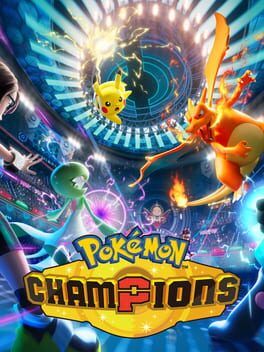
Pokémon Champions arrives on Switch as a free-to-start, battle‑only spin‑off built to unify competitive play, but a rocky rollout and early friction raise questions about its long‑term esports ambitions.
Pokémon has flirted with competitive play for decades, yet its most visible battles still live in a patchwork of mainline RPGs, online ladders, fan rulesets and a slowly evolving official circuit. Pokémon Champions is The Pokémon Company’s clearest attempt yet to centralize that scene on Nintendo Switch, a free‑to‑start battle platform that pulls from across the series, plugs into Pokémon Home and promises a focused arena for serious matches.
At launch, it looks like the right idea. The question is whether the execution is strong enough to turn Champions into a long‑term competitive hub, or whether its rocky first impression will leave it fighting from behind.
A game built around the Frontier
Champions drops the traditional badges‑and‑gym structure and instead funnels everything into the Frontier, a combat‑first space that serves as both menu wrapper and narrative excuse. From the first boot, you are pushed straight toward battling: a short cinematic, a starter selection flow and an immediate tutorial match.
The design intent is obvious. This is not a meandering adventure, it is a lobby for structured battles. Modes surface quickly, from casual queues to more rules‑heavy formats, with the Frontier acting as a unified staging ground. It feels closer to a dedicated fighting‑game client than a typical Pokémon RPG, which is exactly what a competitive hub needs to be.
That focus carries into the mechanics. Champions collects familiar elements from across generations, including type matchups, abilities and returning Mega Evolutions. The inclusion of newcomers tied to Pokémon Legends: Z‑A, like Mega Meganium, Mega Emboar and Mega Feraligatr with new abilities, gives the roster a fresh meta wrinkle instead of feeling like a greatest‑hits recycle. On paper, this is the most consolidated toolkit the series has had for pure battling on a Nintendo platform.
Onboarding: sharp tutorial, messy first hours
If Champions is meant to welcome both ladder veterans and curious newcomers, its onboarding is crucial. The opening minutes land well. The early tutorial does a solid job of introducing basics without getting bogged down in the decades of mechanical cruft that usually scare off new players. It explains turn order, coverage, terrain effects and basic team roles in matches that resolve quickly, which helps reinforce core ideas.
Where the onboarding starts to wobble is everything that happens just after that first guided sequence. The game quickly opens multiple menus, currencies and queues without clearly telling newer players where they should live for their first few hours. Competitive veterans will immediately dig into custom rules and ranked formats, but someone arriving from Pokémon Go or the story‑driven RPGs can feel like they have been dumped into a tournament hall with no one pointing them toward the beginner table.
That lack of a strong progression spine also feeds into early churn risk. There are challenge tracks, daily missions and unlock paths, yet they feel more like layered checklists than a clear on‑ramp to competitive literacy. Champions wants to be the place where new battlers learn the ropes and future tournament players hone their skills, but it needs more deliberate early‑game curation to truly bridge that gap.
Free‑to‑start structure and its impact on play
Champions launches as a free‑to‑start title on Switch and mobile, immediately lowering the barrier to entry for a competitive platform. In theory, this is exactly how you build a big, active player base. The details of that structure matter, though, because any perception that roster access is locked behind grindy systems can quickly sour a game that depends on strategic variety.
The core setup gives players a starter path and access to a rotating pool of Pokémon to experiment with. Additional Pokémon, cosmetics and some mode unlocks sit behind currencies and progression gates. That is expected in a free model, but it intersects awkwardly with the competitive pitch. In a game that sells itself on being the place to prove you are a top trainer, having portions of the roster gated can feel like your options are being throttled just as you start to understand team synergy.
To its credit, Champions does provide avenues to earn new Pokémon through play instead of only through direct purchases, and the free pool is broad enough to start exploring archetypes like bulky balance teams, weather offense and hazard‑focused control. Still, early players are already pointing out the friction of wanting to build a specific team only to bounce off availability limits or slow progression tracks. For a title marketed as a pure competitive arena, anything that nudges choices away from “what is the best strategic fit” toward “what do I actually have unlocked” works against its core identity.
Pokémon Home integration: the big promise
The biggest technical and ecosystem hook for Champions is its Pokémon Home integration. Being able to pull familiar partners into a dedicated battle client instantly gives the game relevance to longtime fans with deep collections. It aligns with the pitch that this is the place where all your past effort can finally live in one ongoing competitive space.
In concept, this is exactly the sort of glue Pokémon’s fragmented ecosystem has needed. Rather than every generation’s ladder effectively being sunset when a new pair of RPGs arrives, Champions could become the persistent arena where your favorites keep seeing play, updated as new mechanics and forms arrive. It also opens straightforward pathways into organized events: an official circuit can standardize rules within Champions itself while letting players build and tune their teams from a single hub.
Early on, though, this integration is also another friction point. Transfer rules, compatibility lists and timing windows are not always clearly surfaced in the client, which has already caused confusion around which Pokémon are legal and when. Even when the plumbing works, the balance implications of importing powerful, fully trained Pokémon into a free‑to‑start environment have sparked debate. The developers appear to be leaning on format‑specific restrictions to manage that tension, but Champions will need constant, transparent communication around Home support if it wants to keep both competitive integrity and collection appeal intact.
A rocky launch and first‑week friction
Reports out of the gate point to a launch that has been less smooth than The Pokémon Company would like for what is supposed to be a flagship competitive project. Server issues and connection errors have hit players trying to queue into matches or simply stay connected through longer sessions. Cross‑platform support adds complexity and reach, yet it also increases the surface area for failure, and Champions is feeling that in its earliest days.
Beyond stability, there are the growing pains that often accompany live service launches. Matchmaking has struggled at times to neatly separate brand‑new players from veterans already porting experience and teams over from other formats. That can turn someone’s first night into a series of one‑sided losses that the opening tutorial did little to prepare them for. Coupled with progression systems that sometimes feel stingy in their first hours, the cumulative impression is of a game that knows what it wants to be but has not entirely smoothed the path to getting there.
Crucially, all of this lands in a context where Nintendo and The Pokémon Company are explicitly positioning Champions as a long‑term platform rather than a one‑off side project. A rocky first week is survivable for a live game, but only if swift, visible updates show that player feedback on connection quality, matchmaking and onboarding is being taken seriously.
Esports ambitions or shaky foundation?
On paper, Champions is tailored for esports in a way previous Switch Pokémon titles have not been. It isolates the competitive experience into a single client, concentrates on readable battle presentation and connects directly to a legal roster via Home. The free entry and cross‑platform footprint dramatically widen the potential player pool. That is the infrastructure you would want if you are planning seasonal circuits, qualifiers and broadcast‑friendly finals built around one stable ruleset.
The launch rollout reflects some of that ambition. Marketing materials lean heavily into the idea of proving yourself at the Frontier and of Champions as a destination rather than a side mode. The presence of new Mega Evolutions and future‑facing forms hints at a live balance philosophy where metas evolve through discrete injections of content instead of being tied solely to boxed retail releases.
At the same time, the shaky first impression cannot be ignored. Esports ecosystems thrive on three pillars: stability, clarity and trust. Stability means servers and clients that simply work. Clarity covers rulesets, formats and the path from ranked ladder to official events. Trust is about players believing that balance, monetization and support will not undermine the competitive field.
Right now, Champions is strongest on conceptual clarity. It is finally obvious where Pokémon wants its high‑level battles to live. Stability and trust, though, are works in progress. Technical hitches, fuzzy communication around Home integration and early progression pain undercut confidence at the exact moment the game is trying to win over the community that will determine its long‑term health.
Verdict: a promising hub that needs quick fixes
As a launch package, Pokémon Champions is an exciting but uneven proof of concept. The Frontier framing, concentrated battle focus and Home integration show a real commitment to turning Switch into the center of official Pokémon competition. The battle system feels comfortably familiar with enough twists to suggest a healthy evolving meta, and the free‑to‑start model positions the game to amass a huge player base if it can keep people around.
Yet the same launch also highlights how fragile that ambition is. Onboarding that loses players once the tutorial ends, a progression structure that sometimes fights the competitive fantasy, unclear Home messaging and unstable online play all erode the sense that Champions is ready to anchor an esports scene out of the box.
None of these problems are fatal if they are treated as urgent. With careful tuning of early‑game guidance, more generous early unlocks, clear format communication and fast server fixes, Champions could still grow into the long‑lived competitive hub its design suggests. For now, though, it feels more like a promising open beta than the rock‑solid arena Pokémon’s competitive community has spent years waiting for.