
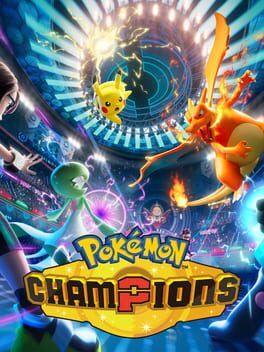

Pokémon Champions hits Switch on April 8 with a free day‑one Switch 2 visual upgrade and a free‑to‑start model. We break down the business model, modes, and early battle‑system details to see if it offers enough depth beyond nostalgia for competitive play.
Pokémon’s next big competitive experiment finally has a date. Pokémon Champions launches on Nintendo Switch on April 8, with a native Switch 2 update available on day one at no extra cost and a mobile version to follow later in the year. It is pitched as a pure battle platform rather than a traditional adventure, built around online play, team‑building, and long‑term progression.
For competitive players wondering whether this is a serious alternative to the mainline games or just a nostalgia‑driven spin‑off, the reveal of its free‑to‑start model, format choices, and core mechanics starts to paint a clearer picture.
Release timing and platforms
Pokémon Champions arrives on April 8 on Nintendo Switch, landing just in time to act as the franchise’s de facto competitive hub between mainline generations. A free update will be available on the same day for Nintendo Switch 2 owners, bringing cleaner visuals and improved performance without changing gameplay. That parity matters for competition, since it suggests identical rulesets, animations, and timing across both Switch systems.
The mobile version is planned for later in the year, with cross‑platform play expected to keep a unified player base. For anyone eyeing tournaments or long‑term ladder play, that broad platform reach should help sustain matchmaking and meta diversity.
Free‑to‑start structure and what it means for the ladder
Champions launches as a free‑to‑start download on Switch. You can get in with no upfront fee, then expand via optional purchases like a Starter Pack, Premium Battle Pass, and a Membership style subscription.
The Starter Pack, arriving alongside launch, bundles the base game with account unlocks such as extra Pokémon storage, additional battle music, and a stockpile of training and recruitment tickets. None of these are raw stat boosts, but they clearly speed up team building and give paying players more flexibility when experimenting with different squads.
The Premium Battle Pass is tied to seasonal play. By participating in battles during a given season, you earn rewards that range from cosmetics to items and resources used for training or unlocking Pokémon. The Membership layer adds a trickle of regular bonuses and more favorable progression, similar to many service‑style competitive titles.
For ranked‑minded players, the key question is whether spending money grants competitive power that cannot be reasonably earned through play. Right now the system looks closer to a time‑saver model. Money accelerates how fast you assemble and tune teams, while the underlying ceiling appears to be reachable through persistent play. That still creates a gap early in each season, when heavily invested accounts will likely hit optimized teams sooner, but it stops short of a hard paywall on specific strategies.
Battle formats and rulesets
On the field, Champions is very deliberately built to feel like mainline Pokémon battles. The core ruleset uses the familiar six‑Pokémon team structure, classic turn‑based combat, and the same type chart and ability interactions VGC and Battle Stadium players already know.
Matches can be played as Single Battles or Double Battles. Singles will appeal to classic ladder veterans from the handheld days, while Doubles continue the modern official standard seen in recent VGC seasons. Both formats are available across the core online modes, which should keep queues healthy for whichever style gains traction.
At launch, the game will offer three main online battle setups. Ranked Battles form the competitive backbone, with placement, tiers, and seasonal resets. Casual Battles give players a way to test sets, learn the meta, or just relax without risking rank. Private Battles let you queue up matches with friends or practice partners under custom conditions, which is valuable for serious prep.
On top of that, seasonal Online Competitions will rotate in special rulesets. These can restrict eligible Pokémon, tweak level caps or item rules, or otherwise shake up the ladder. For tournament‑level players, those events are likely to mirror or foreshadow official circuit formats.
Mechanics: Mega Evolution and team building depth
The headline mechanic for many returning fans is the full return of Mega Evolution. Champions leans into Megas as a high‑impact strategic layer, and promotional materials have already highlighted examples like Feraligatr, Meganium, and Emboar receiving unique abilities when Mega‑Evolved.
That alone has big implications for competitive depth. The game encourages you to think in terms of mega‑centric cores: archetypes built around how a Mega’s typing, ability, and stat redistribution reshape matchups. If Champions retains classic rules about only one Mega per battle, then choosing which Pokémon occupies that slot becomes a central teambuilding question, much like Dynamax selection in Sword and Shield or Terastallization choices in Scarlet and Violet.
Beyond Megas, Champions imports familiar strategic elements from the main series. Types, Abilities, and held items all behave as expected, so staples like Intimidate cycling, speed control, redirection, and pivot moves should remain foundational. There is an emphasis on deep customization, letting you adjust movesets, Abilities where compatible, and core stats to push a Pokémon toward particular roles such as bulky pivot, fast sweeper, or dedicated support.
Training and optimization revolve around a new currency called Victory Points. You earn VP by playing matches and can spend it to recruit additional Pokémon, train their stats, and pick up key items and Mega Stones. This essentially centralizes what used to be spread across breeding, bottle caps, shards, and a dozen side systems into one progression loop tied directly to battling.
Pokémon acquisition, HOME integration, and meta concerns
From day one, Champions is built to feed off the broader Pokémon ecosystem. It will be compatible with Pokémon HOME at launch, and the developers are already signalling support for transfers from recent games and Pokémon GO, within a curated list of eligible species.
That has two important implications for the competitive scene. First, it should massively increase the pool of viable Pokémon in the early meta, preventing the shallow day‑one rosters that often plague new live‑service titles. Second, it creates a bridge for veterans who have spent years building perfect Pokémon elsewhere. Being able to bring in long‑term projects into Champions immediately gives invested players a head start on options, if not on raw power.
At the same time, there is a separate in‑game recruitment system that gives all players access to Pokémon even if they never touch HOME. Every day, you can try a random Pokémon for a limited time. If you like how it plays, you can use VP to recruit it permanently. VP also fuels other acquisition routes, letting you steadily expand your roster through play.
The risk is front‑loaded roster imbalance if the initial supported list skews heavily toward certain generations or archetypes. However, early details suggest The Pokémon Company wants Champions to function as an all‑star battle sandbox, not a narrowly curated dex cut, so competitive players should prepare for a fairly wide field at launch.
Switch 2 upgrade: visuals and play experience
The free day‑one Switch 2 update focuses on visuals and performance. Expect sharper resolution, cleaner textures and models, and potentially more stable frame pacing. While these improvements will not directly alter battle calculations or timings, they matter for long sessions and spectator play.
Sharper visuals help with clarity on small details such as status indicators, field effects, and turn order UI. Stable performance, especially in docked mode, is also important for consistency in online tournaments and streams. Crucially, since core gameplay is identical on Switch and Switch 2, the upgrade looks like a quality of life bump rather than a competitive advantage locked to newer hardware.
Is it substantial enough beyond nostalgia?
For players who cut their teeth on past battle facilities and online ladders, Champions taps directly into that history. Megas, classic battle music, and the familiar six‑mon format are all calculated nods to the series’ competitive golden eras. The question is whether there is enough substance beneath those callbacks.
Right now, the outline is promising. A dedicated battle platform that removes the adventure overhead, backed by integrated training tools, flexible recruitment, and ongoing seasonal rulesets, addresses many long‑standing complaints about how slow it can be to get a viable team ready in the RPGs. Ranked, Casual, and Private modes cover the main use cases from high‑stakes ladder grinding to focused practice.
The free‑to‑start model is the biggest wildcard. If resource income from normal play is generous and event rewards stay meaningful, Champions could become a sustainable central hub for competitive battling that does not demand constant spending. If, instead, VP and key unlocks are tightly throttled, the grind gap between high‑spend and free players could warp the early metagame each season.
From what has been revealed so far, Champions looks less like a shallow nostalgia package and more like The Pokémon Company’s attempt at a long‑term, tournament‑ready battle service. The real test will come once tier lists, usage stats, and early seasons shake out, but for competitive‑minded players, April 8 is shaping up as a launch worth taking seriously rather than just another spin‑off curiosity.