
With Pokémon Champions launching on Switch in April and the 2026 World Championships heading to San Francisco, The Pokémon Company is quietly reshaping how its games work as competitive esports. Here’s how the new title, Home integration, and a destination Worlds all fit together.
In 2026, Pokémon is not just celebrating thirty years of catching them all. It is quietly rebuilding what competitive Pokémon looks like.
Between Pokémon Champions launching on Nintendo Switch this April, an expanded Pokémon Home ecosystem, and the newly announced 2026 World Championships set for San Francisco, The Pokémon Company is laying out a long term plan to turn its battles into something closer to a modern esport. It is not a single game doing the work, but an entire structure being put in place over the next eighteen months.
A new centerpiece: what Pokémon Champions actually is
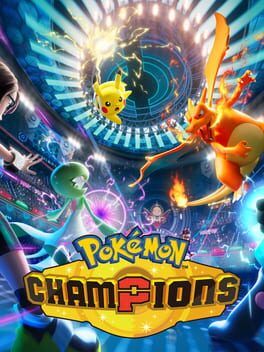
Pokémon Champions arrives on Nintendo Switch in April 2026, with a mobile release planned afterward. On paper it looks like another spin off, but its design checks just about every box you would want from a broadcast friendly, long tail competitive title.
Champions is a battle focused game that keeps the core language of the series intact. Teams are still built around type matchups, Abilities and moves, with enough depth to reward experienced battlers while staying readable for newcomers watching a match for the first time. It runs on both Switch and mobile, and supports multiplayer alongside single player play, which lets it live in the same daily routine as Pokémon GO, Unite and Masters EX instead of competing with them.
Crucially, Champions is part of the shared ecosystem rather than a sealed arena. Pokémon Home is being updated with support for the Game Boy Advance era FireRed and LeafGreen, and the presentation coverage makes it clear that transfers can move forward into Champions, as well as Scarlet, Violet, Legends Z A and future titles. That means a player’s roster crosses games and generations instead of resetting every time there is a new battler.
That continuity is one of the most important things about Champions from an esports angle. If your favorite Pokémon is something you caught in a remake from 2004 that you have been dragging through Home for years, seeing it show up on a competitive stage immediately makes a match more personal. In traditional esports terms, your account and collection carry across titles rather than being locked to one client.
April launch timing and the 2026 competitive calendar
The April release on Switch does more than simply give players something new in the spring. It anchors the competitive year.
By arriving four months before the 2026 World Championships in late August, Champions has enough runway to get through a first ranked season, balance passes and grassroots exploration. Tournament organizers can experiment with formats, creators can publish team breakdowns, and viewers can get used to watching it. When San Francisco rolls around, the game is not brand new; it is battle tested.
The staggered mobile launch extends that curve. Mobile is where Pokémon’s daily engagement is strongest thanks to GO, Masters EX and Café Remix, and where a new competitive title can pick up players who do not own a console but still want to follow official play. If the mobile version lands in the second half of 2026, the competitive scene effectively gets a second growth spurt heading into the Worlds season.
This calendar structure mirrors how other esports front load their content cadence before flagship events. The difference for Pokémon is how it spreads that content across several games instead of just one.
San Francisco Worlds and the return to a destination city
The Pokémon World Championships head to San Francisco, California on August 28 to 30, 2026. On its own that is a standard rotation of host cities, but the framing matters. San Francisco is not just a convention center stop; it is a tech capital with established esports infrastructure and a history of major fighting game and MOBA events.
The Worlds announcement also comes paired with Pokémon XP, a parallel fan and experience event running in the city at the same time. This shifts Worlds away from feeling like a closed invitational and more like an anchor for a weeklong festival. For an esport trying to grow its audience, that surrounding festival is as important as what happens on stage.
From a competitive perspective, San Francisco gives The Pokémon Company a western hub to push its modern portfolio in front of industry partners and broadcasters. Unite, GO and the trading card game all have well defined competitive circuits. Champions now has a natural spotlight to aim at, even if it is introduced in a smaller showcase format or side event for its first year rather than instantly replacing the mainline doubles format.
Where Champions fits next to Unite, GO and the main series
Pokémon already has multiple competitive products. Unite delivers a 10 minute MOBA, Pokémon GO has location based PvP and raid races, and the trading card game is a long running pillar of Worlds. The traditional video game championship has historically centered on the latest mainline RPG pair, with formats built around doubles battles and VGC rulesets.
Champions does not erase any of that. Instead it fills a gap the series has never fully solved: a focused, battle only client that keeps the feel of the RPG while stripping away the barrier to entry and preparation overhead. Where a mainline competitive season involves breeding, training and navigating a full adventure, Champions can focus entirely on teambuilding and matches.
That makes it a better fit for modern esports broadcasts. Matches can be shorter and more predictable in length, lobbies easier to set up, and visual clarity tuned around what looks best on a stream. Because it shares mechanics and a Pokémon pool with the main series through Home, it can still sit alongside VGC rather than feeling like an unrelated spin off.
For Unite and GO, Champions is also a companion rather than a rival. Fans who discover competitive Pokémon through Unite’s 5v5 structure or GO’s local events now have a place to experience something closer to the classic 6 on 6 battle fantasy without buying a full mainline game. If The Pokémon Company links progression, cosmetics or cross promotion across all of these titles, it effectively builds a network of on ramps into a shared competitive ecosystem.
Pokémon Home as the backbone of a long term esport
The updated Pokémon Home support that ties FireRed and LeafGreen into the modern ecosystem is easy to see as nostalgia. In practice it also looks a lot like infrastructure investment.
An esport lives or dies by whether players feel that their time investment carries forward. Home is how Pokémon solves that problem. When a GBA era capture can eventually stand on stage at a 2026 tournament through Champions or a mainline title, it tells veteran players that their older collections still matter. When new players realize that anything they catch today can move into future games, the value of spending time in the ecosystem increases.
Champions is the first new competitive product fully framed around that idea. Its compatibility list in the February Pokémon Presents runs alongside Scarlet, Violet, Legends Z A and whatever follows, rather than toward the side. It reads as a client that will be updated across multiple hardware generations, not something that will be dropped in a year or two.
If that proves true, Pokémon will have something that looks very close to the evergreen platforms you see in other esports genres, but backed by an IP where the roster is already the draw.
The broadcast story Pokémon can tell in 2026
With Champions on Switch, mobile on the horizon, and Worlds in a high profile North American city, The Pokémon Company has all the pieces it needs to tell a cleaner story to viewers and sponsors.
On the broadcast side, that story can look like a ladder of experiences. At the base are mobile and casual games that feed interest. Above that sits Champions as the clear battle simulator and skill showcase, built to be watchable in short sessions. At the top are destination events like San Francisco Worlds and Pokémon XP, where all of these games come together under one roof.
The February Presents already hinted at this structure, with competitive announcements for Unite, Masters EX, the trading card game and Champions sharing the same stage as single player reveals. Over the next year, the key question will be how aggressively Champions is woven into official circuits and whether it earns a permanent slot on the Worlds stage.
What is clear now is that 2026 is not business as usual. Between April’s launch, Home’s expanded reach and a San Francisco Worlds built to feel like an esports festival, Pokémon is building a future where competitive battling is a centerpiece rather than a side attraction.