
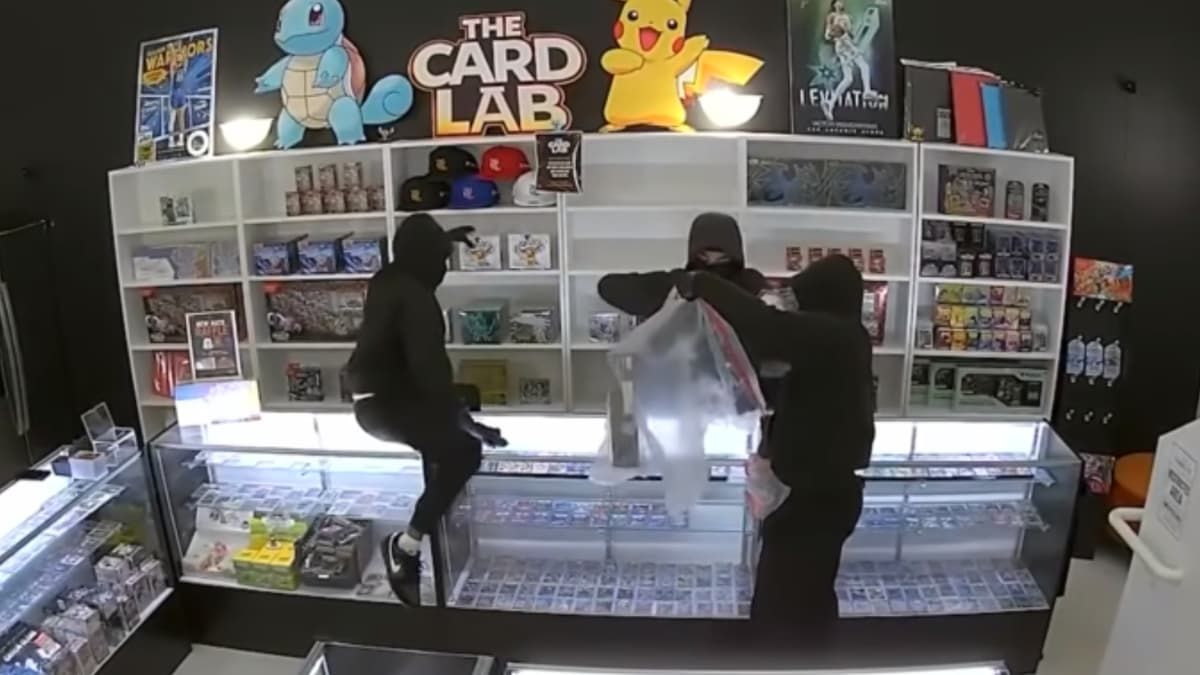

Two UK brothers admitted stealing £71,000 of Pokémon TCG stock, with one jailed and the other awaiting sentencing, as card shortages and scalping pressure spill into retail crime.
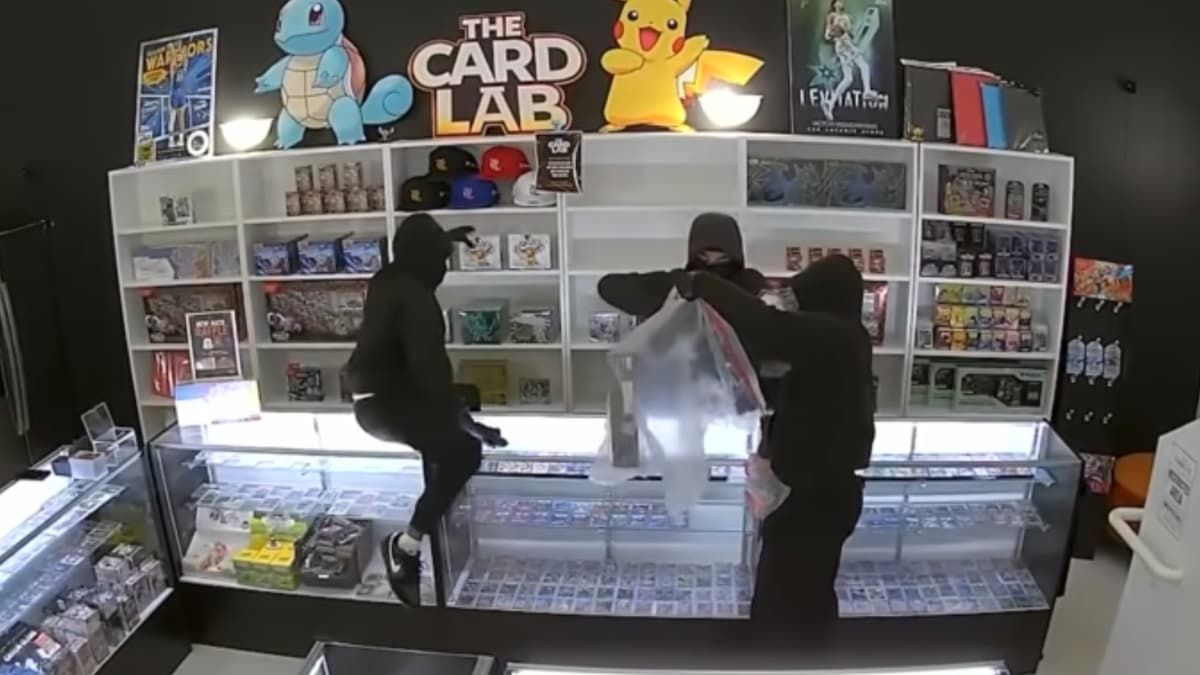
Image: dexerto.com
A £71,000 Pokémon card burglary case now has a prison sentence
Keith Johnson has been sentenced to 29 months in prison after he and his brother Shane Johnson admitted to burglaries involving £71,000 of stolen Pokémon Trading Card Game stock, according to Cheshire Police as reported by IGN and Dexerto. Shane Johnson has also admitted the offences and is due to be sentenced later in July, with Dexerto giving the date as July 31.
That distinction matters. The headline search term around the case is already “Pokemon card thieves jailed,” but the confirmed sentencing status is narrower: one brother has been jailed, while the second has pleaded guilty and awaits sentence. Both men, from Birmingham in the UK, admitted burglary offences tied to two specialist card businesses, turning a collector-market shortage story into a straightforward retail crime case.
IGN reported that the brothers were caught after a Ford Transit van used in the first getaway broke down. Dexerto, citing the police account, said the pair pushed the broken-down van to another location, transferred the stolen goods into a second vehicle, and escaped. Investigators later linked vehicles, keys, clothing, and stolen property to the brothers’ address, which is the kind of evidence trail that turns a fast burglary into a failed route through the criminal justice system.
The reported heists targeted specialist shops, not random retail shelves
The first burglary took place on April 8, 2026, at a Warrington specialist card shop identified by IGN as Celestial Collectibles and by Dexerto as Celestial Collectables. Dexerto reported that the front door was smashed with a crowbar, police were alerted after reports of the break-in, and officers arrived to find Pokémon cards strewn across the floor along with the crowbar. The stolen items were mainly Pokémon cards valued at nearly £62,000, while the store suffered more than £3,000 in damage, according to Dexerto.
The second targeted business was The Graded Gallery in Rugby. IGN reported that more Pokémon card stock was stolen and the shop was left in disarray. Dexerto said the same break-in method was used and that stock stolen plus damage caused at the Rugby business totaled more than £9,000.
The combined figures explain why this Pokemon TCG theft sits apart from the usual stories of checkout-line hoarding or online resellers racing to cart out a product drop. The Johnson case involved forced entry, damage to stores, multiple vehicles, and a haul concentrated in compact, high-value stock. For any RPG player used to thinking in inventory slots and value density, the attraction to thieves is bleakly obvious: sealed product, rare singles, and graded cards can carry significant resale value while fitting into boxes that can be moved quickly.
Police say the evidence put both brothers at the crime scenes
Cheshire Police said the investigation connected the brothers to both burglaries through vehicle movements, recovered property, keys, and clothing. IGN reported that police found the missing cards, keys to both getaway vehicles, and clothing worn during the first burglary at the brothers’ house. Dexerto added that the Ford Transit and a Nissan X-Trail were both linked to Keith Johnson’s address.
“The overwhelming evidence collected through our extensive enquiries put them at both crime scenes giving them no choice but to plead guilty,” Cheshire Police spokesperson DC Hannah Smith said in a statement quoted by IGN. Smith described the offences as a “criminal Pokémon enterprise.”
The phrasing is memorable, but the practical point is evidentiary. Stolen cards can be hard to trace once they enter private resale channels, as Games.GG noted in its coverage of the case. Here, police did not appear to rely on spotting individual cards later in the market. The reported case against the brothers rested on the route, vehicles, physical items, and recovered stock, which is a much cleaner chain than trying to prove ownership after sealed products have been split, traded, or relisted.
Scalping pressure and retail theft are connected, but they are different problems
Nintendo’s recent comments on Pokémon TCG scalping sit near this story, but they should not be collapsed into it. At a Nintendo shareholder meeting, president Shuntaro Furukawa was asked about Pokémon Card bulk buying, high-priced resale, and whether players could enjoy the game with “peace of mind,” according to Kotaku and GoNintendo. Furukawa said Nintendo is aware of limited-quantity cards being purchased in large volume and resold at high prices, and that The Pokémon Company is taking measures including made-to-order sales, agreements with marketplace operators, and account verification for some online priority drawings in Japan using My Number Cards, the country’s government-issued ID system.
Those measures address access and resale friction. They do not directly address smashed doors, crowbars, stolen shop inventory, or van-linked burglary investigations. That is the separation this case forces into view. Pokemon card scalpers exploit scarcity by buying product through legal channels and reselling at higher prices. The Johnson case, as described by police and reported by IGN and Dexerto, involved burglary.
The connective tissue is demand. A product category that sells out instantly, holds value, and has a deep secondary market creates incentives all along the chain. Some incentives produce marketplace arbitrage. Some produce queue chaos and raffle systems. In the ugliest cases, according to recent police and court reports covered across gaming outlets, that same value profile has also made card shops and vendors targets for robbery.
The market is overheated even after a huge production increase
The strangest part of the current Nintendo Pokemon card shortage conversation is that it is happening after an enormous increase in supply. IGN reported that The Pokémon Company manufactured 10 billion cards in 2025 alone. IGN also noted that 43 billion cards were printed in the 25 years between October 1996 and March 2022, while roughly the same number has been released again in the four years since.
In a healthier collectible economy, that kind of production ramp would loosen pressure. Instead, outlets covering the market continue to report sellouts, high resale pricing, and shortages for ordinary buyers. Kotaku framed the problem around a post-pandemic boom in collectible markets, with Pokémon Cards at the hottest end of that trend. GoNintendo similarly described new releases as being consumed quickly by scalpers and second-hand sellers, leaving fans to chase scraps or pay inflated prices.
There is also a timing problem. IGN reported that a Pokémon TCG 30th anniversary set is due in September, and described it elsewhere as an all-foil collection with 30 new Pikachu designs. Game Rant reported that the 30th Celebration expansion will include reprints of popular cards from the game’s history, including Base Set Charizard. Anniversary products tend to concentrate nostalgia, competitive interest, sealed collecting, and resale speculation into the same release window. If supply systems are already strained, that kind of set becomes a pressure test.
Recent cases show the crime risk is broader than one failed getaway
The UK burglary case landed the same week as other reports showing how far Pokémon card crime has spread across different settings. Game Rant reported that Joseph Trevor Wilson of Wilmington, North Carolina pleaded guilty to stealing approximately $21,000 worth of Pokémon cards and was sentenced to 10 to 14 years in prison as part of a plea deal. Polygon, citing WECT News and North Carolina District Attorney James W. Smith, reported that Wilson pepper sprayed and tied up a Video Game Time employee before fleeing with cards and cash, and that the cards were later recovered after two other men attempted to sell them to a store in Fayetteville.
Polygon also reported a separate New Jersey incident in which a 27-year-old man and his 69-year-old father were robbed of $150,000 worth of Pokémon cards and $12,000 in cash after vending at a hobby showcase. The outlet further referenced a Florida case involving an alleged chainsaw burglary tied to Pokémon cards.
These are not the same fact pattern, and they should not be treated as one organized wave without evidence. What they share is the underlying economics of the Pokémon TCG market: portable product, active buyers, strong resale channels, and a community where rare or sealed stock can be monetized quickly if a thief finds the wrong buyer. For small retailers, that turns inventory management into a security build. The optimal shop layout for browsing, community play, and impulse purchases is often in tension with the locked cases, back-room storage, and controlled access that high-value collectibles now require.
For collectors, the safest play is patience and traceability
For players and collectors, the immediate outcome is simple: Keith Johnson is serving a 29-month sentence, Shane Johnson has admitted the same offences and awaits sentencing, and the stolen-stock case is being treated as burglary rather than resale drama. There is no confirmed new Pokémon Company policy in the source material that directly responds to this UK theft case.
The broader buyer guidance is less satisfying but more useful. Furukawa’s shareholder comments, as reported by Kotaku and GoNintendo, point to made-to-order sales, marketplace cooperation, and stricter verification in Japan as tools The Pokémon Company is using against bulk buying and high-priced resale. Those systems may help legitimate fans secure products through official channels, but they will not make every desirable release easy to buy, especially with the September anniversary set approaching.
If you are chasing sealed product or expensive singles, traceability matters. Retailers with established stock histories, receipts, graded-card documentation, and transparent pricing are safer than anonymous private sales that look too convenient after a widely reported theft. If you run a shop or sell at events, the recent cases reported by IGN, Dexerto, Polygon, and Game Rant suggest treating Pokémon inventory like a high-value category rather than casual hobby stock.
The Pokémon TCG has always had a progression loop: open packs, trade up, refine a deck, complete a binder page, chase the card that makes the collection feel whole. The current market has added a harsher parallel track built around scarcity, resale, and now repeated criminal cases. The Johnson brothers’ failed getaway is almost absurd in its details, but the conditions around it are not. Until supply, access, and resale incentives cool down, the gap between collector passion and retail risk is going to stay wide.