
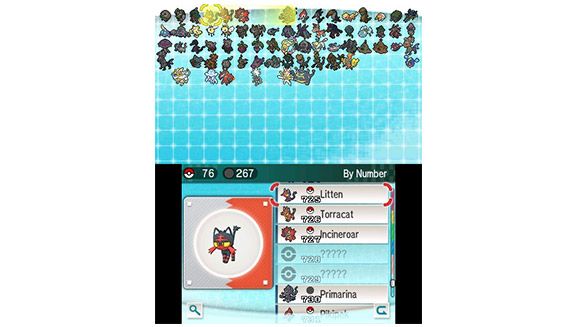

A practical Pokemon Bank checklist for deciding which older Pokémon to move before deposits, withdrawals, and transfers end in February 2027.
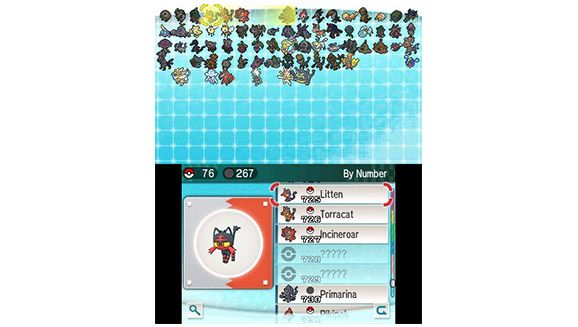
Image: pokemon.com
The deadline turns an old storage app into a triage problem
Pokémon Bank is scheduled to end service in late February 2027, turning years of optional collection maintenance into a hard transfer deadline. Bulbapedia records the shutdown date as February 26, 2027, after which no further deposits, withdrawals, or transfers will be possible. Wikipedia’s Pokémon Bank entry lists the end time as February 25, 2027 at 19:00 PST. Those references are not necessarily describing different shutdown windows, since time zones can push the date into the following day, but the practical lesson is the same: do not treat the final week as safe margin.
The tension is sharper because Pokémon Bank is not only a storage box. Wikipedia describes it as a Nintendo 3DS application that could hold up to 3,000 Pokémon in an online cloud storage service and work with compatible physical and downloaded games. Its companion app, Poké Transporter, is the bridge for older generations. Nintendo Everything’s feature on Pokémon to get before Bank shuts down frames the consequence bluntly: once Bank and Poké Transporter are gone, there will no longer be a way, for the foreseeable future, to transfer Pokémon from the first seven generations into a Nintendo Switch game. The same report adds that Pokémon from the first five generations will also lose their route forward into X and Y or Sun and Moon because that process requires Poké Transporter.
That makes this less like cleaning a PC box and much closer to planning a final RPG route before a point of no return. If you have limited evenings, aging cartridges, a 3DS battery that no longer holds like it used to, or shiny hunts you have been postponing, the correct question is not “Can I save everything?” It is “Which saves, species, and provenance details become hardest to replace if I wait?”
First priority: move the one confirmed Switch-era problem case, Spinda
If you only move one species because you are building a Living Pokédex, Nintendo Everything identifies Spinda as the top priority. The outlet calls it the one Pokémon that cannot be obtained on Nintendo Switch in a transferable form. Its report notes that Spinda is available in Pokémon Brilliant Diamond and Shining Pearl, but says ILCA’s coding for Spinda’s spot patterns prevents Spinda caught in those games from entering Pokémon Home. The same article adds that Brilliant Diamond and Shining Pearl have not been updated in years, and the writer does not expect that issue to be fixed.
That combination gives Spinda a different status from ordinary scarcity. Many older Pokémon are inconvenient. Spinda, according to Nintendo Everything’s reporting, is structurally blocked from the current transfer ecosystem if your source is Brilliant Diamond or Shining Pearl. A Spinda that enters through Pokémon Bank therefore carries practical value beyond Pokédex completion, because Bank is the route that preserves access.
For a completionist, Spinda should sit at the front of the Pokemon Bank Pokemon to transfer queue. Do not bury it behind sentimental duplicates, breeding rejects, or species that have current Switch availability. If your goal is a clean Living Pokédex in Pokémon Home, move a Bank-origin Spinda first, then verify that it has successfully reached the modern side of your collection before spending time on less fragile targets. The source material does not provide a list of every alternate Spinda acquisition route, so the safe, sourced recommendation is narrow: if you want Spinda represented in Home through the legitimate Bank pipeline, prioritize it now.
Second priority: anything trapped behind Poké Transporter
The next layer of the Pokemon Bank checklist is not one species. It is an entire transfer dependency. Nintendo Everything reports that Poké Transporter is shutting down alongside Bank and that, without it, Pokémon from the first five generations will no longer be transferable forward into X and Y or Sun and Moon. Wikipedia describes Poké Transporter as the additional application that connects with Pokémon Bank and allows transfers from Pokémon Black and White and their sequels to Pokémon Omega Ruby and Alpha Sapphire. Its history section also notes that Bank and Transporter streamlined earlier transfer chains, including routes that once involved Pal Park and Poké Transfer.
That history matters because older Pokémon often do not live one hop away from the Switch era. A creature from Ruby, Sapphire, Diamond, Pearl, Black, or White may represent several generations of accumulated handoffs. Bank made that chain feel abstract, but Transporter is the gate that lets parts of it keep moving. Once that gate closes, Nintendo Everything’s report says those Pokémon will be stuck in their older games.
Your practical order should follow the length of the chain. Start with saves that require Poké Transporter before touching 3DS-native catches that already sit closer to Bank. If you have Black, White, Black 2, or White 2 collections with event keepsakes, competitive projects, ribboned partners, shinies, or one-off legends, those boxes deserve immediate inspection. The source material does not confirm a replacement tool after the shutdown, so planning around a future rescue route would be speculation.
There is also an access issue hiding underneath the checklist. Wikipedia notes that Pokémon Bank was downloadable from the Nintendo eShop before the discontinuation of the storefront’s capabilities for 3DS. If your system is already configured with Bank and Transporter, you are working against a service deadline. If it is not, the provided sources do not establish a new download workaround. That makes an early audit of your actual 3DS setup as important as choosing the Pokémon themselves.
Third priority: personal provenance that current games cannot recreate
After Spinda and Transporter-dependent saves, the next best use of the remaining months is preserving provenance: the specific old partner, not merely the species. Nintendo Everything’s feature mentions Living Pokédex goals and urges players to go through Nintendo DS and 3DS games to transfer the Pokémon they would like to save. That is the right frame. A modern catch can often fill a Pokédex number, but it cannot duplicate your original trainer history, the cartridge journey, or the fact that a Pokémon survived multiple migration systems.
This is where the checklist becomes personal. A rare transfer can be a shiny, but it can also be the starter that cleared your first Elite Four, the legendary sitting untouched in an old save, or a Pokémon kept in a preferred ball for a themed collection. Nintendo Everything’s writer specifically references a personal Living Pokédex organized around Pokémon caught in a Poké Ball, which is a useful example of how collector rules can make one copy matter more than another.
The patient approach is to sort by irreplaceability rather than by raw rarity. A common species with your original trainer name from a childhood cartridge may be more valuable to you than a legendary you can catch again elsewhere. A shiny hunt you have been postponing, which Nintendo Everything explicitly calls out as the kind of work players should start now, should be evaluated by time remaining. If the hunt is realistic within the shutdown window, finish it before moving on. If it is a long hunt with no progress and you have boxes of already-caught Pokémon waiting, preserve the known collection first.
For lore-minded players, this is the last call for continuity. Pokémon’s mainline games have always treated partners as companions that can cross regions. Bank was the modern system that kept that fantasy mechanically coherent across the 3DS era and earlier transfer chains. When choosing what to save, think in terms of stories that cannot be replayed exactly: old OT names, save-file origins, ribbon paths, and teams tied to specific playthroughs.
Do not rely on file edits to replace a legitimate transfer path
One of the more important technical details in Nintendo Everything’s report is that simply using a save-editing tool such as PKHeX is not presented as a substitute for Bank. The article says Pokémon receive Home trackers when they are transferred through Pokémon Home, and that placing a file into Sword and Shield and then trying to deposit that Pokémon into Home will not work if it lacks a valid tracker.
That claim changes the risk calculation. The shutdown is not only about losing a convenient cloud box. It is about losing the recognized path that gives older Pokémon a valid place in the modern storage ecosystem. Whether a player cares about competitive legality, collection integrity, or simply avoiding failed deposits, the relevant priority is the same: move legitimate old Pokémon through the official route while the route still exists.
This is also where players should separate confirmed function from wishful maintenance. Nintendo Everything says Brilliant Diamond and Shining Pearl’s Spinda issue has gone unpatched for years. Bulbapedia says Bank’s end will cut off deposits, withdrawals, and transfers. Wikipedia says the service is scheduled to end at a specific PST time. None of the provided sources confirms a late patch, a successor app, or an exception process for stranded collections after the deadline. A careful Pokemon transfer guide should therefore assume the official transfer window closes when the service does, rather than banking on restoration later.
Before committing to long hunts, test the route with something expendable if your setup has not been used in years. The sources establish the systems and deadline, but they cannot check your cartridges, SD card, Nintendo Network configuration, or app access. A failed setup discovered in February is a collection emergency. A failed setup discovered months earlier is a solvable project.
A sane final-month plan for Bank-era collections
The most efficient Pokemon Bank shutdown plan is a staged rescue. Start with access, then save the globally fragile cases, then preserve personal value. Confirm that your 3DS can open Pokémon Bank and, where needed, Poké Transporter. Confirm which DS and 3DS games actually contain Pokémon you care about. Then move Bank-dependent Spinda, Transporter-dependent older-generation Pokémon, and personal trophies before filling space with ordinary duplicates.
Bank’s 3,000-Pokémon capacity, as listed by Wikipedia, sounds generous, but capacity is not the real bottleneck anymore. Time, attention, hardware reliability, and transfer dependencies are. A player with several unfinished cartridges may lose more by trying to perfect every box than by making decisive passes through each save. Treat the process like endgame inventory management in a long RPG: rescue unique quest rewards first, then optimized builds, then sentimental gear, then replaceable materials.
There is one final caution about timing. Public references currently phrase the end as either February 26, 2027, per Bulbapedia, or February 25, 2027 at 19:00 PST, per Wikipedia. Nintendo Everything broadly describes the shutdown as happening in February 2027. Because all of those point to the same final stretch, the safest reader guidance is to finish transfers well before that date range. If you are deciding whether to wait, the answer depends on your goals. Casual players who only use current Switch games may not need to panic. Living Pokédex builders, shiny hunters, old-save archivists, and anyone with first-five-generation Pokémon still behind Transporter should act early.
The practical heart of the Pokemon Bank closing story is that every collection has a different definition of rare. For the market of official transfer routes, Spinda is the clearest sourced emergency. For individual players, the rarest Pokémon may be the one sitting quietly in an old box with a name, origin, and memory that cannot be generated again. Move those first.