
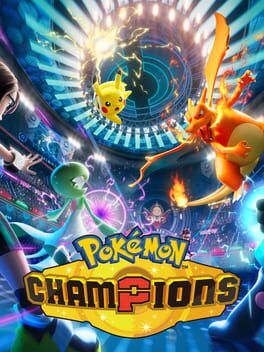

The Pokémon Company International’s Champion of Champions event turns whistlers, pizza acrobats, pillow fighters, and other unusual titleholders into Pokémon Champions competitors, while its J League crossover shows a wider marketing push beyond standard game promotion.
Image: IGDB
The Pokémon Company is turning unlikely champions into Pokémon Champions competitors
The Pokémon Company International has announced a Champion of Champions tournament for Pokémon Champions, and its most striking choice is the field itself: eight people known for winning outside traditional esports will compete in the game for a 2027 Pokémon World Championships trip and a charitable donation made in the winner’s name to a charity of their choice.
According to The Pokémon Company International’s press release, the event takes place in London on 29 July 2026 at 2pm BST and will culminate in a livestream on the official Pokémon Twitch and YouTube channels. Four of the eight competitors have been named so far: whistling champion Ayna Ziordia Botella from Spain, pizza acrobatics champion Nicola Matarazzo from Italy, pillow fighting champion Leandro Silva from the United States, and doing nothing champion Denis Kwan Hong-Wang from Hong Kong. The remaining competitors are still due to be revealed in the run-up to the event.
That creates the central tension around this Pokemon Champions charity tournament. The prize connects directly to Pokémon’s most serious competitive stage, but the casting is deliberately outside the usual ladder of regional qualifiers, Championship Points, and metagame expertise. The Pokémon Company International describes the tournament as a celebration of the game’s accessibility and cross-platform nature, with the stated aim of proving that anyone can be a champion in Pokémon Champions. In practice, it is a showpiece built around a question competitive Pokémon has asked for years: how much of battling can be taught, and how quickly can a new player understand the systems well enough to make meaningful decisions under pressure?
Who the real-world champions are, and why the lineup changes the tone
The confirmed lineup is unusual because each titleholder arrives with a different kind of mastery. A whistling champion, a pizza acrobatics champion, a pillow fighting champion, and a doing nothing champion are not natural proxies for Pokémon Video Game Championships archetypes, but that is the point of the event’s framing. The competitors are already “champions” before they ever select a Pokémon, which lets the broadcast turn Pokémon Champions into the shared rule set that tests how transferable discipline, pattern recognition, composure, and coaching can be.
The most concrete competitive bridge is Ray Rizzo, whom The Pokémon Company International says will coach the participants in Pokémon battling ahead of the event. Rizzo is a three-time Pokémon Video Game Championships World Champion, and VGC describes him as widely considered one of the greatest Pokémon VGC players of all time. That matters because Pokémon’s battle system can look approachable from the outside while hiding a dense layer of turn sequencing, speed control, type matchups, damage ranges, switching incentives, and team-preview reads.
Insider Gaming added color around two of the announced competitors, reporting that Denis Kwan Hong-Wang’s “doing nothing” win involved around 100 competitors sitting still on yoga mats for 90 minutes without sleeping, making noise, or checking phones, and that Ayna Ziordia Botella won first place at Master of Whistling in Hollywood in 2023. Those details are not Pokémon credentials, but they do suggest why the casting works for a broadcast: each competitor brings a premise viewers can understand before the match begins.
The open question is how much of the tournament will lean into that novelty versus how much it will teach actual play. The Pokémon Company International says Rizzo will help ensure a “competitive and authentic tournament experience,” but it has not yet detailed the format, team selection rules, match structure, or whether competitors will use prebuilt teams. For a systems-heavy RPG battler, those details shape everything. A single-game exhibition rewards different skills than a best-of-three set, and open team sheets, rental teams, or restricted formats can dramatically change how much preparation matters.
Pokémon Champions is being positioned as the new competitive default
The charity event lands at a moment when Pokémon Champions is being treated as the center of the video game side of competitive Pokémon. VGC reports that Pokémon Champions launched on Nintendo Switch and Nintendo Switch 2 earlier this year and, following the end of the Pokémon Scarlet and Violet era, is now used in the Pokémon Video Game Championships as the default title. The Pokémon World Championships page on Wikipedia similarly states that VGC tournaments used a different main-series game each year up to 2025 and that from 2026 all VGC tournaments are played on Pokémon Champions.
The Pokémon Company International’s own announcement frames the timing slightly differently, calling the event a Champion of Champions tournament following the Pokémon Champions mobile app launch. The press release says Pokémon Champions has free downloads, cross-play compatibility across mobile and Nintendo Switch systems, and gameplay intended for both new players and competitive veterans. VGC’s report specifically names Nintendo Switch and Nintendo Switch 2, while the press release emphasizes mobile and Nintendo Switch systems. The sources therefore point to the same platform strategy from different angles: Pokémon Champions is being sold as a shared competitive environment across dedicated Nintendo hardware and mobile access.
That platform strategy is central to the tournament’s message. A main-series Pokémon title carries adventure progression, party building, collecting, and story context before players arrive at formal battles. Pokémon Champions, as described in the press release, is being promoted through accessibility, free downloads, and cross-play. A tournament built around whistling, pizza acrobatics, pillow fighting, and doing nothing champions makes that positioning visible. Instead of asking viewers to follow an established pro circuit first, it asks them to watch newcomers enter the system with expert coaching.
For players, the practical details confirmed by the announcement are straightforward. The Champion of Champions finale streams on 29 July 2026 at 2pm BST on official Pokémon social video channels, specifically Twitch and YouTube per the press release. The winner receives a trip to the 2027 Pokémon World Championships and triggers a charitable donation in their name. The amount of that donation, the full roster, and the tournament format have not been announced in the provided materials.
The World Championships prize gives the showmatch real competitive gravity
The 2027 Pokémon World Championships trip is an unusual prize because Worlds is not merely a brand celebration. The Pokémon World Championships are described on Wikipedia as an invite-only esports event organized by Play! Pokémon, held annually in August, with invitations earned through qualifying performance across the season. VGC reports that Pokémon Champions will make its Pokémon World Championships debut later this year when the Pokémon World Championships and PokémonXP take place from August 28 to 30 in San Francisco, California.
The Champion of Champions winner is not being described as receiving a competitive invite to play in Worlds. The sources say the winner receives a trip to the 2027 Pokémon World Championships. That distinction is important. The event borrows the prestige and destination of Worlds without claiming to bypass the qualification structure that supports the competitive circuit.
VGC notes that the location of the 2027 Pokémon World Championships has not yet been announced. It also says the location is likely to be revealed next month during the 2026 Pokémon World Championships, but that is VGC’s expectation rather than a confirmed announcement from The Pokémon Company International in the provided source text.
For a community that tends to parse rules documents, legal Pokémon pools, and regional formats carefully, this distinction keeps the charity showmatch in its lane. It is a promotional competition with a charitable outcome and a Worlds-related travel prize, not a replacement path into the official championship bracket based on the available information.
The J League pairings show Pokémon’s wider move into real-world competition culture
The Champion of Champions event is not happening in isolation. IGN reports that The Pokémon Company has also announced a collaboration with J League, Japan’s top professional soccer association, as part of Pokémon’s 30th anniversary celebrations. In that campaign, each of J League’s 60 teams is assigned its own partner Pokémon.
The pairings are designed to connect club identity with Pokémon identity. IGN gives Roasso Kumamoto and Ponyta as one example, matching the club’s horse logo and mascot. It also cites Akita Blaublitz receiving Horsea, whose evolutionary line reaches Kingdra, a Water and Dragon-type Pokémon, aligning with Blaublitz’s blue dragon mascot, Blaugon. J League’s current catchphrase, according to IGN, is “Evolution! The J League is evolving,” which naturally overlaps with one of Pokémon’s most recognizable systems.
The collaboration officially launches on August 7, IGN reports, with 1 million Pokémon eco bags in 60 designs to be handed out to attendees at each club’s home ground. Each bag features the club’s partner Pokémon on the front and a special Pikachu design on the reverse. IGN also says collaboration merchandise is planned.
Together, the Pokemon soccer teams Japan collaboration and the Pokémon Champions tournament suggest a consistent marketing approach: put Pokémon’s systems and iconography into existing competitive cultures, then let the audience map one form of fandom onto another. With J League, that means club mascots, home grounds, merch, and team identity. With Champion of Champions, it means taking winners from other competitive disciplines and asking them to learn Pokémon’s battle language in public.
The useful signal for players is accessibility, not a solved format
For players already invested in competitive Pokémon, the Champion of Champions tournament is unlikely to reveal a polished top-cut metagame by itself. The currently confirmed competitors are being introduced through non-Pokémon achievements, and The Pokémon Company International has not announced the ruleset, eligible Pokémon, match format, or team construction process. Anyone looking for high-level tournament data should treat this as a charity showmatch unless further details say otherwise.
For newer players, the event may be more useful. If Pokémon Champions is meant to welcome both new players and competitive veterans, as The Pokémon Company International says, then the broadcast can demonstrate where the game’s onboarding succeeds or strains. A coached player can learn a strong opening line, but Pokémon battling still asks for adaptation: reading an opponent’s win condition, preserving defensive pieces, choosing when to commit, and understanding how a single turn can decide a set.
That is where the event’s premise becomes sharper than its novelty suggests. A pizza acrobatics champion or pillow fighting champion entering Pokémon Champions is a marketing hook, but it also tests whether the game communicates enough information for a skilled newcomer to make progress quickly. In RPG terms, it is a public tutorial arc with charity stakes and a world champion acting as mentor.
The broader brand strategy is clear from the confirmed materials. The Pokémon Company International is promoting Pokémon Champions through free downloads, cross-play, mobile access, Nintendo Switch compatibility, coaching, livestreaming, and a charity prize. The Pokémon Company’s J League campaign, as reported by IGN, is pairing all 60 top Japanese professional soccer clubs with Pokémon and sending physical merchandise into stadiums. Both campaigns pull Pokémon outside the familiar loop of trailers, store pages, and ranked ladders. The unanswered questions now are practical ones: who fills the remaining four Champion of Champions slots, how much money goes to charity, and whether the event can make Pokémon Champions’ battle systems feel as readable to newcomers as they are rewarding to veterans.