
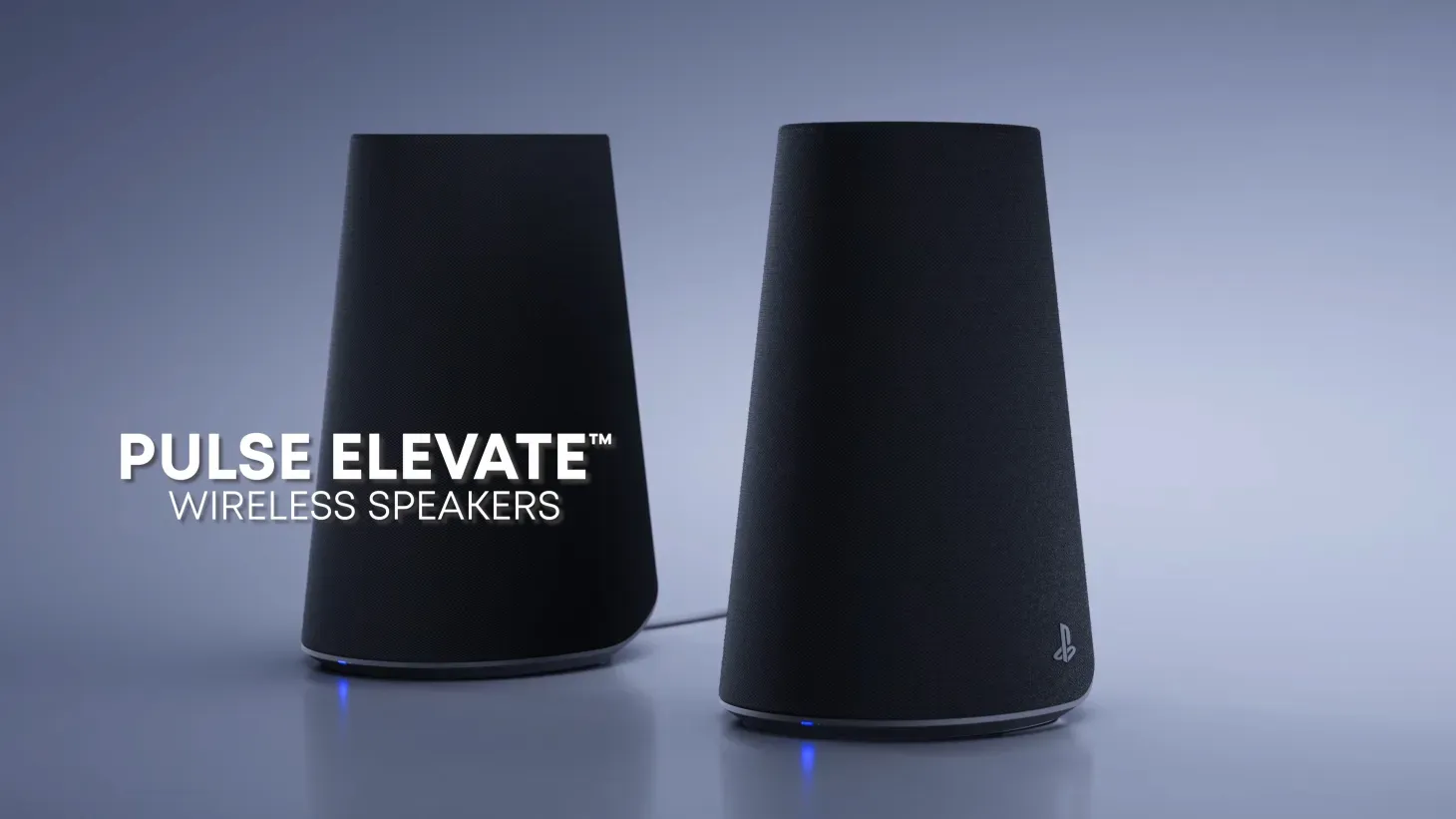

Sony has dated and priced the PlayStation Pulse Elevate speakers for November 2026. Here is what PS5, PC, Mac, Portal, and mobile players should check before preordering.
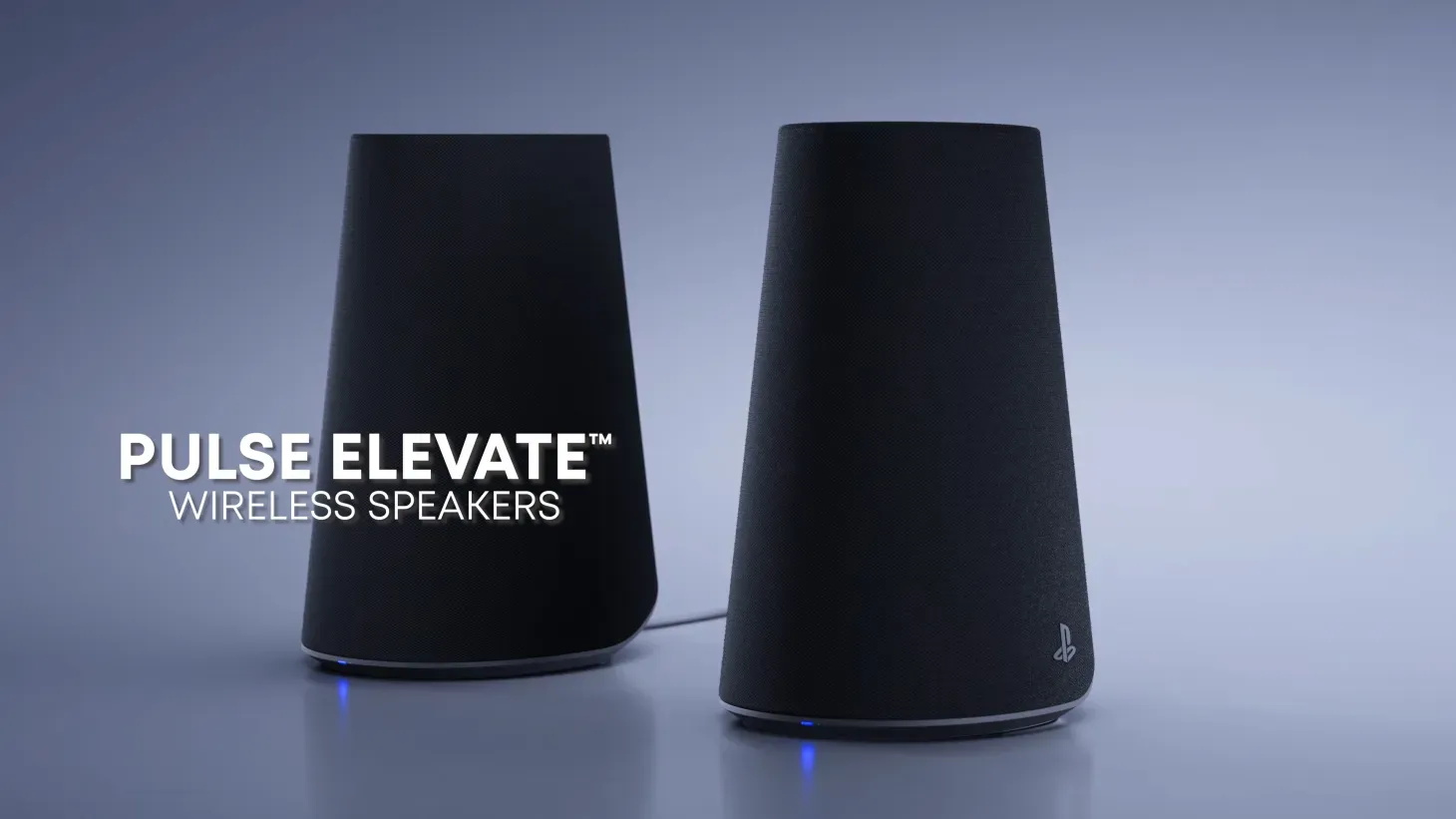
Image: gameinformer.com
Sony finally puts a date and price on PlayStation Pulse Elevate
Sony Interactive Entertainment’s first wireless desktop speakers now have a firm launch plan: PlayStation Pulse Elevate will release starting November 12, 2026, with preorders opening September 1, 2026 at 10 a.m. local time, according to the updated PlayStation Blog post from Edwin Foo, SIE’s vice president of product development. The official recommended price is $219.99 in the U.S., €219.99 in Europe, £199.99 in the U.K., and ¥37,980 in Japan, including tax in Japan.
That makes Pulse Elevate one of the more expensive PS5 accessories 2026 buyers will be asked to consider, especially because it enters a crowded desktop audio space where players may already own a headset, soundbar, monitor speakers, Bluetooth speaker, or PC audio setup. The immediate tension is simple: Sony is pitching these as purpose-built PS5 desktop speakers with low-latency wireless audio and a built-in microphone, but $220 is a high enough price that players should be clear about the problem they need solved before putting in a preorder.
The speakers were first shown during a State of Play in September 2025, and several outlets, including SoundGuys and The Gadgeteer, noted that buyers have been waiting nearly a year for final release information. Push Square reported the same updated date and price via Sony’s revised PS Blog post, framing Pulse Elevate as PlayStation’s first official line of desktop speakers. The news is concrete now, but it also raises the usual hardware-launch question: should players buy early for ecosystem convenience, or wait for independent audio testing?
The November launch window is precise, but availability is not identical everywhere
The confirmed Pulse Elevate release date is November 12, 2026, with Sony using the phrase “launch starting” in its PlayStation Blog update. That wording matters because Sony also attaches a market caveat: availability may vary by market and retailer.
For most readers in Sony’s direct markets, the preorder clock starts September 1 at 10 a.m. local time, with the U.S. specifically listed as 10 a.m. ET. Sony says the Midnight Black model will be available globally through direct.playstation.com and participating retailers. The White model is narrower. PlayStation Blog lists the U.S., U.K., France, Germany, Austria, Belgium, Luxembourg, Netherlands, Italy, Spain, and Portugal for White availability through PlayStation Direct and select retailers in other regions.
There is also a regional wrinkle for Southeast Asia. A separate PlayStation Blog post for Southeast Asia says Pulse Elevate launches starting November 12, 2026 in Midnight Black and White, with preorders beginning September 2, 2026 through local retailers. That post lists recommended prices of SGD 319, MYR 1,099, THB 8,499, PHP 14,709, and VND 6,999,000. If you are outside Sony’s main Direct storefront regions, the practical move is to check your local PlayStation retailer page rather than assume the U.S. preorder schedule applies.
One source in the provided material also shows why it is worth reading past headlines. 9to5Toys states in its own prose that the speakers are releasing on “September 12, 2026,” but immediately quotes Sony’s update and embedded PlayStation post saying November 12. Sony’s official PlayStation Blog, Push Square, PlayStation LifeStyle, SoundGuys, The Gadgeteer, Basic Tutorials, and the quoted PlayStation social post all support November 12, so September 12 appears to be an outlet error rather than a conflicting launch plan.
What the $219.99 package is actually selling
Sony’s official pitch is built around PlayStation Link, planar magnetic drivers, dedicated woofers, portability, and a microphone built into the speaker system. In the PlayStation Blog update, SIE describes Pulse Elevate as wireless speakers for PS5, PC, Mac, PlayStation Portal, and smartphone use, with “ultra-low latency” and “lossless PlayStation Link wireless connectivity.”
The hardware language is unusually ambitious for compact gaming speakers. Sony says each speaker uses studio-inspired planar magnetic drivers intended to deliver lifelike sound across the audible spectrum. The company also says the speakers include built-in woofers for richer bass. On PS5, Sony says the driver technology can enhance supported games using Tempest 3D AudioTech by positioning audio cues with greater accuracy.
That is the confirmed claim. The unknown is how well it works in ordinary rooms and on real desks. Planar magnetic drivers have become a prestige term in PlayStation’s current audio line through Pulse Elite and Pulse Explore, but speakers face different constraints than headsets. A headset controls driver distance, ear position, leakage, and room interference. Desktop speakers have to contend with monitor placement, wall reflections, open windows, roommates, pets, and whatever hollow desk surface is turning your cozy platformer corner into a bass drum.
Basic Tutorials reports that the speakers connect through PlayStation Link using a USB-C adapter and can also use Bluetooth, with both connections available simultaneously. The Gadgeteer likewise describes a setup where game audio can come through PlayStation Link while another device sends music, chat, or other audio over Bluetooth. That dual-source angle is one of the clearest use cases for the price, because it makes Pulse Elevate feel aimed at players who jump between PS5, PC, phone, and Portal rather than those who only need a pair of basic speakers.
The strongest use case is a desk, not a living room theater
Pulse Elevate makes the most sense in the increasingly common hybrid setup: a PS5 beside a monitor, a PC or Mac on the same desk, and a player who alternates between controller, keyboard, Discord, remote play, and late-night sessions. Sony’s own wording focuses on “desktop gaming” and says the speakers fit into a PS5, PC, or Mac setup while also working on the go with PlayStation Portal or a smartphone.
That matters because the speakers are not being described as a replacement for a full surround system. Push Square’s comment section, as quoted in the provided source text, immediately shows the price sensitivity around this category, with readers comparing the cost against soundbars, existing home theater systems, and simply buying more games. Those reactions are informal community comments, not product testing, but they capture the purchase pressure Sony is creating: at $220, players will compare Pulse Elevate against both gaming headsets and traditional speaker systems.
For PS5 desk players, the appeal is cleaner. If you play indies, platformers, roguelites, rhythm games, or puzzle adventures at a monitor, the craft is often in tiny audio cues: the pop of a jump cancel, the shimmer before a secret room, the warning bark before a boss pattern changes, the left-right placement of a projectile in a dense arena. A headset can make those details intimate, but wearing one for long sessions can become tiring. The Gadgeteer frames Pulse Elevate as a response to that tradeoff: headsets offer positional audio and microphones, while speakers are more comfortable but can introduce latency and usually require a separate mic.
The buyer question is whether your setup is actually a desk setup. If your PS5 lives under a TV across the room, Pulse Elevate’s compact desktop identity may be a poor fit compared with a soundbar or existing home audio. If your console sits beside your monitor and you keep dragging a headset on and off between work, PC games, and PS5 sessions, Sony’s design brief becomes much easier to understand.
The microphone could be the feature that decides it, but it needs real-world testing
Sony says Pulse Elevate includes a built-in microphone with AI-enhanced noise rejection. The Gadgeteer reports that the microphone is built into the right speaker and is designed to identify and remove unwanted background noise. 9to5Toys similarly describes the speakers as moving from a voice-chat experience into a desktop gaming setup with the microphone integrated within the right speaker.
That could be genuinely useful. The moment players switch from headset to speakers, they usually lose their headset mic. Replacing it with a desk mic is another purchase, another cable, and another object competing for space beside the coffee mug and controller dock. If Pulse Elevate can handle voice chat while outputting game audio, it solves a real desk problem.
The caution is that microphone noise rejection is one of those features that can look wonderful in controlled demos and uneven in everyday homes. The Gadgeteer cites hands-on evidence from a PlayStation Blog contributor during a Sony demonstration, where music played through the speakers while a voice remained clear after filtering. That supports the feature working under Sony’s demo conditions. It does not yet prove how it handles a mechanical keyboard, a fan, a second person talking nearby, a reflective room, or loud game audio during a chaotic co-op night.
There is also a small correction worth noting. PlayStation LifeStyle reports that Sony previously incorrectly stated the Pulse Elevate speakers would feature sidetone volume as an adjustable setting. That is a narrow detail, but it is exactly the kind of thing voice-chat players should notice. If you rely on sidetone to hear your own voice while chatting, do not assume that feature works as originally described. Check Sony’s final specs before launch.
PC, Mac, Portal, and mobile support make this broader than a PS5 add-on
The name and design sit firmly inside the PlayStation accessory family, but Sony’s compatibility list is broader than a console-only product. The official PlayStation Blog says Pulse Elevate supports PS5, PC, Mac, PlayStation Portal, and smartphones. Push Square also lists PC, Mac, mobile devices, PS Portal, and PS5 compatibility.
For PC and Mac players, the key promise is low-latency audio through PlayStation Link rather than relying only on Bluetooth. Bluetooth remains convenient for phones and casual listening, but gaming latency can make action games feel slightly smeared, especially in platformers, fighters, shooters, rhythm games, or anything built around immediate input feedback. Sony’s PlayStation Link pitch is aimed at that gap.
For PlayStation Portal owners, the speakers are stranger and potentially more interesting. Portal already includes built-in speakers and is commonly used with headphones, but Sony says Pulse Elevate can be enjoyed on the go with Portal or a smartphone. The speakers include charging docks, according to Push Square and 9to5Toys, and SoundGuys notes a built-in rechargeable battery that allows portable use. That suggests a product meant to move around a home rather than stay permanently wired to one device.
Still, portability has unanswered practical questions. The provided sources do not include battery life, charging time, weight, water resistance, codec details, exact dimensions, or how switching between paired devices behaves in daily use. Those are not small omissions for a $220 portable desktop speaker pair. If your main interest is Portal or phone use away from a desk, waiting for full reviews is the safer path.
Who should preorder, and who should wait
A preorder makes the most sense if you are already inside the PlayStation desktop ecosystem and know exactly where these will sit. The ideal buyer has a PS5 at a monitor, also uses a PC or Mac, wants speaker comfort without giving up voice chat, and values PlayStation Link’s low-latency promise enough to pay more than basic desktop speakers cost. Color preference may also matter at launch, because White has limited regional availability while Midnight Black is listed globally.
Waiting is smarter if you already own a strong headset, a soundbar, or a PC speaker setup you like. It is also smarter if your main concern is sound quality per dollar. Sony’s specs are promising on paper, but the provided material does not include independent measurements, latency testing, microphone stress tests, bass extension data, or comparisons against similarly priced speakers and soundbars. At this price, those details matter.
The preorder checklist is refreshingly practical. Ask whether your PS5 is close enough to your desk for desktop speakers to make sense. Ask whether you need a built-in mic or would rather buy a separate dedicated microphone. Ask whether PlayStation Link and simultaneous Bluetooth solve a daily annoyance. Ask whether you care about Tempest 3D AudioTech in supported PS5 games. Ask whether you are buying for Portal and mobile use, because the sources do not yet answer enough portability questions to make that an easy early recommendation.
Sony has now settled the biggest unknowns around PlayStation Pulse Elevate: November 12, 2026 for launch, September 1 for most preorders, and $219.99 as the U.S. PlayStation speakers price. The rest is the part buyers should not rush past. Pulse Elevate could be a tidy answer for players whose desks have become tiny multi-platform studios. It could also be an expensive convenience piece if your current audio setup already does the job. Until independent testing arrives, the best preorder reason is a specific use case, not the PlayStation logo on the speaker grille.