
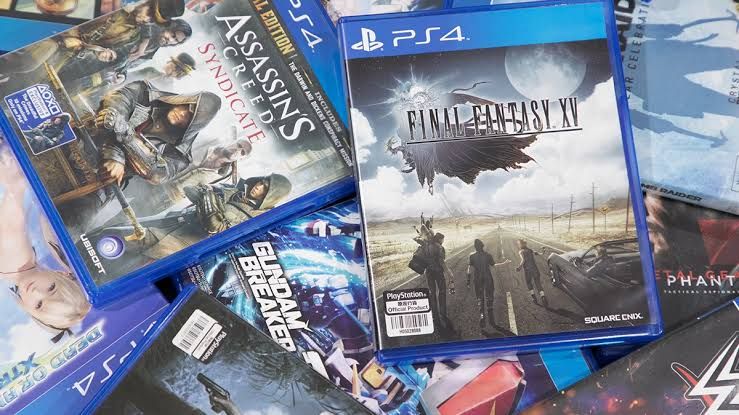

The Don't Kill the Disc campaign has surged past 165,000 signatures after Sony's January 2028 disc phase-out announcement, but the PS6 disc drive question remains unanswered.
Image: gamedaim.com
A six-figure petition is testing Sony’s all-digital bet
The PlayStation physical games petition known as “Don’t Kill the Disc” has passed 165,000 signatures, according to Video Games Chronicle, turning Sony’s January 2028 disc phase-out into a public pressure campaign rather than a one-day backlash cycle. VGC reported the Change.org petition at 165,640 signatures at the time of its article, while Eurogamer later put the total at over 170,000. Tom’s Hardware described the campaign as approaching 200,000 signatures. The different totals reflect a fast-moving petition count rather than a disagreement over the core story: a large group of PlayStation players is asking Sony to keep producing physical discs for new games beyond January 2028.
The tension is sharper because Sony has not publicly engaged with the petition. VGC reported that the main PlayStation account on X went quiet after the July 1 announcement, an unusual pause for an account that normally posts and shares upcoming game content frequently. Eurogamer’s later timeline adds a small correction to that picture, saying the account’s FlexStrike fight stick post was its first since the announcement after nearly a week. That does not amount to a response to the petition. It does show the limits of reading corporate social silence too literally, while still leaving the larger question unanswered: whether Sony intends to address the ownership argument players are making or simply wait for the news cycle to move on.
What the Don’t Kill the Disc petition is actually asking for
The petition was started by PNP Games, a small independent Canadian retailer with three locations, according to VGC and IGN. That matters because PNP has a direct business interest in physical products surviving, but the petition’s stated case is broader than protecting shelf space. Its central ask is for Sony to keep physical PlayStation games as a real option after the company’s planned January 2028 cutoff for new disc production.
The petition frames the issue around ownership. As quoted by VGC and indy100, it argues that “a disc is a real game you own” because players can lend it, trade it, resell it, gift it, collect it, or pass it down. It contrasts that with a boxed download code, which the petition calls “a digital license in plastic packaging.” The language is blunt because the fear is blunt: once new PlayStation releases move to digital purchases or code-in-the-box retail releases, the secondhand market and the ability to transfer a copy between people shrink dramatically.
PNP Games’ Jade Pearce also told IGN the campaign is not anti-digital. The line that has travelled across coverage is: “We are not against digital. We are against digital being the only option.” That distinction is important. The Sony physical media petition is not trying to rewind the PlayStation Store or deny that many players prefer downloads. It is asking Sony to maintain a mixed ecosystem where digital convenience does not erase discs for the people who rely on resale, lending, collecting, preservation, offline installation, or simply the ability to buy games outside a platform-holder storefront.
Sony’s confirmed plan leaves a narrow lane for old discs
The confirmed Sony policy, as reported across IGN, Eurogamer, VGC, and indy100, is that physical disc production for new PlayStation games will end in January 2028. Eurogamer reports that this applies to all physical media on PlayStation from that point, including games not published by Sony Interactive Entertainment, with new releases confined to digital formats or retail boxes containing download codes.
There is one important carve-out. VGC reported that Sony later told developers and publishers they would still be able to make discs for older games released before January 2028. That means the cutoff is not necessarily an immediate shutdown of every PlayStation disc manufacturing pipeline. It is a boundary around new releases. For collectors and late buyers, that distinction may preserve some reprints or ongoing physical availability for pre-2028 titles. For anyone focused on future releases, it does not solve the core concern.
Sony’s public rationale, as described by IGN and Games.gg, is tied to changing consumer behavior. IGN cites Sid Shuman, Senior Director of Sony Interactive Entertainment Content Communications, describing the move as “a natural direction.” Games.gg reports Sony’s view that digital represents the clear majority of how players now buy games, with digital full-game unit sales on Sony consoles rising from roughly 13 percent around the PS4 launch era in 2013 to nearly 80 percent by 2025. Those figures explain the strategic logic. They do not answer the petition’s ownership argument, which is why Sony’s lack of a direct response has become part of the story.
The business incentives point in one direction
Viewed as a platform strategy move, Sony’s position is easy to model. If new PlayStation games move fully through PlayStation Store and code-based retail, Sony gains tighter control over pricing, distribution, storefront visibility, refunds, discounts, regional availability, and long-term access. Eurogamer reported that industry experts it spoke with said Sony stands to gain more control over the market if physical discs are eliminated. Games.gg also reported a financial split that helps explain the attraction: publishers typically keep around 50 percent of a physical retail sale after retail and distribution costs, while on PlayStation Store publishers keep 70 percent.
That shift changes the bargaining table. Physical discs introduce friction into the platform economy. Used copies compete with new digital sales. Retailers can discount inventory. Players can trade games back into the market. Collectors can buy years later without waiting for a store listing or license renewal. From Sony’s side, those same qualities weaken central control. From the petition’s side, they are the whole value of PlayStation disc games.
This is where the debate becomes less about nostalgia and more about market structure. A disc drive is not simply a component in a console. It supports a parallel economy where value can move between players, retailers, collectors, and local stores without every transaction passing through Sony’s digital storefront. Removing new discs after January 2028 would not make every old disc vanish, but it would stop that parallel economy from receiving new PlayStation releases. That is the strategic break the Don’t Kill the Disc petition is trying to prevent.
The PS6 disc drive question is still unannounced
The petition is already being tied to the PS6 disc drive conversation, but that part of the story remains unconfirmed. indy100 notes that Sony has not announced the PS6, while also reporting that many fans are speculating the next PlayStation home console will be digital-only because new physical discs are due to end in January 2028. Games.gg says analysts broadly expect PS6 to arrive in late 2028, which would put the next console cycle close to the disc cutoff, but that is expectation rather than a Sony announcement.
The safest reading is narrower: Sony has announced a policy that would make new PlayStation disc games unavailable from January 2028, and that policy naturally raises questions about whether a PS6 disc drive would have a meaningful role. Sony could still sell hardware that supports existing PS4 and PS5 discs, or some form of external drive, but none of the supplied reporting confirms PS6 hardware design, price, compatibility, or launch timing. Any claim that Sony has officially revealed a digital-only PS6 would go beyond the sources.
For players planning purchases, that uncertainty matters. If you buy physical PS5 games today, the sources do not say those discs will stop working. They do say new PlayStation releases after January 2028 are planned to arrive without newly manufactured discs. If your buying habits depend on trading, lending, resale, collecting, or long-term offline access, the practical date to watch is not a PS6 reveal event. It is January 2028, because that is when Sony’s confirmed new-release disc policy is scheduled to change.
What a petition can realistically change
Change.org campaigns do not force corporate reversals. Eurogamer makes that point directly, saying the Don’t Kill the Disc petition may not produce real change. Sony’s incentives are strong, the digital sales trend is real, and the company has framed the move as a response to consumer preference. A petition, even a large one, does not rewrite those economics by itself.
Its realistic power is different. It creates a visible counter-metric to the sales data Sony is using. If Sony points to digital becoming the dominant format, the petition points to a minority of players who may be smaller than the digital majority but still organized, vocal, and commercially meaningful. It also gives retailers, preservation advocates, collectors, and physical-first players a common message: keep the option alive. That is a cleaner demand than asking Sony to abandon digital growth.
The strongest potential outcome for the Sony physical media petition is not necessarily a full reversal. It could push Sony to clarify whether legacy discs remain supported, whether publishers have any exception path for premium or collector’s editions, whether code-in-the-box releases will replace all retail discs, and whether the next PlayStation hardware will offer any disc-based compatibility. Those are questions Sony can answer without changing its entire roadmap. If the petition keeps growing toward the numbers Tom’s Hardware says it is approaching, silence becomes a strategy with a cost: it lets the most anxious interpretation fill the gap.
The choice players are defending is smaller than the industry it supports
The petition’s job argument is harder to measure from the supplied reporting, but its target is clear. PNP Games says physical games support retailers, distributors, manufacturers, warehousing, logistics, pre-owned trade-ins, collectors, and preservation communities. IGN quotes Pearce warning that ending physical media removes consumer choice, weakens local economies, and gives platform holders greater control over how players access purchased games.
There is also a historical sting to the campaign. Eurogamer reports that the petition invokes Sony’s 2013 used-game messaging, when PlayStation mocked restrictions on lending and trading games. The petition argues that Sony is now moving against the same ownership freedoms it once used as a competitive advantage. That comparison is advocacy, not neutral analysis, but it explains why the backlash has reached beyond ordinary format preference. Players remember disc ownership as part of PlayStation’s identity during the PS4 launch era.
Sony may calculate that most users will follow the convenience curve into digital purchasing, and the sales trend cited by Games.gg suggests many already have. The unresolved risk is whether the remaining physical audience is small enough to absorb, or concentrated enough to damage trust among the players who buy at launch, collect premium editions, support local stores, and keep older libraries alive. The PlayStation physical games petition cannot decide Sony’s strategy on its own. It can make the tradeoff visible, and right now that visibility is growing faster than Sony is willing to talk about it.