
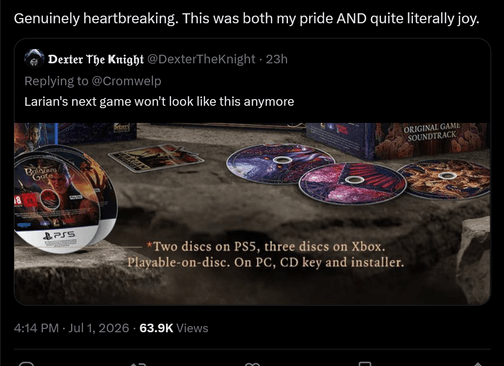

Ken Kutaragi says he understands why PlayStation fans see discs as ownership, but argues Sony’s digital shift is economically rational. The backlash shows the hard part of PlayStation’s digital future is trust.
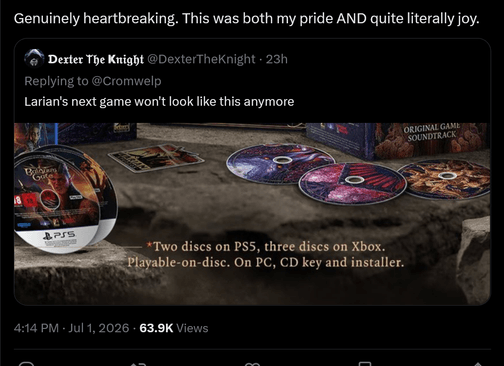
Image: gamerant.com
Kutaragi backs the digital shift while acknowledging the wound
Ken Kutaragi, the former Sony Interactive Entertainment chairman widely known as the “father of PlayStation,” told Video Games Chronicle that he understands why some players are angry about Sony moving away from physical discs, but he does not believe continuing to support discs is “economically reasonable.” That is the hard center of this story: one of the architects of PlayStation’s disc-based rise is now describing discs as a legacy expectation that no longer fits the economics of a networked platform.
Speaking to VGC at the Game Republic New Horizons event in Middlesbrough, UK, Kutaragi said Sony’s handling of the transition has “caused some friction with game enthusiasts.” He framed that friction around ownership psychology. “I understand that physical discs have become a metaphor for ‘owning’ games. I really understand that mentality,” he told VGC. “But nobody thinks [physical media] is necessary for a networked device like a smartphone, for example, because people feel that they will keep their content. So it’s a mentality.”
Kutaragi’s comments land because Sony has already put a date on the break. IGN cites Sony’s current plan for physical disc production for new PlayStation releases to end in January 2028. IGN also quotes PlayStation Blog language from Sid Shuman, Senior Director of Sony Interactive Entertainment Content Communications, saying that “new games will be released on PlayStation Store and at retailers in digital formats only” in response to shifting consumer preference and broader entertainment trends.
That makes Kutaragi’s remarks less of a speculative forecast and more of a read on an active platform transition. The open question is not whether Sony sees PlayStation digital games as the future. According to the sources here, it does. The fight is over whether players accept that a purchased license can replace the practical confidence they associate with a disc, a case, and a shelf.
The word ‘ownership’ is doing most of the work
Kutaragi’s smartphone comparison is revealing because it identifies the strategic gap Sony has to close. In his view, people accept digital media on phones because they believe the content will remain available to them. That belief is the product being sold alongside the file. For PlayStation, the transition is more exposed because the console business spent decades training players to connect ownership with a physical object.
Kotaku’s coverage of the same VGC interview separated the backlash into two overlapping camps. One is nostalgia and sentimentality, with discs tied to the ritual of buying, opening, lending, displaying, and playing console games from the PlayStation era forward. The other is ownership rights and control. Kotaku argues that in an all-digital future, Sony has far more power over a customer’s access to a game regardless of what they paid for it.
That is where the physical games backlash becomes a preservation issue rather than a preference fight. A disc can still depend on patches, online authentication, or server-side features, so physical media is not a perfect archive. But for collectors and game preservation advocates, it is a tangible fallback in a market where storefront listings, account access, licensing terms, and platform policy can determine whether a purchase remains reachable. Kutaragi’s own phrasing, that discs have become a metaphor for owning games, explains why the symbol is so durable. Symbols matter most when the replacement has not earned the same trust.
Sony’s official rationale, as quoted by IGN from PlayStation Blog, is consumer preference and entertainment-industry movement away from discs. That may be true at the platform level, but it does not answer the narrower collector’s question: if the disc disappears, what concrete rights, guarantees, or preservation tools replace the confidence players attached to PlayStation physical games?
The economics are easier to explain than the trust problem
Kutaragi’s argument is essentially an operations argument. If many players are connected and the platform already supports digital delivery, then pressing, shipping, stocking, and supporting discs becomes harder to justify. VGC reports that he has been predicting this direction since at least 2006, when he discussed a future where digital distribution could remove the need for discs, and even hard drives through streaming.
That long view matters. Kutaragi is not reacting to a single PlayStation 5 policy change as an outsider chasing a headline. He helped lead the first three PlayStation generations and has been publicly thinking about distribution moving away from packaged media for years. His current position is consistent: once the network becomes central, the disc becomes an inefficient layer.
But platform strategy is not decided by efficiency alone. Console ecosystems are built on habits, resale markets, holiday gifts, retail visibility, collector editions, and trust that purchases can survive beyond a storefront cycle. Removing discs may reduce costs and simplify distribution, but it also removes a player-facing proof of ownership that PlayStation benefited from for decades.
That is the balance issue Sony now faces. In a competitive game economy, you can patch out an inefficient system and improve the numbers on paper while still damaging player confidence if the replacement changes perceived control. Kutaragi is probably right that the economics favor digital. The sources also show why that answer does not satisfy the players most invested in long-term access.
PlayStation is being described less like a console and more like a content terminal
Kutaragi also told VGC that Sony Interactive Entertainment’s current leadership may be thinking about PlayStation differently than the older console audience does. He pointed to people at SIE who came from companies such as Gaikai or streaming businesses and said it is understandable that, by using network connectivity, they may see PlayStation as a “content terminal” rather than only a traditional game console.
That phrase is the forward-looking signal in the interview. If PlayStation becomes a network-connected endpoint for games, media, cloud access, and store-based services, then discs become strategically awkward. They anchor the system to a product model where the console is a box that reads local media. Digital distribution shifts the center of gravity to accounts, servers, storefronts, subscriptions, and remote delivery.
IGN reports that Kutaragi went further in the same broader discussion, suggesting consoles themselves could eventually be phased out through streaming solutions as component costs rise, while clarifying that this was not an official Sony Computer Entertainment comment. eTeknix similarly notes that he made clear these were personal views and not Sony’s official position.
That distinction matters. There is a confirmed Sony policy about ending physical disc production for new PlayStation console games starting January 2028, according to the PlayStation Blog language quoted by IGN. There is also Kutaragi’s personal forecast that cloud and network technologies could push the industry beyond dedicated console hardware. Those are related ideas, but they are not the same announcement.
Collectors are reading the 2028 date as a countdown
For players who buy mostly digital already, January 2028 may feel like a formal acknowledgement of a trend that has been visible for years. For collectors, retailers, preservationists, and anyone who relies on used-game markets, the date functions differently. It turns a slow migration into a deadline for new PlayStation physical games.
The practical effects depend on details Sony has not fully answered in the provided source material. IGN’s quoted PlayStation Blog wording concerns “new games” releasing on PlayStation consoles after the cutoff. The sources do not establish how existing physical stock will be handled, how long replacement disc drives or disc-capable hardware will remain available, what retail digital formats will look like in practice, or whether publishers can offer any alternative archival or collector-focused packages after disc production ends.
That uncertainty feeds the backlash. A digital-only retail card is useful for distribution, but it does not perform the same role as a disc for resale, lending, offline installation, or shelf preservation. A premium collector’s box without playable media may satisfy merchandise buyers, but it does not solve the access question for preservation-minded players.
Kotaku also notes that the debate has moved into policy territory, citing proposed legislation from Congressman Ritchie Torres intended to regulate the sale of digital games so players know what they own when they buy. That does not mean such legislation will pass, and the source material does not provide a legal outcome. It does show that the ownership language around PlayStation digital games is no longer confined to forums and collector communities.
Sony’s digital future depends on making ownership feel less fragile
The sharper reading of Kutaragi’s comments is not that he dismisses players. He explicitly told VGC he understands the upset. The risk for Sony is that calling the issue a mentality problem can sound as if the company sees player anxiety as a perception bug rather than a trust deficit created by the structure of digital ownership.
If PlayStation’s future is digital-first and eventually digital-only for new releases, the company’s strongest move would be to make the terms of access clearer than they have ever been. Players will want to know what happens to purchased games if licenses change, storefronts evolve, accounts are compromised, hardware generations move on, or a publisher delists a title. The provided sources do not show Sony making new promises in those areas as part of the 2028 transition.
That is why this is a strategy story as much as a consumer reaction story. Sony can probably win the distribution battle because platform holders control the platform rules. Winning the confidence battle is harder. The players pushing back are not all asking for the industry to freeze in the PS2 era. Many are asking what replaces the protections, habits, and secondary markets that discs enabled.
Kutaragi’s comments clarify the divide. To him, discs are no longer economically rational for a connected device, and digital ownership can become normal if people believe their content will remain theirs. To the most skeptical PlayStation fans, that belief has not been earned yet. The 2028 deadline gives Sony time to change the terms of that conversation, but it also gives collectors and preservation advocates a date around which to organize their resistance.