
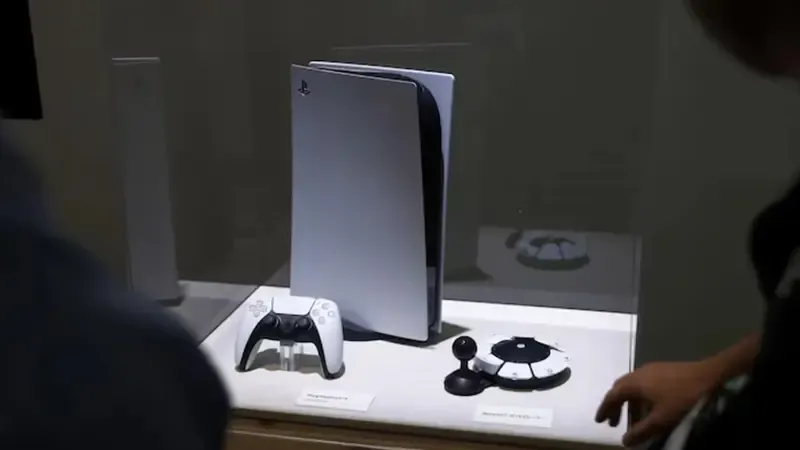

A reported PlayStation 6 memory cost of over $680 for RAM and NAND alone would force Sony into a difficult tradeoff on PS6 price, specs, timing, and hardware tiers.
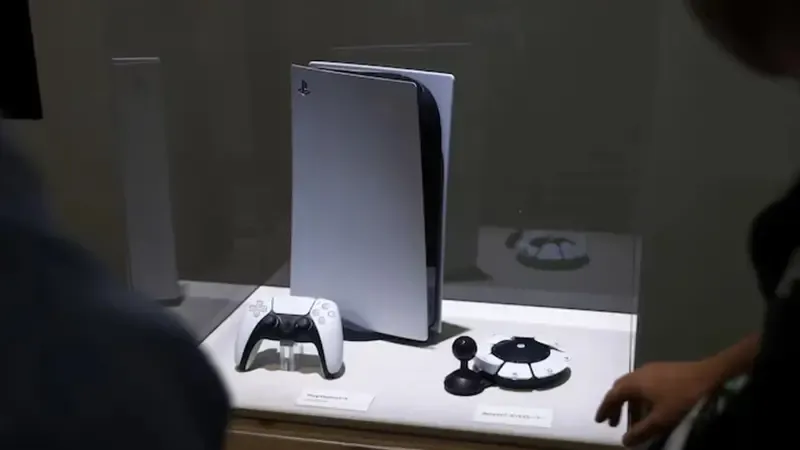
Image: dlcompare.com
A $680 memory claim lands before Sony has announced the PS6
The sharpest new number around Sony’s next console is not a launch date, a GPU target, or a first-party game. It is a component-cost claim: according to Video Games Chronicle, hardware insider KeplerL2 wrote on NeoGAF that “RAM + NAND alone” for PlayStation 6 will cost Sony “over $680” per console.
That is a rumor, not a Sony disclosure. Sony has not announced the PlayStation 6 price, release date, specifications, storage capacity, memory configuration, or final retail strategy. VGC describes KeplerL2 as an insider who has accurately reported on AMD hardware in the past, which gives the claim more weight than an anonymous forum guess, but it remains an unofficial estimate until Sony or a supplier provides hard numbers.
The tension is obvious. If the PlayStation 6 memory cost really sits above $680 before the processor, cooling, controller, chassis, power supply, wireless hardware, packaging, assembly, shipping, retailer margin, and support costs are counted, Sony’s next-gen console math becomes punishing. That figure is higher than the PS5’s original $499 launch price in the United States, and it would cover only RAM and NAND flash storage, the latter being the core storage component behind an internal SSD.
VGC reports that KeplerL2 also claimed those same components were much cheaper when Sony finalized the console’s designs. If accurate, that detail is the strategic problem rather than the headline number alone. Console hardware is planned years in advance, but memory and storage are commodity markets. Sony can lock in architecture, developer targets, and performance assumptions, then watch a global component cycle move underneath the whole plan.
Kotaku, citing VGC’s report, framed the claim as a sign that the next generation of home consoles could be “monumentally expensive” for players. That is interpretation, but it tracks with a practical reality: a console maker cannot simply wish away a bill of materials. It can subsidize hardware, delay a launch, reduce specifications, create multiple models, raise the retail price, or search for a different business model. Every one of those choices carries a cost.
The math gets ugly before the APU is even counted
A $680 RAM and NAND figure does not translate directly into a $680 PS6 price. It points in the opposite direction. Memory and storage would be one slice of the bill of materials, while a console also needs the custom AMD system-on-chip, motherboard, cooling solution, enclosure, controller, ports, power hardware, software and network integration, warranty coverage, logistics, and retail channel support.
That is why the PS6 price rumor has quickly turned into a $1,000 discussion. VGC notes that analysts have already debated whether next-generation consoles could retail above $1,000, with current hardware pricing described as historically high. Speaking to GamesIndustry.biz, Aldora CEO Joost van Dreunen warned that “north of a grand is the floor” and suggested the next generation may not arrive until 2028. Newzoo market intelligence director Manu Rosier offered a more conservative read in the same broader analyst discussion, saying base next-generation models are likely to stay under $999 for psychological and marketing reasons, while premium tiers are a separate question.
Those two views define Sony’s lane. A four-digit base PlayStation risks turning the console from a mass-market platform into an enthusiast device. A sub-$999 base model, if component costs remain elevated, risks either a thinner margin or a weaker specification. Neither is painless for a platform holder that depends on a large installed base to sell software, services, subscriptions, accessories, and licenses.
The current PlayStation 5 pricing backdrop makes the rumor harder to dismiss. VGC reports that PS5 now costs over 50 percent more, or $200 and £200 more, than at launch. Rosier, quoted in VGC’s coverage of the analyst debate, said PS5 Pro is already at $899 after two hikes inside a year, so the distance to $1,000 is short. Those current-generation numbers do not prove a PS6 price, but they show that the old expectation of cheaper hardware over time has broken down for this cycle.
The key point for readers is that the reported $680 is not a retail forecast. It is a pressure signal. If Sony is really staring at memory and storage costs this high, then any final PlayStation 6 hardware plan has to solve the same equation from one side or another: retail price, subsidy, specs, timing, or monetization.
Memory has become the next-gen bottleneck, according to the reporting
The reported pressure point is not exotic silicon. It is memory and storage, the parts of a console that used to feel less glamorous than CPU and GPU performance but now sit at the center of the PS6 component cost conversation.
VGC attributes the surge in memory and storage pricing to shortages driven by AI data center demand, a market-wide force rather than a PlayStation-specific issue. Newzoo’s Rosier, quoted by VGC, said component costs sit outside manufacturers’ control and that there is “no sign of an AI-driven cooldown in memory and storage demand.” That matters for Sony because PlayStation 6 hardware would be competing for supply in the same broader ecosystem that serves servers, PC components, phones, laptops, and other consumer electronics.
Tech-Insider, in a separate September report based on forum-tracked Kepler_L2 estimates and reporting from Mix Vale, placed a rough PS6 bill of materials at about $960, up from about $760 earlier in 2026. That report also cited TrendForce data, via CNBC, saying DRAM contract prices rose 93 percent to 98 percent quarter over quarter in the first quarter of 2026, then another 55 percent to 63 percent in the second quarter, with a slower but still rising third-quarter forecast. Those figures are not Sony component invoices, but they support the broader claim that memory markets have moved violently.
There is also a conflict inside the rumor ecosystem. Tech-Insider’s September piece said follow-up reporting had memory components at roughly $300 of a $960 bill of materials. The newer VGC-reported KeplerL2 claim says RAM and NAND alone are over $680. Those numbers cannot both describe the same final configuration at the same moment in the same way. The gap could reflect changed pricing, different component assumptions, different accounting methods, or simple inaccuracy in unofficial estimates.
That conflict is a reason to treat the exact dollar amount carefully. It is not a reason to ignore the pattern. Multiple reports in the provided material point in the same direction: memory pricing has become one of the biggest constraints on Sony next gen console planning, and the cost curve may be moving faster than a traditional console cycle can comfortably absorb.
Sony’s real choice may be specs, tiers, or subsidy
If the PlayStation 6 hardware design was set when memory and NAND were far cheaper, as KeplerL2 reportedly claimed, Sony is left with a familiar strategy problem: change the build, change the price, or change the economics around the box.
The most direct technical levers would be memory capacity, storage capacity, and model segmentation. A smaller internal SSD would reduce NAND cost, but it could push more pain onto players already juggling large game installs. A lower memory target could reduce cost, but it would also shape what developers can assume for the entire generation. A cheaper base model and a more expensive premium model could let Sony protect a mass-market entry price while selling higher specifications to players willing to pay more.
None of those options has been announced by Sony. The provided reporting does not say Sony has cut PS6 memory, reduced storage, or chosen a two-tier launch. The required media attached to this assignment refers to reduced memory and cost savings, but the sources here only support the broader possibility that Sony may need to examine those levers if the reported component pressure holds.
The subsidy option is also harder than it used to be. Kotaku’s analysis notes that console makers once accepted hardware losses while expecting to earn the money back through game sales and licensing fees, but argues that the model is less secure when players spend more time with fewer games. That is an interpretation rather than a formal Sony statement, yet it fits the strategic risk. A heavily subsidized PS6 only works if Sony is confident the installed base will generate enough downstream spending through software, PlayStation Plus, add-ons, third-party licensing, and accessories.
A high-spec PS6 at a high price has a different risk: it could narrow the launch audience. A restrained PS6 at a lower price risks underwhelming players who expect a clean leap after PS5 and PS5 Pro. A split strategy risks developer complexity and consumer confusion if the difference between models is too large. Sony’s challenge is not simply to build the fastest console it can. It is to set a target that developers can use, players can afford, and Sony can manufacture at scale.
Xbox’s Helix context shows this is an industry problem, not only a PlayStation problem
Sony is not alone in this bind. VGC reports that Xbox has announced a next-generation console is in development, codenamed Helix, and has warned that it needs to consider new business models to cover costs. Games.gg’s coverage of the same broader issue says Xbox CEO Asha Sharma has publicly stated that memory costs will affect pricing and availability for Project Helix, and that Xbox is exploring different business models to keep hardware accessible.
That context changes how to read the PS6 price rumor. If memory and storage costs are being driven by AI data center demand and wider component shortages, neither Sony nor Microsoft can solve the problem entirely through clever console design. They can negotiate supply, choose capacities, time the launch, and adjust retail strategy, but they cannot fully control the commodity market.
This is where console competition may look different next generation. The old comparison was simple: which box offers the stronger GPU, better exclusives, lower price, or cleaner subscription value. The next comparison may include financing, upgrade paths, cloud tie-ins, premium tiers, and whether the base hardware is built to hit a psychological ceiling below $1,000.
For Sony, the PlayStation brand still gives it leverage. A large PS5 audience, a deep first-party catalog, and strong third-party support all help justify a new platform when it arrives. But brand strength does not erase sticker shock. If PS5 Pro is already sitting close to the $1,000 line in current reporting, Sony has less room to frame PS6 as a traditional generational bargain unless component prices cool or the company accepts a serious launch subsidy.
The strategic danger is a squeezed middle. If high-end players migrate to PCs, handheld PCs, or premium consoles, while price-sensitive players stay on PS5 longer, the PS6 launch window could be slower and more segmented than prior generations. That is not confirmed, but it is the scenario Sony has to defend against if the PlayStation 6 memory cost claim proves directionally accurate.
Timing may be Sony’s cleanest lever, but delay has its own cost
VGC says PlayStation 6 was once claimed to be targeting a launch as soon as next year, while van Dreunen suggested to GamesIndustry.biz that the next generation may not arrive until 2028. Sony has not confirmed either window. The practical takeaway is that timing remains one of the few levers that can change the PS6 price equation without altering the machine itself.
Waiting could help if memory and NAND prices fall, supply improves, or Sony secures better long-term contracts. It could also give developers more time to optimize for a final target and let the PS5 generation keep generating revenue. With PS5 prices rising rather than collapsing, Sony may have less urgency to rush a successor into a hostile component market.
Delay is not free. A later PS6 risks extending the current generation past the point where enthusiast players feel meaningful progress. It also gives competitors, PC hardware makers, handheld device manufacturers, and cloud services more time to define the premium gaming conversation. If Xbox’s Helix strategy lands first, Sony may face pressure to respond even if the component market remains unfavorable.
There is also a developer-side consideration. Studios need a stable target. If Sony changes memory or storage assumptions late, that can ripple through asset budgets, open-world streaming systems, loading expectations, and cross-generation support plans. If Sony holds the target and waits for costs to improve, developers get clarity, but the market waits longer for a new console cycle.
That is the long-game problem. The best launch moment is not necessarily the earliest one. It is the moment when the hardware, price, software slate, supply chain, and player appetite line up well enough to create momentum. The reported $680 RAM and NAND figure suggests Sony may be optimizing around cost volatility as much as raw performance.
For players, this is a reason to watch the model strategy closely
No one should treat $680 memory as a confirmed PS6 spec sheet or a guaranteed $1,000 retail price. The confirmed state of the market is narrower: Sony has not announced PlayStation 6 details; VGC reports that KeplerL2 claims PS6 RAM and NAND alone exceed $680; analysts cited in the same reporting are openly debating four-digit next-generation pricing; and current PlayStation hardware has already become more expensive than it was at launch.
For buyers, the practical question is whether to wait for PS6 or buy into the existing PlayStation ecosystem. The sources do not provide enough to answer that for every player, but they do suggest one safe assumption: next-generation hardware is unlikely to be cheap if memory and storage costs remain elevated. Anyone expecting the PS6 to arrive as a straightforward $499 successor to PS5 should reset expectations until Sony says otherwise.
The model strategy will be the signal to watch. A base PS6 under $999 would show Sony prioritizing reach, even if that means accepting lower margins or trimming elsewhere. A premium model above $1,000 would show Sony trying to capture enthusiasts without forcing every buyer into the same price tier. A reduced storage model would shift some cost pressure onto players who need expansion later. A delayed launch would imply Sony believes timing can solve part of the component problem.
The unanswered questions are now sharper than the rumor itself. How much memory does Sony believe developers need for the full generation? How much internal storage is acceptable when game sizes remain a consumer concern? Can Sony subsidize another console launch at scale? Will PlayStation 6 launch with multiple configurations? And will AI-driven demand cool soon enough to matter?
Until Sony speaks, the PlayStation 6 memory cost claim should be read as a credible warning sign rather than a final price tag. The number may move. The pressure behind it is already visible across the hardware market.