
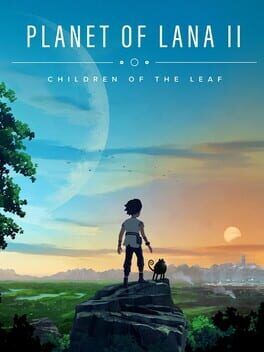
A deep dive into how BAFTA-nominated composer Takeshi Furukawa is evolving Planet of Lana II: Children of the Leaf’s orchestral soundscape, from returning motifs to kulning vocals and darker tonal shifts revealed in the new music dev diary.
Planet of Lana’s first journey owed as much to its music as its painterly visuals. Takeshi Furukawa’s score wrapped Lana and Mui’s side-scrolling odyssey in delicate strings, searching woodwinds and quiet choral colours that rarely shouted, instead cushioning every leap and moment of stillness. With Planet of Lana II: Children of the Leaf, Furukawa is not just repeating that formula. The new dev diary filmed in Budapest, a city he pointedly calls an orchestral capital, makes it clear this sequel’s soundtrack is about expansion, contrast and a more fragile emotional core.
Where the first game used a relatively intimate palette to underscore wonder and unease on a mysterious world, Children of the Leaf opens the lens. The story itself is darker, with Lana returning to a home fractured by greed and power struggles between tribes. Furukawa’s answer is to grow the ensemble, working with a full orchestra and choir, yet he keeps talking about restraint. The goal is not to drown Wishfully’s art in symphonic bombast, but to use all that scale for moments that matter while allowing silence and sparse textures to carry the rest.
The dev diary frames this balance through a session in Budapest, where we see Furukawa on the scoring stage, marshalling strings, brass and choir. What stands out is how often he talks about simplicity. Planet of Lana II might be larger, but its music leans on clean thematic writing rather than dense orchestration. Short, singable motifs return frequently, acting like memory triggers. They call back to the first game while hinting at how Lana herself has changed. A gentle rising figure that once suggested naive curiosity now appears in slower, lower register variations, turning that same idea into something more melancholic and burdened.
One of the most intriguing shifts revealed in the video is the introduction of kulning, a traditional Scandinavian cow-calling vocal technique. In the dev diary, Furukawa spotlights fast, major-key passages built around this piercing, high-register vocal colour. It is not the brooding, minor-key gloom many might expect from a darker sequel. Instead, kulning slices through the orchestral bed, evoking vast open spaces, distance and a fragile line of communication across valleys and forests. Within the context of Children of the Leaf, that sound can read as both a call home and a warning carried on the wind.
Kulning also plays into the series’ Scandinavian flavour. The first Planet of Lana’s score occasionally hinted at Nordic folk through modal shifts and rustic percussion, but it remained largely within modern filmic orchestral language. By centering kulning in key cues for the sequel, Furukawa grounds Lana’s world in a more tangible folk tradition. It helps distinguish Children of the Leaf from the sci-fi platformers it will share shelf space with, and it threads an audible line between the human tribes at the heart of the story and the wild planet they are in danger of breaking.
Thematically, Furukawa is approaching Planet of Lana II as a story of internal and external conflict. The dev diary’s narration and supporting coverage describe Lana’s arc as a kind of emotional caging, someone closing off as her world fractures. The music mirrors that by juxtaposing open, consonant textures with encroaching dissonance. In one segment, he demonstrates how simple piano triads can be nudged into unease through carefully placed dissonant notes. Those voicings are designed not to scream horror, but to subtly curve the emotional line of a scene, tilting a moment of apparent calm into a space where the player feels something is not quite right.
This approach builds directly on the first game’s soundscape. Planet of Lana was notable for how much it trusted negative space. Strings often entered as soft cushions rather than leads, and melodic material tended to be sparse, leaving room for environmental audio. In Children of the Leaf, Furukawa keeps that philosophy but extends the range. When nothing critical is happening, the score often pulls back to solo instruments, muted strings or distant choral washes that blend with wind and foliage. When narrative pressure spikes, the same orchestra that has been whispering can suddenly swell, letting brass and choir push Lana’s struggle into mythic territory.
Motivic continuity is central to that evolution. The dev diary and press material point to recurring ideas tied to Lana, Mui and to the planet itself. Lana’s theme, in particular, becomes a kind of barometer for her state of mind. Early sequences use familiar intervals and contours from the first game, offering returning players a sense of homecoming. As tribal conflict escalates, the harmony under that theme shifts. Chords that were once straightforwardly major fold in darker extensions, and the theme occasionally fractures, appearing only in fragments amid more turbulent orchestral writing. It suggests a character trying to hold on to who she was while the world pushes her toward something harsher.
Instrumentation plays a big part in marking those emotional boundaries. The orchestra in Children of the Leaf is deployed almost like a set of overlapping ensembles. Strings and woodwinds handle memory, nostalgia and the fragile bond between Lana and Mui. Brass and percussion step in when power, greed and looming threat take the stage. Choir, especially when combined with kulning, sits at the intersection, representing both the ancestral voice of the tribes and the planet’s own presence. Furukawa’s comments about Budapest’s musicians highlight how much he relies on their interpretive nuance, asking for bow pressure changes and breathy attacks to give certain lines an unstable, living edge.
Despite the heightened scale, Furukawa remains keenly aware of the game’s visual storytelling. Wishfully’s art direction is still doing much of the narrative heavy lifting, with tableaux of colossal ruins, tangled forests and underwater environments. The music’s job, as the dev diary frames it, is to underline the emotional vector of those images rather than compete with them. That is why the score often steps back into gentle ostinatos and subtle harmonic beds, letting color choice carry the mood. A slight shift from warm strings to colder, sul ponticello textures can turn a sun-dappled glade into something that feels watched, setting up the player for story beats without telegraphing them bluntly.
What emerges from this new look at Planet of Lana II’s soundtrack is a sense of confident restraint. Furukawa is not chasing the maximalist tendencies that often come with sequels. Instead, he is sharpening the emotional grammar of the series. Familiar motifs return in new emotional contexts. Traditional vocal styles like kulning expand the palette while reinforcing the setting’s specificity. Dissonance is used as a seasoning rather than a blanket. All of it serves a tone that is unmistakably more mature but still anchored in the quiet wonder that made the first game stand out.
If Planet of Lana was about discovering a world, Children of the Leaf looks set to be about fighting for the soul of that world, and for the person Lana is becoming inside it. The music, as revealed in Budapest’s recording halls, is the connective tissue between those stakes and the player’s experience. Every soaring vocal line and carefully bent piano chord is there to make each step beside Mui feel heavier, more meaningful, and more human.