
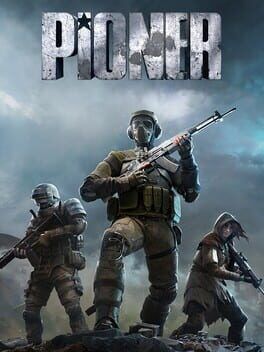
Pioner’s gritty post‑apocalyptic MMOFPS has landed on Steam Early Access with a strong pitch but mixed reviews. We dig into player feedback and our own impressions to map out what GFA Games has to fix next – from onboarding and performance to solo viability – if it wants to succeed where so many Tarkov‑likes have stumbled.
Pioner has finally hit Steam Early Access, bringing its blend of Soviet post apocalypse, MMO structure and Escape from Tarkov style tension to a live audience. It has also landed with the kind of launch most survival shooters know all too well: a promising core buried under technical problems, unclear onboarding and a player base already asking if this will be another “Tarkov killer” that never gets out of beta.
Steam’s verdict so far is blunt. With hundreds of reviews pulling the score into “Mixed,” the mood is one of cautious interest rather than hype. Players like the atmosphere, the 50 square kilometer island and the idea of a persistent MMO shooter where factions, hubs and story quests sit alongside high stakes PvE and PvP. They do not like crashing, stuttering, long loads and a game that leaves newcomers to drown in hardcore systems with very little explanation.
For GFA Games, the next few months will decide whether Pioner grows into a cult hit or slides quietly toward the long list of Tarkov‑likes that bled players faster than they could add content. Looking across early player reviews, community discussions and our own time in the zone, three pressure points stand out: onboarding, performance and solo viability.
Onboarding: Hardcore is not an excuse for opacity
Pioner is built for people who enjoy getting punished, but punishing and confusing are not the same thing. Right now, too many early access reviews blur those lines.
New players drop onto the island and immediately juggle survival meters, realistic ballistics, anomalies, faction reputation, hub vendors, instanced activities and open world roaming. In theory this is the appeal. In practice, players repeatedly describe the early game as disorienting. Basic questions like where to go for starter quests, how to safely extract from dangerous areas or what penalties they face for death are not surfaced clearly.
Some of this is a UI problem. Vendor screens are dense, tooltips are inconsistent, and important systems such as modding or crafting benches assume prior Tarkov experience. Other complaints come down to how poorly the game explains its structure. The promise is an MMO shooter with hubs, social areas, raids and open world exploration. The reality for new arrivals is wandering through ruins and menus with little sense of progression.
Hardcore shooters can still teach. Escape from Tarkov itself eventually added better tutorials, clearer extraction markers and more transparent quest flows because the initial learning wall throttled growth. If Pioner wants to keep its identity while avoiding that same choke point, it needs a visible onboarding push.
The fixes do not require “dumbing down” the experience. They require better communication inside the game. Early faction quests that deliberately send players through all major systems, clearer map indicators for safe hubs and dangerous anomalies, and context sensitive tips the first time you interact with vendors or workbenches would cut down on confusion without lowering the game’s difficulty ceiling.
Performance: A brutal shooter hamstrung by a brutal frame rate
The other dominant thread in reviews is performance. Even PC owners who comfortably meet the recommended specs are reporting hitching, frame drops and unusually long load times between zones. Combined with the game’s unforgiving combat model, this is an especially nasty pairing. Dying because you misjudged an angle is one thing. Dying because the game stuttered is another.
Technical issues range from inconsistent frame pacing to animation problems and server hitches in busier areas. Some players praise the atmosphere and visual ambition while simultaneously admitting they have had to turn settings down much further than they would expect for comparable shooters. Others report that their first extended session ended not from enemy fire but from a client crash or a failed connection in the middle of a key encounter.
GFA has already pushed at least one hotfix aimed at reducing load times, correcting facial animation bugs and shoring up server stability. That is a start, but the early access tag only buys so much patience in 2025. The genre is crowded and players have plenty of alternatives. If the game’s identity is tight, high stakes gunplay in a shared world, then technical performance is not a side issue. It is the foundation.
The studio’s short term priorities should be obvious. Stabilize frame rate on mid range hardware, prioritize network stability in crowded hubs and popular routes, and continue to trim loading screens wherever possible. Players are more willing to forgive content gaps than they are a game that simply does not feel responsive.
Solo viability: MMO structure, loner fantasy
Pioner is pitched as a massive online shooter, but the fantasy at its core is wandering a hostile Soviet wasteland as a lone operator. That tension shows up everywhere in early feedback.
At low levels, solo players describe the experience as punishing in ways that feel more like numbers tuning than intentional survival design. Enemies take too many rounds unless you are already geared. Some activities tuned for groups border on impossible without friends or extremely conservative play. On the other hand, pushing too far into solo friendliness risks gutting the danger that makes the island compelling.
This is where the “failed Tarkov” trap is most dangerous. Several extraction shooters and survival MMOs have tried to widen appeal by softening early game lethality and making loot progression smoother. They often lost their hardcore base without replacing it with a broader audience. Tarkov itself kept its core design and instead added ways for different player types to find their place, whether through co op focus, more accessible early quests or safer routes.
For Pioner, the path forward is to protect the fantasy of the lonely stalker while ensuring that playing alone is viable rather than masochistic. That likely means:
Adjusting early enemy health and damage in specific solo accessible zones so that new players can learn fundamentals without every mistake resulting in a full gear wipe. Making faction and story content more readable as a progression ladder for solo players, so there is always a clear “next step” that does not require premade groups. Offering tools that let solo players scout, recon and retreat more effectively, leaning into stealth and preparation rather than sheer firepower.
The key is to signal clearly which content is designed for squads and which is intended as a tense but fair solo challenge. If the MMO structure becomes a constant source of friction for players who prefer to roam alone, they will peel off to single player alternatives that offer similar vibes without the pressure.
Avoiding the Tarkov graveyard
The comparison to Escape from Tarkov is baked into Pioner’s pitch. It borrows the lethality, the gear focus, the paranoia that every building might hide another player. But Tarkov’s long road through rough betas shows what it takes to survive in this niche. The games that did not make it usually had one or more of the following problems: poor communication about what they were, a lack of clear progression, or technical issues that made risk feel arbitrary rather than earned.
Right now, Pioner sits on the knife edge between those futures. The concept is strong. The world is distinctive. The mix of MMO structure with a bleak Soviet island and anomalies is still rare. Early access players are not rejecting the idea. They are asking GFA to meet them halfway.
A clear roadmap, which the studio has promised, will help with expectations. Early and aggressive work on onboarding, performance and solo viability will decide whether those expectations stay optimistic or turn into another cautionary tale of a Tarkov‑like that never quite figured itself out.
If Pioner can get those fundamentals right, there is still plenty of room in the market for a grim, faction driven MMO shooter that treats every expedition into the unknown as a story worth telling. If it cannot, the island risks becoming just another abandoned relic in a genre that moves on quickly.