
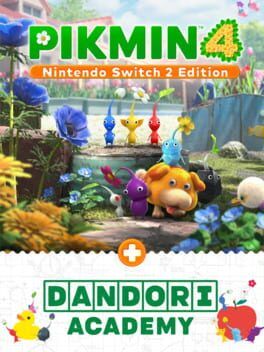

Players are review bombing Pikmin 4: Nintendo Switch 2 Edition over slower loads, frame drops, reused Dandori Academy content, and a paid upgrade that some say feels worse than the original.
Image: IGDB
A paid upgrade is being judged like a downgrade
Pikmin 4: Nintendo Switch 2 Edition + Dandori Academy launched last week as a paid upgrade to Nintendo’s 2023 Switch game, and the strongest reaction so far is not about its sharper image quality. It is about players saying the new version can load more slowly and run less smoothly than the original.
According to IGN, the Switch 2 upgrade is priced at $9.99 and adds the Dandori Academy challenge mode while raising the game’s visuals to 4K. Nintendo Life lists the upgrade price as £7.99 / $9.99 / €9.99. Polygon likewise reports that the upgrade costs $10 for owners of the original Nintendo Switch version.
That price is central to the backlash. The complaint is not simply that Pikmin 4 Switch 2 Edition lacks a dream-list of extras. The sharper criticism, visible across Metacritic user reviews quoted by IGN, Polygon, Nintendo Life, and egamers.io, is that paying for the upgrade may introduce practical annoyances into a game players already liked. For a series built on tiny movements, brisk resets, and careful routing, even a small technical step backward is easy to feel.
The reaction has turned into a rare Nintendo review bombing story. Nintendo Life reported that the Switch 2 Edition had a Metacritic metascore of 83 while its user score sat at 2.3, categorized as “Generally Unfavourable.” Polygon, citing Metacritic separately, reported a 1.9 out of 10 user score and contrasted it with the original Pikmin 4’s 8.9 user rating. Those figures appear to reflect different checks of a live user-score page, but both point to the same divide: critics and users are grading this package very differently.
The complaint with numbers: longer exits from caves
The most specific Pikmin 4 Switch 2 performance complaint concerns loading out of caves. Polygon and egamers.io both cite a Metacritic user review from PrestonandTom claiming standard load times increased from “six seconds to 30+ seconds” and that the frame rate went from a “consistent 30 FPS to an inconsistent 30 FPS.” IGN also says initial evidence shows a hit of up to 30 seconds when emerging from a cave compared with the Switch 1 version.
Nintendo Life looked into that same load-time complaint and found a less extreme, but still notable, result. The outlet said loading into a cave took about six seconds in its own test, while loading out took around 14 to 15 seconds. Nintendo Life explicitly said it did not reproduce the 30-plus-second figure others cited, but still found the cave exit long enough to raise concern.
That difference matters. Based on the available reporting, the 30-second figure should be treated as a player-reported and video-analysis-backed complaint, not a universal measured result across every setup and scenario. The 14-to-15-second figure is Nintendo Life’s own test for one cave-exit situation. Both accounts, however, point in the same direction: some players are seeing Pikmin 4 slower loads in the Switch 2 Edition, particularly when returning from caves to the main environment.
Frame drops are harder to pin down from the provided sources because the reporting quotes user complaints rather than instrumented frame-time analysis. Polygon and egamers.io cite multiple users alleging Pikmin 4 frame drops, glitches, and an “inconsistent 30 FPS.” IGN quotes a user saying the upgrade brought “longer loads and freezing up in game.” What is confirmed is that frame-rate complaints are a recurring part of the user backlash. What is not confirmed by the sources is a full technical breakdown showing how often those drops occur, which scenes trigger them, or whether they affect all players equally.
Dandori Academy is caught between remix and recycled content
The upgrade’s other flashpoint is Dandori Academy, the new challenge mode that gives this edition its expanded subtitle. IGN describes the mode as a schedule of six challenge levels each month, with players able to submit competitive times during a limited weekend window. That structure fits Pikmin’s best instincts: tight routing, fast corrections, and the little thrill of shaving seconds from a plan that looked perfect five minutes earlier.
The problem is that players are arguing over how new those challenges feel. IGN reports that the available Dandori Academy stages are a mix of fresh maps, repeats from the base game’s original Dandori mode, and modified versions of campaign areas. IGN also cites YouTuber Press A!, who presented examples of “new” Dandori levels that appear to be dungeon caves from the base game with tweaks, including repeated versions of similar layouts and some viewed from a different orientation.
Nintendo Life quotes a user complaint saying half of the maps encountered so far were taken directly from the base game and the other half shared the same layout. Polygon and egamers.io also report that some players describe Dandori Academy as repetitive and built around reused areas.
There is a calmer read from within the Pikmin community. Polygon and egamers.io both note that some posters on the Pikmin subreddit pushed back against the severity of the negative scores, with one Redditor saying a 0.6 would be reserved for a “sub-functional” game. Those reports also say some fans defended Dandori Academy’s reused maps, arguing that enemy placement and other adjustments can make familiar areas play differently.
That distinction is important for Pikmin specifically. Reuse is not automatically a creative failure in a time-attack strategy mode. Rearranged enemies, altered object placement, and a new scoring target can change the texture of a route. But reuse feels very different when attached to a paid hardware-generation upgrade that players expected to feel cleaner, quicker, and more complete than the game they already owned.
The upgrades players do acknowledge
The backlash has not erased the parts of the Switch 2 Edition that are broadly recognized as improvements. IGN says the new edition bumps the visuals to 4K. Nintendo Life also describes the release as bringing 4K visuals to the 2023 title, while Polygon and egamers.io refer to higher-resolution graphics. Even harsh user reactions quoted across the reports tend to concede that the graphics are improved.
Voice commands are the other feature drawing some positive mention. Nintendo Life calls them “neat little extras,” and Polygon and egamers.io report that some users like the ability to issue voice commands to Oatchi, Pikmin 4’s canine companion. It is a small fit for a game about commanding busy crowds under pressure, and it has the kind of tactile charm Nintendo often finds in side features.
Those positives explain part of the frustration. The Switch 2 Edition does contain new features. The argument is about value and tradeoffs. If a player mostly wants a sharper picture and extra Dandori challenges, this edition has those things according to the sources. If that same player is sensitive to repeated cave exits, expects faster loading from newer hardware, or hoped the upgrade would move beyond 30 FPS, the current user reaction is a warning sign.
Nintendo Life’s own review scored the package 7/10, calling the main Pikmin 4 campaign possibly the best in the series while saying it was disappointed by the lack of mouse controls and 60fps performance. That sums up the tension better than the lowest user scores do. The foundation is still Pikmin 4, a widely liked Nintendo strategy adventure, but the Switch 2 treatment is being judged against the promise of a paid next-system upgrade.
Switch 2 upgrade expectations are becoming stricter
This controversy lands in a wider pattern around Nintendo’s Switch 2 upgrade strategy. Polygon and egamers.io both frame Nintendo’s upgraded editions as mixed so far, pointing to Kirby and the Forgotten Land as a stronger example because it received significant new content and noticeable performance improvements, while Xenoblade Chronicles X received a cooler reception. Nintendo Life also compares Pikmin 4’s user-score crash with other Switch 2 releases, including Zelda: Ocarina of Time having a much stronger user-score response despite its own complaints from some players.
That comparison sharpens the issue for Pikmin 4 Switch 2 Edition. Players can accept different kinds of paid upgrades, but the perceived deal needs to be legible. More content can justify a price. Better performance can justify a price. Higher resolution can justify a price for some players. The harder sell is a package where visual clarity improves while load times may worsen and the new content is viewed by some as a remix of material already in the base game.
There is also a genre-specific reason the anger has stuck. Pikmin is about flow. You plan a day, dive into a cave, split tasks, rescue treasure, pivot when something catches fire, and try again with a cleaner route. Load screens and frame hitches interrupt that loop in a way that feels larger than the number on a stopwatch. A 14-second cave exit is not catastrophic in isolation, but repeated cave exits are part of how Pikmin 4 breathes.
At the same time, the review bombing scores should be read with caution. A very low user average can express frustration, but it can also flatten useful distinctions. The provided reports do not show that the Switch 2 Edition is broken across the board. They show a paid upgrade facing unusually intense pushback because some players believe its tradeoffs undercut the value of upgrading.
What to check before buying or upgrading
If you already own Pikmin 4 on the original Switch, the key confirmed buying detail is the paid upgrade path. IGN reports the Switch 2 upgrade costs $9.99, while Nintendo Life lists £7.99 / $9.99 / €9.99. The sources provided here do not include a separate full-package price, so owners should verify the current price on Nintendo’s own storefront before purchasing.
Before upgrading, check three things against your own tolerance. First, look for current load-time comparisons, especially cave exits. Player claims cited by Polygon, IGN, and egamers.io describe jumps from about six seconds to more than 30 seconds in some cases, while Nintendo Life’s own test found about 14 to 15 seconds when loading out of a cave. Second, look for updated performance tests if Pikmin 4 frame drops are a dealbreaker for you. The present reporting confirms repeated user complaints, but not a complete technical audit. Third, decide whether Dandori Academy’s remix structure sounds appealing. IGN reports that its early courses include fresh maps, repeats, and modified campaign areas, with six levels planned monthly.
If you are buying because you want a crisper 4K presentation and extra challenge content, the Switch 2 Edition has support in the reporting for both of those features. If your main hope is faster loads, 60fps performance, mouse controls, or wholly new Dandori layouts, the available reports suggest waiting for clearer technical analysis or a patch. None of the provided source material cites a Nintendo statement addressing the complaints or announcing a fix.
For now, the safest read is that Pikmin 4 remains a strong game under the noise, but the Switch 2 upgrade is not an automatic recommendation for every existing owner. In a series where good play is measured in tiny decisions and cleaner routes, the small stuff is the game. That is why this upgrade’s loading screens, dropped frames, and recycled-map complaints have become such a large story.