
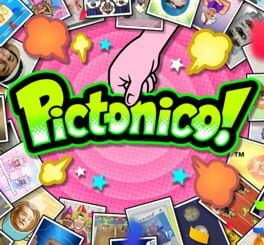

How Intelligent Systems is fusing WarioWare‑style chaos with your photo roll, why it recalls Face Raiders and WarioWare: Snapped, and what it hints about Nintendo’s quieter new mobile strategy.
Nintendo did not just announce a new mobile game. With Pictonico!, it quietly dropped what might be the purest expression of “Nintendo on a phone” so far: a WarioWare-flavored grab bag of microgames that literally points the camera at you.
Launching May 28 on iOS and Android as a free-to-start download, Pictonico! is co-developed with Intelligent Systems, the studio behind WarioWare, Fire Emblem and Paper Mario. Instead of licensed characters or gacha systems, the star this time is your own photo roll.
WarioWare energy, smartphone hardware
Pictonico! is pitched as a collection of fast, silly challenges driven by photos you either snap in the app or pull from your gallery. Nintendo is promising up to 80 minigames split across paid “volumes,” with a small demo set included for free.
You can tell Intelligent Systems is in its element. The examples Nintendo has shown sound like they were pulled straight out of a WarioWare pitch meeting: peeling off a facial mask from a close-up selfie, plucking nose hairs, feeding a stern-looking boss character, rolling out a red carpet for a couple, zipping a noisy kid’s mouth, or dodging attacks from a best friend reimagined as a final boss. The core joke is always the same. Take an everyday photo, exaggerate one detail, then build a short, punchy interaction around it.
Mechanically, this lines up with WarioWare’s rapid-fire philosophy, even if Pictonico! seems to favor slightly more structured bites over split-second reflex tests. You are not sweeping through a dozen games in ten seconds like classic WarioWare, but the DNA is obvious. Each challenge is designed to be immediately readable, to punchline fast, and to be funnier because the victim is your friend, your pet, or your most cursed selfie.
On mobile, that idea fits better than almost anything else Nintendo has tried. Phones are always on hand, cameras are always ready, and your gallery is already packed with potential props. Intelligent Systems is essentially building a WarioWare toolkit on top of the smartphone’s most used feature.
A straight shot from Face Raiders and WarioWare: Snapped
Pictonico! might look new, but it sits on a very specific Nintendo camera lineage. It is hard not to think of the 3DS launch title Face Raiders, which scanned your face into a surreal shooting gallery, or WarioWare: Snapped on DSiWare, which used the DSi camera to track your head and hands for microgames.
Face Raiders turned faces into targets. You pointed the 3DS around your room, blasting floating, distorted versions of yourself and your friends. The novelty came from the collision of the real and the ridiculous. WarioWare: Snapped did something similar by reading your silhouette and making you pose, tilt or mime actions in time with quick-fire challenges.
Pictonico! feels like a distilled, phone-age version of both ideas. The shared threads are obvious. All three hinge on your real-world image becoming something to poke fun at. All three prioritize making you laugh at how dumb you look over technical showboating. But where the older experiments were tied to bespoke hardware and one-off downloads, Pictonico! lives on the devices you already use every day.
The move to smartphones also changes what “camera game” means. Face Raiders and Snapped were built to show off new tech. Pictonico! is not really a tech demo. It is leveraging mature, standard hardware to focus on creativity instead of calibration. You are not worrying about lighting or sensor fidelity, just how funny it will be to turn your coworker into a screaming boss monster.
There is even a hint of Rhythm Heaven in how some of the sequences play out, with compact, repeatable routines that lean on visual timing rather than complex controls. It is Nintendo circling back to a decade-plus of camera gimmicks and stripping them down to the tightest, most replayable loops.
How the photo feed becomes game design
What makes Pictonico! interesting as design rather than just novelty is how aggressively it mines the context of your images. The same minigame concept will read differently depending on who or what is in the shot. Feeding a cartoon boss with your actual manager’s face is a different kind of catharsis than doing it to your dog. Peeling a virtual mask off a perfectly staged selfie has a different tone than ripping one off a late-night, flash-lit disaster photo.
That variability is baked into the structure. Intelligent Systems is essentially shipping a set of microgame templates and trusting your camera roll to do half the comedic work. Because the images are your own, the game sidesteps the fatigue that can set in with preauthored content. Even if you replay the same challenge, dropping a new face into it refreshes the gag.
On top of that, Pictonico! leans into simple, one-hand-friendly inputs that match phone habits. You are dragging, tapping, swiping and flicking. The complexity comes from quickly parsing the prompt and finding the hitbox in the chaos of your own picture, not from memorizing button combos. It is the sort of interaction loop that plays cleanly in a subway line, during a break, or passed around at a party.
In a way, Pictonico! is Intelligent Systems returning to the physical comedy that defined early WarioWare, but with the player’s social life wired directly into the punchlines.
Free-to-start, volumes and a gentler monetization play
Structurally, Pictonico! uses the “free-to-start” label Nintendo likes for its mobile titles, but it avoids the more aggressive monetization patterns that defined games like Fire Emblem Heroes. You download for free and get a sampler of minigames. If you want the full experience, you buy content in chunks.
At launch, the game is split into at least two volumes of microgames. Volume 1 is cheaper, Volume 2 a bit pricier, and Nintendo is promising up to 80 minigames spread across these and any future packs. There are no stamina meters, no login streaks to maintain, no gachapon character pools to chase. You are purchasing defined bundles of content in a way that feels closer to classic DLC than the service-style economies associated with mobile.
For players burned by gacha-heavy designs, this approach will feel almost quaint. For Nintendo, it signals a continued shift away from chasing the kind of mega-whale revenue that Fire Emblem Heroes produced in its prime and toward smaller, lower-pressure apps that trade depth and retention for reach and goodwill.
Is Nintendo quietly rebuilding its mobile strategy?
Nintendo’s mobile output has slowed dramatically since the rush that brought Super Mario Run, Fire Emblem Heroes, Animal Crossing: Pocket Camp, Dragalia Lost, Dr. Mario World and Mario Kart Tour to market. Several of those games have already been shut down. The ones that remain have settled into low-profile maintenance.
Pictonico! does not look like an attempt to restart that old push. It reads more like the shape of a new one. Instead of pushing console-scale brands into free-to-play molds, Nintendo is leaning back into what it does best on the edges of hardware: strange, tightly scoped experiments that make you play with the device itself.
There is a pattern if you squint. After years of tying mobile to recognizable IP and long-tail monetization, Nintendo has shifted to smaller, more self-contained ideas that use phones as toy boxes rather than storefronts. Pictonico! is not trying to be a forever game. It is trying to be the sort of weird thing you show to friends, laugh at for a few sessions, and remember the next time Nintendo announces something equally odd.
Framing it that way also explains Intelligent Systems’ involvement. This is the studio Nintendo calls when it wants something snappy, experimental and slightly unhinged. Handing a photo-driven concept to the folks who turned nose hair into a recurring WarioWare motif is about as on brand as it gets.
If Pictonico! lands, do not be surprised if we see more mobile curios that echo old hardware experiments: maybe AR spin-offs that recall 3DS AR Games, or sound- and motion-led toys that borrow the spirit of Brain Age and Rhythm Heaven. Not live services, but small, sellable toys that make sense precisely because they are on your phone.
A strange little app that feels very Nintendo
Stripped of expectations about revenue and roadmaps, Pictonico! looks like something Nintendo might have quietly launched on DSiWare or the 3DS eShop in another era. It is a compact idea, polished by a veteran team, designed to wring the maximum amount of comedy out of a basic piece of hardware.
That it is landing on iOS and Android now, with a clear WarioWare flavor and a business model closer to DLC packs, suggests Nintendo is not done with mobile. It is just more comfortable treating phones as another place to drop experiments instead of a platform it needs to conquer.
Turning your friends into bosses, your selfies into slapstick and your photo roll into a playground is exactly the kind of low-stakes brilliance that has always made Nintendo’s side projects memorable. Pictonico! might never have the headline pull of Mario Kart Tour, but as a piece of design, it might be closer to the company’s heart.