
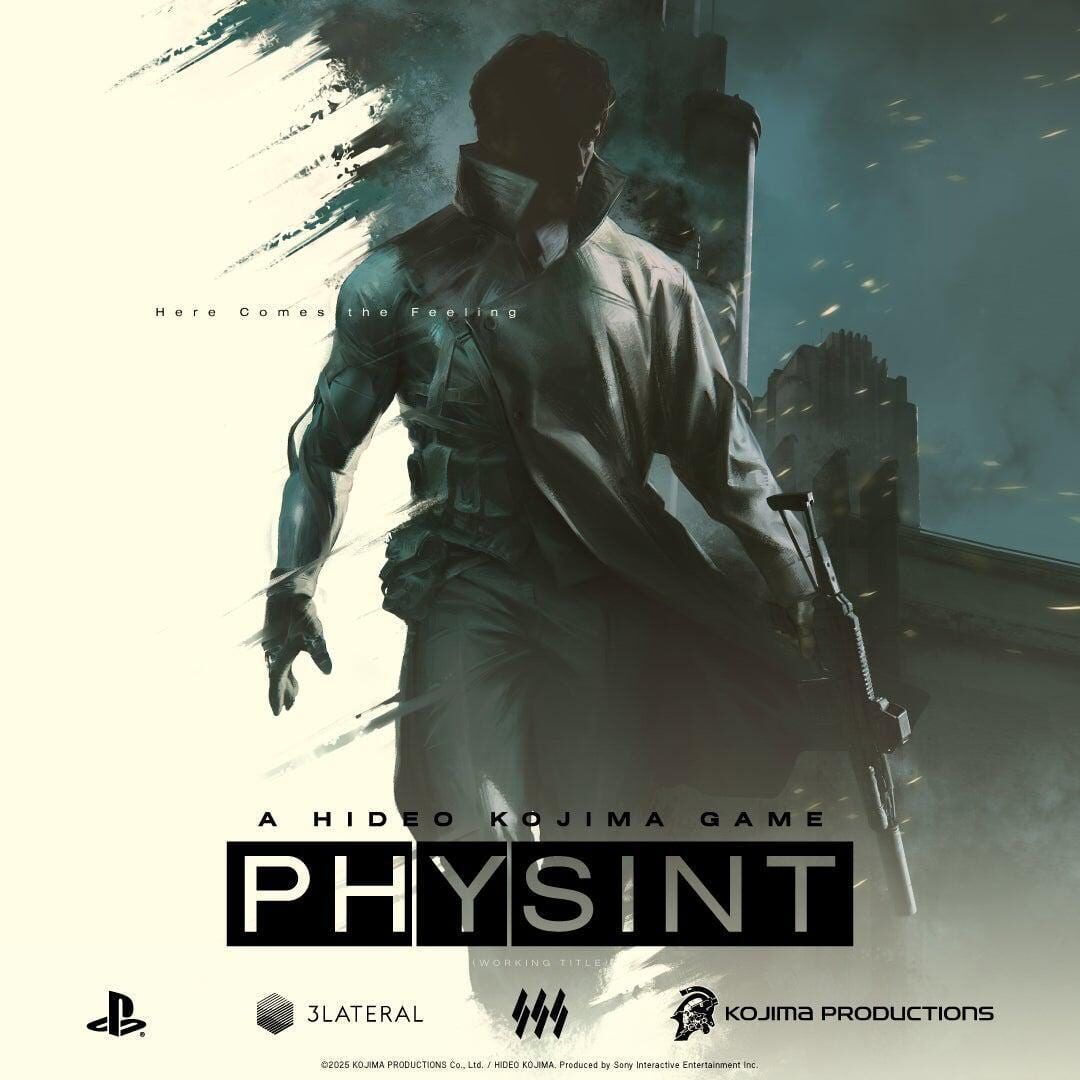

Breaking down the reported Physint villain casting brief, what it implies about tone, espionage influences, and how Kojima Productions may evolve its star‑driven performance capture beyond Metal Gear and Death Stranding.
Hideo Kojima has framed Physint as both his “return” to espionage and a step beyond what we traditionally call a video game. With so little officially revealed, even a small casting brief can feel like a major clue. That is exactly what has happened around a reported villain description that compares the antagonist to “Mads Mikkelsen in Hannibal, but with flair,” paired with notes about a German accent and a “psychotic” sense of confidence.
Treat all of this as rumor, not confirmation. But if this casting sheet is even directionally accurate, it offers an early window into how Physint might angle away from Metal Gear while still embracing the stealth-thriller expectations attached to Kojima’s name.
The rumor, in context
According to the reports, Kojima Productions and motion capture house Pivot Motion are working from a villain brief that calls for a slim, quiet, intense performer with a German accent, “confident in a psychotic sort of way,” and evoking Mads Mikkelsen’s portrayal of Hannibal Lecter, only “with flair.” The same breakdown supposedly references a bus hijacking incident involving a mother, a baby, five teenagers, and two men.
Taken literally, none of this guarantees final story beats or casting outcomes. Casting sides are often stitched together from decoy material, and tonal comps like “Mads in Hannibal” are more about a vibe than a template. Even so, the specific reference points say a lot about the kind of espionage story Kojima Productions appears interested in telling.
A villain cut from prestige thriller cloth
Mikkelsen’s Hannibal is an unusually precise touchstone. It is not just shorthand for “serial killer” or “intelligent villain.” That performance is about poise and elegance weaponized into menace. The horror does not rely on volume or theatrics; it comes from how controlled and self-possessed Hannibal is, even when doing unspeakable things.
Describing Physint’s villain through that lens suggests a tonal anchor much closer to prestige TV thrillers than to the heightened, codec-heavy theatricality of classic Metal Gear. Where Metal Gear’s antagonists often leaned into operatic monologues, masks, and boss-battle gimmicks, this brief implies a quieter, more interpersonal threat: someone who exerts pressure through presence more than spectacle.
The “with flair” qualifier is important too. It hints that Kojima is not about to make a dry, purely realistic spymaster. Instead, it sounds like an attempt to balance grounded psychological menace with the kind of stylistic excess he is known for. In other words, think Hannibal’s unnerving stillness blended with the visual and conceptual flamboyance you would expect from the creator of Psycho Mantis and Higgs.
Espionage through a psychological thriller lens
Kojima describes Physint as an action-espionage project, but the rumored villain brief points to espionage framed more as psychological warfare than as purely military intrigue. A villain modeled on Hannibal implies intimacy: manipulation, emotional leverage, and games of perception.
The notion of a bus hijacking and a cluster of seemingly ordinary civilians, if genuine, reinforces this. Rather than focusing on elite special forces units, the scenario hints at a public, chaotic incident that entangles everyday people. That is less Foxhound, more something like the opening beats of a modern counterterror thriller.
In that mode, espionage becomes about how institutions and individuals respond under pressure, not just about clandestine operations. A villain who is “confident in a psychotic sort of way” can drive that kind of story, testing the morality, discipline, and emotional resilience of the heroes through orchestrated trauma rather than just battlefield force.
For Kojima, this dovetails naturally with his long-standing interest in information control, media spectacle, and the theater of conflict. A hijacking is as much about politics and public fear as it is about guns and hostages, yet the casting brief keeps the focus tight on performance: accent, physicality, and psychic intensity. That points to Physint using big geopolitical incidents as a backdrop for intimate acting showcases, more in line with a limited drama series than with a purely systems-driven stealth sim.
Performance capture as character study, not just spectacle
Kojima Productions already built a reputation on turning performance capture into a central creative pillar rather than a bolt-on technology. Death Stranding was as much an acting ensemble showcase as it was a traversal game, with Mads Mikkelsen, Norman Reedus, Léa Seydoux, and others grounding its most surreal imagery.
The Physint villain brief, if accurate, sounds like it is designed from the ground up to justify that same emphasis. Casting a “slim, quiet, intense” presence is about microexpressions and posture as much as line reads. Those qualities are exactly where high-fidelity performance capture shines, especially when powered by modern scanning and facial rigs.
This suggests Physint will continue the Death Stranding approach where narrative beats hang on close-up performances and nonverbal tension. A Hannibal-style antagonist thrives in silence, in the millisecond shifts between warmth and cruelty. If Kojima Productions is committing to that kind of villain, it is effectively betting that its actors and capture pipeline can sustain it.
It also fits the studio’s larger ambition to blur the line between film and game. Physint has been described as a project that leverages Sony’s film-side infrastructure, and an understated prestige-style villain gives the team a chance to flex cinematic technique without losing interactivity. Think of sequences where you are sneaking, hiding, or conversing while reading an enemy whose danger is written mostly on their face.
Star casting, archetypes, and the Kojima brand
Even if the language sounds tailor-made for Mikkelsen, it does not necessarily mean Kojima is bringing him back. Casting notes often reach for recognizable names to convey a type to agents and performers. “Mads in Hannibal” describes a register of performance: cultured, dangerous, magnetic.
That said, the choice of comparison itself underscores Kojima’s ongoing attachment to star-driven storytelling. He wants actors whose personas carry extra-textual weight. In Death Stranding, Mikkelsen did not just play a character; the game leaned on what players knew about him from Casino Royale, Hannibal, and his broader body of work.
The rumor of a Hannibal-style villain suggests Physint aims for a similar dynamic, where the antagonist feels like someone you could have seen headlining a prestige thriller or art-house horror movie even if the final performer is a fresh face. Audiovisual fidelity and performance capture then amplify that presence, inviting players to scrutinize the villain the way they might a lead in a limited series.
Kojima Productions also seems aware that its audience now expects recognizable names. Early announcements already highlighted actors like Don Lee and Minami Hamabe. A villain brief framed in such film-savvy language keeps that trend going, sending a signal to agencies and talent that this is a showcase role, not a generic bad guy.
Differentiating Physint from Metal Gear without abandoning stealth roots
The comparison to Hannibal provides a useful contrast with Metal Gear’s rogue’s gallery. Classic Metal Gear villains were often broad archetypes with symbolic or thematic hooks: a sniper bound to fate, a psychic tormented by thoughts, a gunslinger obsessed with “the greatest soldier.” They flirted with realism but lived primarily as allegorical figures in a heightened action-political opera.
By contrast, a “Hannibal with flair” setup suggests that Physint wants a villain whose horror lies in recognizably human charisma. The espionage trappings may still involve secret projects, black ops, and shady states, but the emotional tone points toward something more grounded and intimate. It is the difference between fighting a named special forces unit with codename theatrics and trying to outthink a single, hyper-competent manipulator who could walk into any real-world boardroom or embassy.
At the same time, the word “flair” keeps the door open for the signature Kojima oddities. The villain may still have an operatic quirk, a strange philosophy, or some visually striking motif that sets them apart from generic thriller antagonists. Physint therefore has room to inherit the stealthy, systems-aware tension players associate with Metal Gear while re-centering the drama on acting and personal psychology rather than on giant mechs or supernatural mercenaries.
In practice, that might mean stealth sequences framed almost like horror, where the fear is of being inside this character’s controlled orbit rather than being detected by a faceless patrol. It also implies interrogation, negotiation, and cat-and-mouse conversations being as important to the experience as traditional infiltration.
Reading the rumor without overcommitting
All of this rests on unverified casting material, and there are caveats everywhere. Lines in a casting brief might point to cut scenes, red herrings, or composited traits from multiple characters. The bus hijacking setup could be reworked or discarded as development evolves. A “German accent” note might be about rhythm and forcefulness more than literal nationality.
Still, taken together, the reported details align neatly with Kojima’s own stated goals for Physint as an espionage project with a strong cinematic identity. A villain evoking Mads Mikkelsen’s Hannibal, framed through performance-first descriptors, meshes with the studio’s track record and the broader push toward star-powered, film-adjacent interactive experiences.
So the safest way to read this rumor is as an early tonal compass, not a plot leak. It points toward a Physint that uses stealth and espionage not only as mechanics, but as a stage for tightly controlled performances. If Kojima Productions can translate that kind of villainy into interactivity without sacrificing agency, Physint may stand apart from Metal Gear as a more intimate, psychological take on the spy thriller, even as it continues to court the same players who have been sneaking through his worlds for decades.