
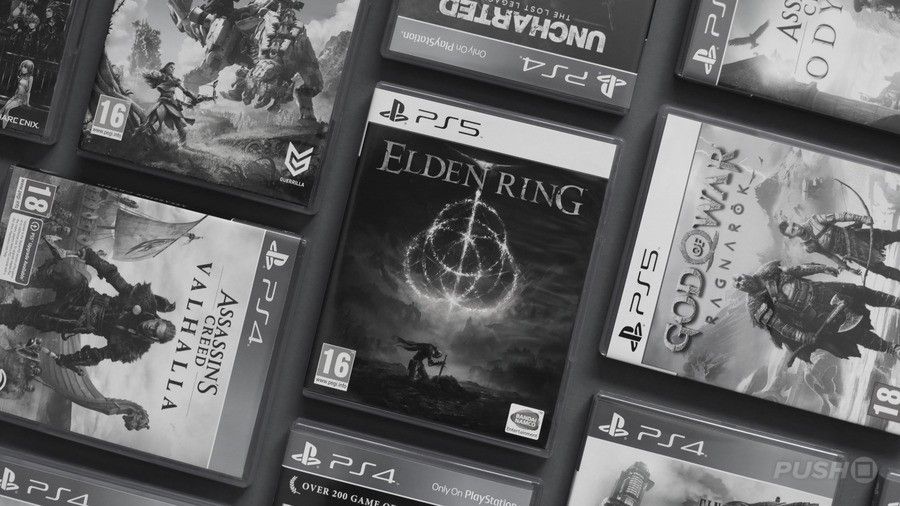

New Circana PS5 game sales data shows how narrow the US market for physical PlayStation discs has become, sharpening the stakes for collectors, retailers, and players who still buy boxed games.
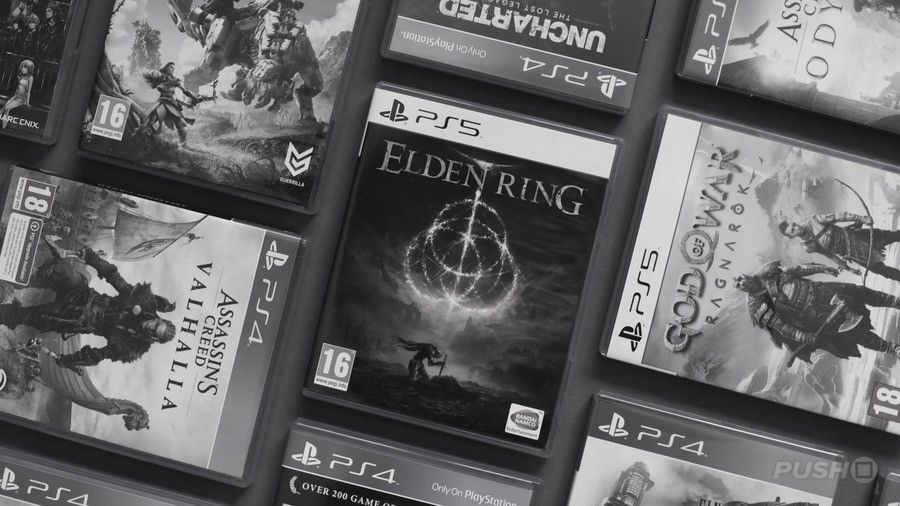
Image: pushsquare.com
Circana’s US data turns the disc debate into a hard sales story
Only seven PlayStation games have sold more than 100,000 physical copies in the US so far in 2026, according to Circana analyst Mat Piscatella, who cited the company’s Retail Tracking Service in a Bluesky post reported by Push Square, Eurogamer, Twisted Voxel, and Notebookcheck. In the week ending July 11, 2026, Piscatella said only two PlayStation video games sold more than 10,000 physical units in the US.
That is the concrete development behind the latest fight over physical PS5 games: the audience defending discs is loud, organized, and emotionally invested, but the US sales lane for boxed PlayStation software now looks painfully narrow. The numbers do not say nobody wants discs. They say that, in one of the industry’s largest revenue markets, PS5 disc sales are struggling to produce many breakout physical sellers at all.
The timing makes the data sharper. Sony has already announced plans to stop producing physical discs for new PlayStation games starting in January 2028, a move the company framed on the PlayStation Blog as a response to “shifting trends in consumer preference.” Push Square quoted Sony as saying the change is meant “to adapt to consumer trends as the general preference for digital media significantly outpaces physical discs” and to align with how most of its community accesses games today.
The tension is obvious. PlayStation physical sales still carry cultural weight for collectors, preservation-minded players, gift buyers, and anyone who likes a shelf that tells the story of their generation. Circana’s US data suggests that shelf is becoming a smaller battlefield every quarter.
The physical market is shrinking from both sides
Piscatella’s follow-up comments, reported by Twisted Voxel, point to a feedback loop rather than a single bad week. He wrote that retailers “pulled back on orders years ago” because they did not want to be stuck with inventory, even if that meant missing sales on hits. He also pointed to the modern retail experience, with shelves often half full, games behind glass, and a weaker shopping environment for browsing.
That matters because digital vs physical PS5 is not decided only at checkout. If a player walks into a store and finds a thin wall of games locked behind a case, the disc version has already lost tempo. Digital storefronts sit on the console dashboard, run constant promotions, and never run out of stock. Retail has to predict demand, pay for shelf space, manage theft risk, and eat the cost of copies that do not move.
Piscatella also addressed whether fewer physical releases are contributing to the decline. According to Twisted Voxel, he said there are fewer games coming to physical, and the games that do are selling fewer units on average. His summary was blunt: “Death spiral.”
That phrase fits the shape of the market. Fewer boxed releases give players fewer reasons to keep buying discs. Lower physical demand gives publishers and retailers less incentive to manufacture and stock them. Reduced store presence makes disc buying less visible to casual players. The combat rhythm of retail has slowed to a crawl while digital keeps pressing forward with instant access, preloads, wishlists, and account-bound libraries.
Sony’s own financials show the broader PlayStation shift
Circana’s PS5-focused US data lines up with Sony’s recent software split. Push Square, citing Sony’s financial materials, reported that 85% of PlayStation software purchases in the quarter ending March 31, 2026 were digital, up from 80% year over year. For the full fiscal year, Sony reported 78% of software purchases were digital, up from 76% the previous year.
Push Square also reported a revenue comparison from that same recent quarter: physical game sales represented about $109 million, while digital accounted for about $1.5 billion. The source cautioned that unit-sale comparisons put a limited physical catalogue against a much broader digital catalogue, including many lower-priced digital titles, so the numbers are not a perfect one-to-one measure of player preference for full-priced releases. Even with that caveat, the direction is clear.
This is the business backdrop for Sony’s January 2028 plan. The company has not, according to the cited reports, shown an inclination to reverse course after the backlash. Eurogamer reported that criticism has continued across Sony’s social media presence and has spilled onto posts for developers making PlayStation games, including Insomniac’s Marvel’s Wolverine trailer, even when those posts are not direct announcements about discs.
The data does not settle the consumer-rights argument. It does make Sony’s incentive structure easier to read. If only seven PlayStation games have cleared 100,000 US physical copies year-to-date, Sony can look at manufacturing, distribution, retail logistics, returns, and shelf space as costs attached to a shrinking share of the software business.
The backlash is real, but the sales signal is smaller than the noise
The loudest PlayStation fans in this debate often argue from a place of legitimate concern. Physical copies can be resold, lent, displayed, gifted, and preserved outside a storefront account. They also create price competition, because retailers can discount boxes independently of the PlayStation Store. Notebookcheck noted consumer-advocacy concerns that a digital-only shift could reduce competition and lead to higher prices, and the outlet has previously pointed to boxed PS5 games seeing steeper discounts sooner after release in some markets.
That is the strongest case for keeping discs alive: boxed games give players another market to shop in. They also give collectors a sense of permanence that a license buried in a digital library does not fully replace. For action and adventure players in particular, the disc often becomes part of the memory of a campaign: the case on the shelf after a 40-hour journey, the cover art tied to a boss fight, the physical object that marks the end of a set-piece-heavy weekend.
But Circana’s numbers show the weakness in a purely protest-driven strategy. If physical PS5 games are to remain viable, the market has to show up at the register, not only in replies to corporate posts. Eurogamer framed the data as a stark business reality behind Sony’s unpopular plan, while Push Square argued the figures provide context for why Sony is not backing down.
There is still a distinction worth preserving. Social media anger can be sincere even if it does not map cleanly to sales. A smaller group of players can be deeply affected by a format change even when the majority has moved on. The issue for Sony, retailers, and publishers is that format support is expensive, and the US numbers suggest the disc audience is no longer large enough to command the same default treatment.
The US picture is severe, but it is not the entire world
The strongest caveat is geographic. Circana’s figures are for the US, and Eurogamer noted that while the US is one of the largest markets in the games industry by revenue, it is still one global market. Notebookcheck also cautioned that digital dominance is not evenly distributed everywhere, noting that brick-and-mortar stores remain important in regions such as Europe, South America, and Japan, and that broadband access can affect the appeal of digital games in some countries.
There is also an apparent tension with another Circana-linked physical media story. Geeks + Gamers reported on a Piscatella chart showing that US physical video game sales rose 3% to $1.6 billion in the fiscal year ending May 2026, the first increase since 2018. That does not erase the PS5 disc decline. It describes a broader physical market measurement, while the newer Circana comments focus on PlayStation physical unit sales in the US during 2026, including a specific week ending July 11.
Those two snapshots can coexist. A small aggregate rebound in physical video game spending can happen while physical PS5 game unit sales remain weak, especially if the broader category includes different platforms, pricing, collector editions, legacy demand, or fewer units sold at higher average prices. The provided sources do not break down the full composition of that $1.6 billion figure, so it would be a mistake to treat it as proof that PlayStation discs are healthy.
For readers tracking Circana PS5 game sales, the key is to separate market nostalgia from platform-specific demand. The US disc market may still have pockets of energy, but the latest PlayStation numbers show a thin frontline.
Collectors should plan around scarcity, not certainty
For collectors, the immediate practical lesson is that the boxed PS5 market is likely to become less predictable. The provided sources do not identify which seven PlayStation games crossed 100,000 US physical copies in 2026, and Push Square explicitly notes that Piscatella did not name them. That means buyers should be careful about assuming any specific title is safe, abundant, or destined for a long retail tail unless the publisher or retailer provides clearer information.
What is confirmed is the deadline Sony has announced: new PlayStation games are set to stop receiving physical disc production from January 2028. What remains unanswered, based on the cited reporting, is how Sony will support large existing retail collections in the next hardware cycle. Push Square said the move effectively points toward a digital-only PS6, but also noted that Sony has yet to confirm how it will support fans’ existing retail libraries.
Players who still prefer discs should watch release formats earlier than they used to. If a game matters to you physically, waiting for deep clearance may carry more risk in a market where retailers have already reduced orders, according to Piscatella. At the same time, panic buying every case on day one is not a universal solution. The sources do not support a claim that every physical PS5 release will become rare or valuable. They support a narrower conclusion: fewer physical releases, smaller retail confidence, and lower average sales make availability harder to take for granted.
Retailers face a different calculation. Stock too much, and they risk dead inventory in a market moving digital. Stock too little, and they train customers to stop checking the shelf. That is the set-piece trap of the disc era’s final act: every participant is reacting rationally, and the result still pushes the format closer to the edge.
Players are losing a format, even if most already changed lanes
The decline in PS5 disc sales does not make digital ownership frictionless. A digital-first PlayStation future raises questions about account access, storefront pricing, delistings, download size, storage management, and broadband availability. The cited sources show those concerns are part of the current backlash, but they do not show Sony offering new answers beyond its consumer-trends rationale for ending new disc production in 2028.
For many players, the convenience argument has already won. Digital purchases remove the need to swap discs, make remote buying easy, and put sales directly inside the console ecosystem. For others, especially collectors and budget-conscious players who rely on used copies or retailer discounts, the loss of physical PS5 games cuts away a safety valve.
The latest Circana data makes the story harder to frame as a simple corporate ambush. The disc audience is passionate, but in the US it appears commercially outmatched. Only two PlayStation titles clearing 10,000 physical units in a mid-July week is not a healthy mass-market signal. Only seven crossing 100,000 physical copies year-to-date is a warning flare.
Sony’s 2028 deadline is still far enough away for publishers, retailers, and players to adjust, but the direction is already visible. The PS5 generation began with a disc drive as a mainstream option. The newest US sales data suggests that, for PlayStation software, the box on the shelf is becoming a collector’s route rather than the main road.