
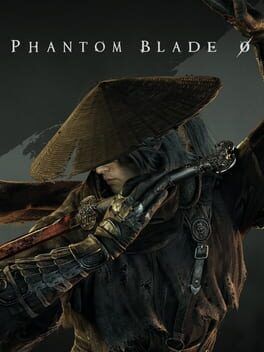
Latest Phantom Blade Zero preview coverage points to a confident wuxia action RPG with deep combat, cinematic set pieces, and one big remaining PS5 performance question.
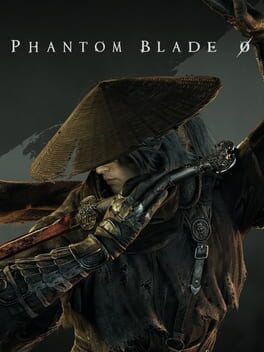
Image: IGDB
Store links: Phantom Blade Zero on Steam
A near-final build has changed the conversation around Phantom Blade Zero
The strongest signal from the latest Phantom Blade Zero preview cycle is not a new trailer or a release-date tease. It is the amount of hands-on time critics say they have now had with S-GAME’s action RPG, and how strongly many of them came away from it. Push Square reported playing six hours of a near-final build in Beijing and called Phantom Blade Zero “one of the most confident and impressive” debuts from a developer in years. Console Creatures said a four-hour Gamescom demo, starting from the beginning of the game, pushed it into that outlet’s most anticipated games of 2026. PCGamesN also reported a six-hour session with the opening chapter during a visit to Beijing, while CGMagazine and Shacknews described extended near-final or first-five-hours sessions in Los Angeles.
That matters for the shape of the coverage because these are not reactions based only on a boss-rush demo or a vertical slice. Across the previews provided, critics repeatedly describe playing the opening stretch, learning the core combat economy, seeing story setup, exploring early areas, and encountering larger set pieces. The result is a noticeably different kind of Phantom Blade Zero preview: less “can the trailer possibly be real?” and more “can the full game sustain what these first hours suggest?”
The current confirmed window is also unusually concrete for a game still generating pre-release skepticism. Console Creatures cites an October 29 release date, and the public listing included in the source material identifies Phantom Blade Zero as scheduled for PlayStation 5 and Windows on October 29, 2026. For PS5 players looking at the late-2026 slate of upcoming PS5 action games, the preview consensus is increasingly treating S-GAME’s project as a major genre release rather than a flashy unknown.
The hook is speed, but the praise is about control
Phantom Blade Zero has always looked expensive in motion: blades clipping through rain-dark air, robes snapping through acrobatic turns, and enemies attacking with the kind of rhythm usually reserved for martial-arts cinema. The newest hands-on coverage argues that the game’s key achievement is that the spectacle reportedly holds together under the player’s hands.
PCGamesN described Soul and his enemies as jumping, twisting, and flipping through fights while the animation remains readable enough for the player to feel in control. The outlet also interviewed director Soulframe, who described S-GAME’s “kung-fu punk” idea as a mix of traditional Chinese wuxia culture and pop-cultural influences, with the goal of making the player feel as if they are inside a kung-fu movie. PCGamesN connected that ambition to its visit to S-GAME’s Shanghai motion capture studio, where it saw kung-fu experts performing the kinds of movements that inform the game’s action.
Push Square’s account gets more mechanical. It says basic attacks do not consume stamina, while blocking, dodging, and Sha-Chi strikes use the Sha-Chi gauge. According to that preview, successful defensive and offensive timing charges Essence attacks, creating a loop where standard aggression is encouraged because the player is not constantly punished for swinging. Shacknews, in its own preview, emphasized the same Sha-Chi resource from a different angle: blocking draws from it, powerful weapon attacks spend it, and switching to Soul’s second equipped weapon can restore the meter, encouraging mid-combo weapon changes.
That distinction is central to why the Phantom Blade Zero gameplay impressions are landing so hard. The praise is not only that Soul looks like a master swordsman. It is that several critics say the combat lets him behave like one without reducing every encounter to a conservative stamina-management exercise.
The Soulslike label is becoming the wrong lens
A running thread across the previews is the rejection, or at least the complication, of the “Soulslike” label. Shacknews states the point most directly, writing that Phantom Blade Zero is “certainly no Soulslike” after its hands-on session. The outlet says parrying exists and can prevent Sha-Chi drain, but it is not the main mechanic. Instead, Shacknews frames the combat around combo flow, blocks, weapon switching, and selective parry windows.
Push Square’s description supports that separation. Its preview says Phantom Blade Zero begins with a high-level duel, then strips Soul of his powers in a structure the outlet compares to Metroid Prime. The important part is what remains after that reset: the feel of combat. Push Square describes a system where the player’s standard swipes are unrestricted, defensive actions feed into stronger attacks, and progression later introduces Phantom Edges plus character and weapon upgrades.
The public gameplay listing in the source material adds further structure. It identifies Phantom Blade Zero as a third-person action RPG in which Soul can carry two primary weapons and two secondary weapons called Phantom Edges. It also describes Sha-Chi as a resource for heavy attacks and blocks, with blocking, parrying, dodging, color-coded enemy attack rules, weapon upgrades, accessories, and a skill tree. That is closer to a character-action foundation with RPG scaffolding than to a pure death-run formula.
The comparison that keeps surfacing is Sekiro: Shadows Die Twice, but even that should be handled carefully. PCGamesN wrote that Phantom Blade Zero is shaping up to be an action hit on the level of Sekiro, while GameRant’s preview uses the phrase “the best combat since Sekiro” in its section heading. Those are critical judgments, not confirmed qualities. What is confirmed by the previews is that critics are finding a parry-capable, timing-heavy action game whose pacing appears more aggressive and combo-driven than the Soulslike shorthand suggests.
Set pieces are doing real design work, not only trailer work
The latest previews also help explain why Phantom Blade Zero PS5 attention has grown beyond combat-system talk. Several outlets describe early sequences that are built like action cinema, but still ask the player to actively perform rather than watch a QTE chain unfold.
Console Creatures gives the clearest example with the carriage sequence shown previously in the game’s 11-minute pre-order trailer. In the hands-on demo, the outlet says the player had to defend Soul against soldiers while parrying and dodging bullets, sword swings, and leaping attacks. The sequence culminated in a mini-boss fight against The Hunt on a barreling horse-drawn carriage. Console Creatures specifically praised the fact that the pressure remained in the player’s hands rather than shifting into a simple quick-time event.
That point is important because Phantom Blade Zero’s promise depends on whether its cinematic staging and mechanical discipline can occupy the same space. A carriage fight can look impressive in a showcase and still feel shallow when played. According to Console Creatures, the playable version demanded timing without becoming as punishing as a Soulslike. Shacknews separately mentions The Hunt appearing around one to two hours into the game with a Chain Sickle, while also noting other boss weapons such as a giant hammer.
Push Square’s preview widens the boss picture. It says the first region includes two-phase fights and distinctive encounters, then describes jumping ahead to later opponents, including a woman who can summon snakes from the ground. CGMagazine similarly says its session included the first of the game’s eight chapters and previews of some later bosses. The pattern across these accounts is that S-GAME is using bosses as mechanical showcases, not only as visual punctuation.
The story setup gives the action a ticking clock
The preview coverage is most unified on the broad premise: Soul is a former elite fighter or assassin who is framed, betrayed, or otherwise condemned, then revived with an artificial heart that leaves him with 66 days to live. Console Creatures says Soul is framed for the murder of Zion Shang, the leader of the Order’s Shadow Sovereign, and later receives the grim 66-day prognosis. GameRant describes Soul as betrayed by his sworn brother Zuo Shang before being saved by the Flesh Sculptor. The public listing in the source material gives the broader version, saying Soul is framed for the murder of The Order’s patriarch, revived with a tainted heart, and forced to unravel the conspiracy that condemned him.
Those accounts differ in naming and framing, so the safest conclusion is that the opening revolves around a fatal political betrayal inside or around The Order, followed by Soul’s artificial-heart deadline. The previews do not settle every proper noun or relationship in a consistent way, and readers should treat the finer story details as preview-context rather than a fully clarified synopsis.
What the coverage does establish is tone. Console Creatures says Soul travels toward Pangzhen in search of a cure, meeting civilians such as Yu’er, who escaped the area and speaks of a strange sickness. The same preview mentions Soul’s ability to interact with something called the Discordance, though the source excerpt does not fully explain it. PCGamesN says Soul is fighting to save the underworld of the Wulin, while CGMagazine frames the artificial-heart countdown as a mission that will force him to confront his past.
For an action game, that ticking-clock premise is practical as much as dramatic. It gives S-GAME a clean reason to push Soul forward through dangerous regions, duels, and alliances. The open question is whether the full game can turn that urgency into meaningful structure across its chapters, rather than using it only as stylish pressure in the opening hours.
The PS5 question is still performance, not ambition
The main caution in the current Phantom Blade Zero preview wave is platform proof. GameRant praised the game’s presentation, citing detailed robes, grass, water, cinematic camera work, natural lighting, and smooth performance. But the outlet also states that its preview build was running on a very high-end PC and that it did not experience the game on a base PlayStation 5.
That caveat matters for anyone specifically searching for Phantom Blade Zero PS5 impressions. The game is listed for PlayStation 5 and Windows, and Push Square’s framing centers it as a major PS5 release, but the provided previews do not uniformly establish how the final PS5 version performs. CGMagazine says its near-final build was playable and visually convincing, but the provided excerpt does not specify base PS5 performance. Until S-GAME or outlets provide clearer console-side technical reporting, frame-rate stability, image quality, and loading behavior on PS5 remain open questions.
There is also the scale question. CGMagazine reports that it played the first of the game’s eight chapters, while Push Square says the opening region contains multiple chapters, quests, fights, and surprises. Console Creatures describes interconnected open-hub areas, and the public listing calls the world semi-open, with seamlessly connected regions, non-linear routes, and some areas becoming accessible later through weapons or paths. These details point to a larger structure than a linear boss gauntlet, but the final balance between exploration, pacing, and repeated combat encounters still needs full-review scrutiny.
For now, the practical guidance is simple. If you are already interested in upcoming PS5 action games, Phantom Blade Zero has earned serious attention because multiple outlets have now praised lengthy hands-on sessions with its opening hours and combat systems. If your concern is day-one buying confidence on console, wait for final PS5 technical coverage, especially because at least one highly positive preview was explicitly based on a high-end PC build.
A rare preview cycle where the hype is getting more specific
The reason critics are now treating Phantom Blade Zero as one of PS5’s most important upcoming action games is that the praise has become concrete. Earlier excitement could be pinned to trailers, art direction, and the promise of wuxia spectacle. The latest hands-on coverage is focused on systems: Sha-Chi management, unrestricted basic attacks, Essence follow-ups, Phantom Edges, weapon switching, boss design, and set pieces that remain playable under pressure.
That does not make Phantom Blade Zero a guaranteed landmark. Preview sessions, even long ones, are still curated access. The sources provided leave meaningful unanswered questions about final PS5 performance, full-game pacing, late-game enemy variety, and how well the story pays off its 66-day premise. The most enthusiastic comparisons to Sekiro are critical expectations, not outcomes.
Still, the direction of travel is clear. Console Creatures came away from four hours calling it one of its most anticipated games of 2026. Push Square described six hours with a near-final build as evidence of an unusually confident action debut. PCGamesN framed it as a game people may discuss for years. Shacknews pushed back on the Soulslike label after five hours, arguing that the game’s combat identity is deeper and more distinct than it appears.
For a new major action RPG from S-GAME, that is the strongest kind of pre-release momentum: critics are no longer only asking whether Phantom Blade Zero can match its trailers. They are asking how far its combat, bosses, and PS5 version can carry the promise those hands-on sessions have now put in play.