
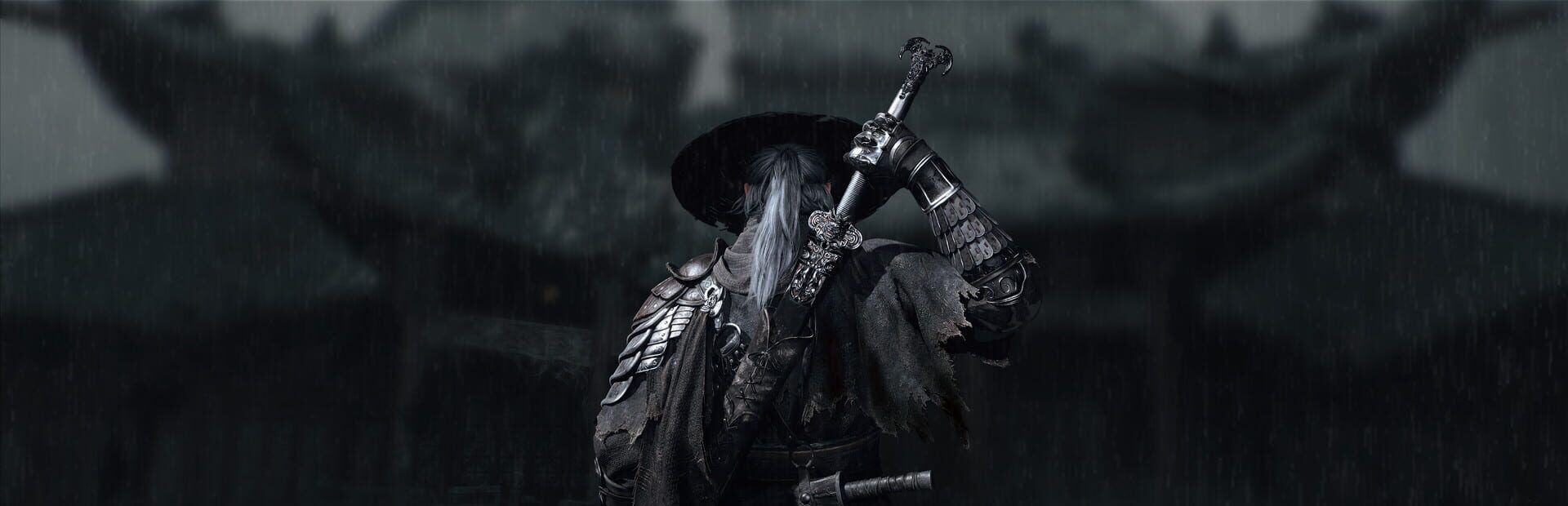

S-Game is steering Phantom Blade Zero straight toward Grand Theft Auto 6’s blast radius. Here is why the studio says it is not scared, how its timing strategy works, and what makes this kung-fu action RPG different enough to survive the storm.
Phantom Blade Zero is walking into the kind of crossfire most publishers sprint away from. After a delay from September 9 to October 29, 2026, S-Game’s wuxia action RPG now launches barely three weeks before Grand Theft Auto 6.
Instead of dodging Rockstar’s juggernaut, the studio has moved closer to it. Director Qiwei “Soulframe” Liang’s message in interviews with GamingBolt and others is blunt: S-Game is not planning around GTA 6 at all. The team is focused on making Phantom Blade Zero as good as it can be, and the new date exists almost entirely to buy more polish time.
In a year when other games quietly flee November, Phantom Blade Zero is an outlier. It is also a fascinating test case for whether a sharply defined action game can thrive in the blast radius of the biggest open world in the industry.
A release date that ignores the room
The wider industry is treating GTA 6 like an eclipse. Reports have publishers pulling their games out of November, pushing into September and early October instead. That strategy is usually sound. For a big-budget game, launching too close to a cultural event like GTA means competing for headlines, ad space, and player cash all at once.
S-Game knows all of this but is choosing a different priority order. Liang has been clear that the delay was a development call rather than a marketing one. About “99 percent” of the decision, he says, was motivated by the team’s desire to squash bugs, improve optimization, and cut down on a heavy day one patch.
The resulting release window is awkward on paper. Phantom Blade Zero now has to sell itself in late October, a time that will already be crowded due to other games fleeing November. Then it must hold player attention as GTA 6 storms in mid November.
Yet that is exactly where S-Game seems comfortable. The reasoning is simple and almost old-fashioned: if the game is excellent, it will find its slice of the audience regardless of what surrounds it.
Confidence rooted in product first thinking
Liang’s comments paint a studio that would rather trust its craft than the calendar. “We only think of the quality of the product itself,” he told GamingBolt, repeating variations of the same line. In his view, schedule maneuvering cannot save a weak game, and great games can still break through even when they are not alone on the shelf.
That does not mean S-Game is blind to the market. Instead, it is betting that Phantom Blade Zero is not directly in GTA 6’s lane. Both are action games, but they scratch very different itches and demand different types of engagement.
GTA 6 is a sprawl of systemic sandbox chaos filled with driving, shooting, social media satire, and long-term online progression. Phantom Blade Zero is a hyper-focused combat showcase where every encounter matters and every swing is part of a carefully choreographed dance. One is about persistent worlds and player stories. The other is about curated martial arts spectacles and handcrafted encounters.
For S-Game, that difference is not just aesthetic. It is the foundation of a release strategy that accepts GTA 6’s dominance and still sees room for a tightly scoped, combat-first epic.
How Phantom Blade Zero stands apart from GTA 6
When you compare the two side by side, it becomes obvious why S-Game is not treating Rockstar’s game as a direct rival.
Phantom Blade Zero is a single player “kungfu-punk” action RPG set in a fictional, grimy version of ancient China fused with steampunk and occult elements. You play as Soul, an assassin whose heart has been ruined, leaving him with only sixty six days to live. The story is a race against death as he hunts for the truth behind the conspiracy that destroyed his clan.
Hands-on previews from Summer Game Fest and Gamescom describe a game that plays closer to character action staples like Devil May Cry and Ninja Gaiden than to open world crime sandboxes. Combat is lightning fast, rooted in stance shifts, cancels, and reads rather than in stats alone. Systems like Ghoststep, Phantom Edges, and Power Surges let players weave in acrobatic dodges, ranged bursts, and cinematic finishers with almost no downtime.
Where GTA 6 is likely to demand hundreds of hours of exploration, side activities, and online play, Phantom Blade Zero instead aims for an intense, replayable core loop. Encounters are tuned to be punishing but fair, with a strong emphasis on pattern recognition and aggressive defense. Think boss rush energy stretched across an interconnected world, not a sandbox of distractions.
Even structurally, the games serve different needs. GTA is the game you sink into for months. Phantom Blade Zero is the game you obsess over for a few weeks at a time, chasing mastery and perfect runs.
Release timing as a calculated risk
From a business angle, S-Game’s timing is still a gamble, but it is not a reckless one. Launching October 29 does a few useful things.
It gives Phantom Blade Zero a brief runway as the new hot action game before GTA 6 arrives. Enthusiasts who have been following the game since its 2023 reveal and 2024 demo “world tour” will finally get their hands on it, and word of mouth can spread while the spotlight is still relatively uncrowded.
It also positions the game as a potential “palette cleanser” just before the GTA flood. Not every player wants to disappear into a hundred hour open world as soon as it drops. Some might grab Phantom Blade Zero as their last focused, combat heavy adventure before they commit to Rockstar’s epic.
Most importantly for S-Game, the new date gives the team enough breathing room to avoid shipping half baked. The developer has repeatedly stressed that extra weeks are going into optimization, stability, and tuning. A slick, polished launch is far more important to long term sales than dropping a month earlier in a slightly less dangerous window.
If Phantom Blade Zero earns a reputation for tight performance and responsive controls, it could enter the GTA 6 wave as the stylish alternative, recommended by critics and streamers who want something mechanically dense and beautifully animated.
Differentiation inside the action genre
The bigger question for Phantom Blade Zero is not whether it can dodge GTA 6 but whether it can stand out among other action games that also try to launch before it. Here, the game has several distinct hooks.
The combat system is the headline. Previews describe a blend of Soulslike tension and character action flexibility. Enemies hit hard, and reckless play gets punished, but there is far more room for improvisation than in a typical pure Soulslike. Defensive mechanics are tuned around parries, last second dodges, and movement skills like Ghoststep that let you appear behind enemies or flow through strikes.
On top of that is the Phantom Edge system, effectively a secondary weapon slot that covers everything from bows to flamethrowers. These tools add controlled bursts of spectacle, letting players punctuate tight melee strings with ranged shots, area denial, or crowd control. It gives combat the rhythm of a martial arts movie fight scene, where the protagonist seamlessly swaps between blades, gadgets, and improvised tricks.
Visual identity is another differentiator. Phantom Blade Zero’s art direction leans into exaggerated, almost theatrical wuxia. Locations look like stage sets from a lavish period drama corrupted by industrial grit and occult energy. Enemies are twisted but grounded in Chinese folklore silhouettes. This stands apart from the often European gothic of Soulslikes and the modern satire of GTA.
Finally, the story hook is unusually sharp for a new IP. Soul’s sixty six day death sentence is more than a lore detail; it frames the entire adventure as a doomed sprint. S-Game has hinted that this limited time premise will feed into structure and pacing, pushing players forward and giving even side content a sense of urgency.
All of these elements combine into something that does not overlap much with bigger, broader fall releases. Where many action RPGs chase open world bloat, Phantom Blade Zero seems to pursue density and intensity instead.
Player expectations heading into launch
Player expectations around Phantom Blade Zero have shifted over the last few years. Early trailers led many to assume a traditional Soulslike structure, but hands-on coverage has repositioned the game as a hybrid of that challenge level with the responsiveness and moveset depth of character action titles.
This matters, because it sets a different bar. Fans are now looking for precise input buffering, animation priority that never fights the player, and a hard but readable difficulty curve. They also expect build variety and weapon experimentation, based on S-Game’s talk of dozens of distinct weapons and Phantom Edges.
There is also an expectation of spectacle. Trailers have pushed cinematic, wire-fu style choreography. If the full game can turn regular encounters into mini set pieces without sacrificing control, it can satisfy both the “clip this for social media” crowd and more hardcore action fans.
On the narrative side, players are watching to see whether S-Game can deliver a coherent, emotionally grounded story within its stylish framing. Indie and AA action games often struggle to match their mechanical flair with strong writing. The studio’s open talk about themes of revenge, love, and the meaning of having a heart sets a high bar that fans will remember at review time.
Crucially, expectation management around GTA 6 is relatively modest. Few players see Phantom Blade Zero as a direct competitor. Instead, they view it as one of several big action experiences that will bookend the GTA launch. That perception works in S-Game’s favor, lowering the risk of unfair one to one comparisons.
Why S-Game’s bet might pay off
In a vacuum, shipping three weeks before GTA 6 looks like suicide. In reality, Phantom Blade Zero’s situation is more nuanced.
It is single player and self-contained at launch, so it does not need to own a live service calendar. It has a clear mechanical identity centered on stylish martial arts combat. Its aesthetic carves out a space that neither Western crime games nor FromSoftware style fantasy occupy. Previews so far suggest that it plays as good as it looks.
Most importantly, S-Game is visibly willing to delay for quality. That might be the strongest signal of confidence of all. Rather than scrambling to get out of GTA 6’s way, the studio chose the date that made the most sense for its development realities, even if it looked risky on the sales chart.
If the finished game delivers on its combat promise and launches in a polished state, Phantom Blade Zero could become the precise kind of cult hit that thrives in a crowded season. GTA 6 will dominate the conversation, but there is room in its shadow for a lean, vicious, kungfu-punk action RPG that knows exactly what it wants to be.