
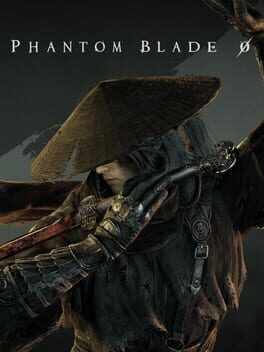
Phantom Blade Zero's difficulty debate is intensifying as players push toward the true ending, where optional quests and harder duels turn mastery into a real gate.
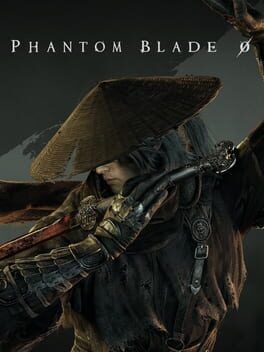
Image: IGDB
Store links: Phantom Blade Zero on Steam
The difficulty debate now leads straight to the true ending
Phantom Blade Zero’s true ending is called “Final Battle,” according to Polygon, and unlocking it is tied to optional quest work that must be completed before the late-game climb to Mount Soulrend. That concrete requirement has sharpened the wider Phantom Blade Zero difficulty debate: the game may include difficulty settings and forgiving checkpoints, but the route to its most complete ending asks players to engage deeply with side content, duel mechanics, and timing-heavy combat.
Push Square framed that debate in a reader poll after the game had been out for “a good few days,” noting that difficulty had been a constant talking point since the game’s announcement. The outlet’s poll asked whether players found the challenge perfect, too easy, uneven, harder than expected, or far too hard, with 624 votes recorded for the overall difficulty question in the source text. It also separately asked which mode players were using, across Wayfarer, Pathbreaker, and Hellwalker.
That split reaction is easy to understand. S-GAME has stressed, as Push Square reports, that Phantom Blade Zero is not in the same category as FromSoftware’s punishing action RPGs. It has difficulty settings, and death does not cost players resources. GameSpot likewise describes it as a “true action game” rather than a Soulslike, pointing out that bells function as checkpoints and healing points without bringing back every defeated enemy.
Yet the practical experience can still be hard. The friction is not built around long corpse runs or resource punishment. It is built around reads, parries, pressure, and whether a player can keep pace with enemies who are designed to punish hesitation. The closer players get to the Phantom Blade Zero true ending, the less this feels like a debate about labels and the more it becomes a question of whether the challenge is the point or the wall.
Phantom Blade Zero is less punishing than a Soulslike, but still demanding
Push Square’s difficulty guide lays out the clearest confirmed structure. Phantom Blade Zero starts with three difficulty settings. Wayfarer is the easy option, where enemies are slightly less aggressive, deal less damage, and have guards that are easier to break. Pathbreaker is the normal setting, with fairly aggressive enemies, moderate damage, and guards that take more work to break. Hellwalker is the hard setting, where enemies are very aggressive, deal more damage, and proper parry use becomes necessary for breaking guards efficiently.
That makes Phantom Blade Zero hard in a specific way. Push Square argues that it is not “brutally” difficult unless players choose Hellwalker, but also says it is not an easy game on any setting. The outlet’s read is that Wayfarer and Pathbreaker are beatable even for players who are not action specialists, especially once the game’s opening hours give way to more weapons, accessories, and build-shaping gear.
The same source also notes an unlockable fourth setting, 66 Days, available after beating the game. Push Square describes it as a challenge mode with enemies that seem to share Hellwalker-level stats, but with only 66 lives before a permanent game over. That mode is selected at the start of a new game and cannot be switched into mid-playthrough, according to the outlet.
This structure matters because it separates Phantom Blade Zero difficulty from the punishment model many players expected. S-GAME’s game is not described by these sources as a resource-loss gauntlet where every death threatens progression. Instead, the challenge is concentrated inside encounters. You are not necessarily being taxed for failing. You are being asked to learn the rhythm well enough to stop failing.
The combat rhythm is where the barrier forms
GameSpot’s account of an early bridge encounter with Hua Qianxiao captures the shape of Phantom Blade Zero’s challenge. The outlet describes the fight as an early signal that the first boss was only an appetizer, and argues that the game rewards players for being both offensive and defensive. In GameSpot’s phrasing, patience alone can lead to an early death, which is a useful distinction from slower, stamina-conservation action RPGs.
The details behind that impression are important. GameSpot highlights the flow between parrying and starting combos, the strategic risk of Phantom Edge weapons whose windups can leave the player vulnerable, and the ability to switch weapons to refill Sha-Chi, a stamina-like resource used for specific moves. That is a combat model built on momentum. Defensive timing creates openings, but the player still has to cash them in before the fight resets.
Push Square reaches a similar conclusion from a different angle. Its poll article says Phantom Blade Zero is forgiving overall in structure, but challenging in combat because it often demands careful defensive timing and knowledge of the opponent. That distinction explains why reactions can diverge so widely. A player who catches the parry cadence early may read the game as fair, even generous. A player who struggles to parse enemy strings can hit a wall even on settings below Hellwalker.
The Phantom Blade Zero final battle chase magnifies that dynamic because the route to the true ending requires optional objectives that include extra duels and late-game preparation. This is where challenge becomes a selling point for one group and a barrier for another. If the combat clicks, the true ending route gives the campaign extra dramatic weight. If it does not, the same route can feel like the game asking for mastery before it lets the story fully resolve.
The true ending checklist is optional, but the deadline is real
Polygon reports that Phantom Blade Zero’s true ending, “Final Battle,” is the ending that connects the story’s dots most fully. The outlet says players can experience four different endings, but the true ending requires completing specific side quests before reaching the last boss fight. Its core checklist is straightforward in name, even if the work behind it is substantial: finish “Secrets at the Heart of the Lake,” finish “Bloodline Awakening,” and complete all of Quick Hand Zhang’s questline.
Polygon warns that these are secondary quests, not mandatory campaign steps. That is the trap. A player can keep pushing the main story and still miss the true ending conditions if the side work is incomplete before the peak of Mount Soulrend. Polygon recommends handling these quests before entering the Mirage State area in Pangzhen, and specifically says completing “Secrets at the Heart of the Lake” first is the best option because it opens an area tied to a Lóng Pillar for “Bloodline Awakening” and contains treasures for Zhang.
There are prerequisite items and unlocks as well. Polygon says players should complete the “Illusory Pipa” side quest to receive the Illusory Pipa weapon, progress through the campaign until they obtain the Flame Mane Phantom Edge, and unlock both Crimson Manor and the Mountain of Imprisonment to obtain the two Crystal Puppet Eyes.
Maxroll’s true ending guide lines up with the idea that the route looks larger than it feels once organized. It lists a longer chain of Mystery quests and sub-steps, but says the process effectively boils down to the three major requirements: “Secrets at the Heart of the Lake,” “Bloodline Awakening,” and “Quick Hand’s Request.” Maxroll also recommends backup saves at key points, including before a point of no return at Mirage Estate and again at Mount Soulrend after defeating The Crusher and the Saw. For players trying to avoid spoilers, that save advice may be more useful than reading a step-by-step route too early.
Bloodline Awakening turns the ending route into a skill check
The most difficulty-relevant piece of the Phantom Blade Zero ending requirements is “Bloodline Awakening.” Polygon says this quest requires destroying five Lóng Pillars. Each interaction triggers a battle against the Gold-Masked One, and the outlet warns that these fights get harder the further players progress through the game. Polygon is blunt on the condition: losing is not an option, because players must win the duels to destroy the pillars.
That framing makes “Bloodline Awakening” the hinge between completionist checklist and combat exam. It is not simply a matter of visiting markers before the finale. It asks the player to repeatedly prove command of the same fundamentals driving the broader difficulty debate: recognition, guard pressure, parry timing, and controlled aggression.
Polygon lists Lóng Pillars in areas including Weeping Creek Valley and Crimson Forest in the source text provided, with nearest bell references for teleporting. The full guide uses maps and additional location details, but the practical spoiler-light guidance is simpler. Once “Bloodline Awakening” is active, do not leave the pillar duels for a final cleanup sprint unless you are comfortable entering late-game fights cold. Since Polygon says the duels become harder with progression, spacing them into your broader route may reduce the feeling that the true ending suddenly spikes.
This is also where difficulty choice becomes a practical decision rather than a pride test. Push Square’s description of Hellwalker makes clear that it expects cleaner parries and punishes mistakes harder. If your goal is the Phantom Blade Zero true ending rather than a self-imposed hard-mode run, Wayfarer or Pathbreaker are the safer choices. The game’s structure gives you permission to lower the friction without losing the route’s optional quest demands.
Even the number of endings is not completely settled across guides
There is one unresolved wrinkle: sources do not all describe Phantom Blade Zero’s endings the same way. Polygon says there are four different endings and identifies “Final Battle” as the true ending. Maxroll also says there are four possible endings, with the perfect or true ending requiring a chain of special purple quests.
Timesaver’s launch-window guide presents the conflict differently. It says launch guides had documented two endings, the default Normal Ending and the True Ending, while also noting that director Soulframe Liang had said in a 2025 Game Rant interview that there were “8 different endings” depending on side quests. Timesaver further reports that Game Rant’s own later Perfect Ending guide described most endings as variations of the regular ending, and that PowerPyx listed two endings, Normal and True.
Those accounts do not cleanly match. The safest reading from the provided sources is that players should distinguish between documented finales, variations, and the named true ending path. What is consistent across Polygon and Maxroll is the key practical point: “Final Battle” is locked behind optional quest completion, and the important work must be handled before the late-game cutoff.
For readers trying to avoid spoilers, that consistency is enough. You do not need to know the payoff to protect your save. You need to know the names of the required questlines, the rough deadline, and the fact that the ending path contains skill checks rather than passive collectibles alone.
How to approach the chase without turning it into a grind
If Phantom Blade Zero’s combat is clicking for you, the true ending route sounds like the version of the game most aligned with its strengths. The optional duels and side quests give the campaign a stronger sense of escalation, and the game’s action systems are built for players who enjoy reading an opponent, turning defense into offense, and maintaining pressure once the opening appears.
If you are struggling, the better plan is to treat the ending requirements as pacing advice. Start “Secrets at the Heart of the Lake” early, keep “Bloodline Awakening” from piling up, and do not treat Quick Hand Zhang’s requests as cleanup content after the story has already reached its final ascent. Polygon’s recommendation to work before Mirage State in Pangzhen is the clearest spoiler-light warning in the provided guides.
Difficulty selection should follow your actual goal. Hellwalker is for players who want Phantom Blade Zero hard from the start and are prepared for parry discipline to become central. Pathbreaker is the better fit if you want the intended action-game pressure without the harshest tuning. Wayfarer is reasonable if your priority is seeing the story through while still engaging with the systems. Push Square’s reporting makes clear that even Wayfarer does not erase the need to learn bosses, but it does soften aggression, damage, and guard-breaking demands.
The fairest answer to the debate is that Phantom Blade Zero’s challenge is both a selling point and a barrier, depending on what you came for. It does not appear, based on the cited guides and reports, to punish players with the harshest Soulslike structure. It does ask them to earn the cleanest narrative resolution through combat fluency and optional completion. For an action game built around blades crossing at speed, that is a coherent design choice. For anyone chasing “Final Battle,” it is also a warning: the road to the true ending begins long before the final boss arena.