
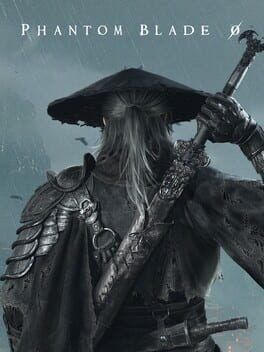
As Phantom Blade Zero enters its final stretch before launch, S‑Game is loudly rejecting generative AI and framing handcrafted art, real-world scans, and intensive motion capture as the soul of its PS5 and PC action epic.
As Phantom Blade Zero closes in on its September launch on PS5 and PC, S-Game is trying to make one thing absolutely clear: this is a game built by people, not by prompts.
In a series of recent interviews, studio head Qiwei Liang, also known as Soulframe, has drawn a hard line against generative AI across the project. He describes a studio philosophy where every frame, every map, every weapon and animation has to pass a simple test. It must come from a human artist with a specific intent behind it. If a tool risks diluting or replacing that intent, S-Game does not want it in the pipeline.
That message might sound simple, but it cuts against a growing trend. Across the industry, generative AI is being pitched as a way to fill worlds faster, iterate concepts, or test ideas without hiring additional staff. S-Game is positioning Phantom Blade Zero in the opposite direction. The team wants players to know that what they are seeing and feeling in this fast-cut wuxia action game is the product of deliberate craft.
You can see that philosophy in how the world of Phantom Blade Zero is being built. Instead of AI-assisted concept art or texture generation, S-Game has sent teams out to real locations across China. Ancestral halls, ancient towns, old industrial plants, and other spaces were carefully photographed and scanned, then transformed into the exaggerated, grim fantasy aesthetic the game is going for. The result is a setting that is not just inspired by Eastern architecture and history in a vague sense, but grounded in specific places and materials. Those spaces carry the imperfections of real stone and rust, then get pushed into something more operatic.
Maps and interface art follow the same logic. Rather than feeding reference art into an image model, S-Game hired artists from the Central Academy of Fine Arts to paint in-game maps with traditional Chinese brushes on rice paper. The studio has talked about wanting those maps to feel like artifacts from within the world, not just UI layers laid on top of it. That decision turns what could have been a functional but forgettable overlay into another expression of the game’s identity, rooted in Chinese visual traditions that predate both game engines and training data.
Animation is where S-Game’s stance becomes especially important. Phantom Blade Zero sells itself on impossible swordplay that feels physical. To bridge that gap, the team has leaned heavily on motion capture and an unusually grounded starting point: real blades. According to Liang, S-Game commissioned actual weapons from Chinese swordsmiths, using them in motion capture sessions so performers could feel the weight, balance, and danger of the tools in their hands. The studio is chasing the flow of classic martial arts cinema, with rapid cuts and flickers of motion, but it starts from bodies moving through space with real steel.
That focus on authentic movement extends to the broader cast. Character models are based on 3D scans of actors, capturing their faces and physiques before stylization. The writing and performance pipeline supports both Chinese and English voice acting, with full lip sync targeted for each language instead of treating one as a dubbed afterthought. In practice, that doubles the work of implementation and polish. In S-Game’s framing, this is not an inefficiency to be patched over with automated tools but a necessary investment in making characters feel grounded in their respective cultures and languages.
All of this adds up to a particular kind of promise at a pivotal moment. Phantom Blade Zero is entering its final stretch of development, the part of the schedule where cuts, shortcuts, and last-minute tech experiments can creep in. S-Game choosing this moment to publicly disavow generative AI is a way of telling players what will and will not happen as the team races toward release. The studio is trying to frame its anti-AI stance as more than a marketing bullet point. It wants it understood as the backbone of how the game is being finished.
That matters because of what Phantom Blade Zero is trying to be. Trailers have shown a dense, grimy, almost impossible world of masked killers and collapsing steel, where the camera snaps between angles and enemies with surgical precision. In a game like that, the line between choreography and noise is thin. If players are going to parse each slash and parry, they need to feel that the game’s combat language is designed, not synthesized. S-Game’s insistence on human-authored animation and handcrafted hit reactions is part of its answer to that challenge.
There is also a trust element at play. Conversations around AI in games are increasingly about where studios draw the line between assistance and replacement. S-Game is staking out a position that avoids that grey area entirely, at least for Phantom Blade Zero. By making its philosophy public, the studio invites scrutiny. If the result feels cohesive and distinct, that stance becomes a selling point and a recruiting pitch. Artists and animators who are wary of being automated out of existence might see Phantom Blade Zero not just as a game to play, but as a proof that a mid-sized studio can commit to human-centric production and still ship a globally anticipated title.
For S-Game, that choice feeds into the narrative of the game itself. Phantom Blade Zero is about a condemned assassin sprinting through a doomed world with just sixty-six days left. The story hinges on fragile bodies and fleeting choices. Building that world out of scanned places, hand-painted maps, real blades and captured performances reinforces what the studio is trying to say on a thematic level. The world is falling apart, but while it stands, it bears the mark of the hands that shaped it.
As the countdown to launch continues, S-Game’s gamble is that players will notice. In an industry where AI tools are becoming both more common and more invisible, Phantom Blade Zero is planting a flag for the opposite approach. Its identity is not only in its acrobatic combat and moody art direction, but in the declaration behind it: this is a world carved, painted, and performed by people, and the studio wants that fact to be part of what you feel every time steel meets steel on screen.