
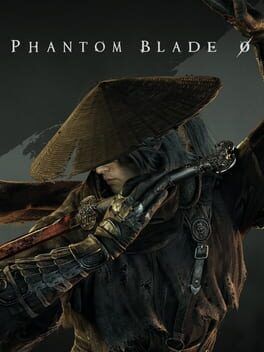
S-Game says Phantom Blade Zero has at least 50 bosses tied to its weapon rewards, while PlayStation’s early enthusiasm has helped frame the action RPG as a major PS5 and PC launch.
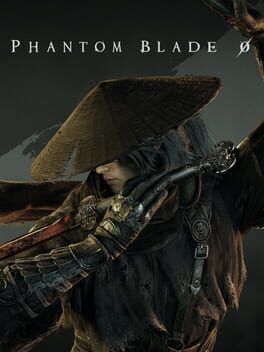
Image: IGDB
Store links: Phantom Blade Zero on Steam
Fifty bosses turns Phantom Blade Zero’s arsenal into a promise
S-Game director Qiwei “Soulframe” Liang has put a hard number behind one of Phantom Blade Zero’s biggest combat claims: the action RPG has “at least” 50 bosses, and the real count may be higher. In an interview with 4Gamer, reported in English by GamingBolt, Liang explained that the estimate comes from the game’s weapons. Phantom Blade Zero has 30 main weapons and about 20 secondary weapons, and Liang said those weapons are obtained by defeating bosses.
That makes the boss count a structural claim rather than a marketing flourish. If every major tool in the player’s kit comes from a fallen opponent, then the Phantom Blade Zero bosses are doing double duty. They are set-piece tests of timing and movement, but they are also the route through which S-Game teaches the player its combat language.
The tension is obvious. Fifty-plus bosses can make an action RPG feel lavish, especially for players drawn to duels, weapon mastery, and spectacle. It can also expose repetition quickly if encounters blur together or if rewards feel like checklist loot. Liang’s phrasing leaves room for a larger number, but the confirmed claim already sets a high bar for pacing. Phantom Blade Zero now has to make the journey from one weapon to the next feel earned, not merely counted.
A boss for every weapon raises the design risk
The weapon math is the important part. Liang’s comment ties the boss roster directly to progression: 30 main weapons, about 20 secondary weapons, and a boss associated with each. The PlayStation Store page uses slightly broader wording, listing “30+ primary weapons and 20+ unique Phantom Edges” and saying they are “claimed from fallen foes.” GamerFuzion flagged a similar discrepancy between weapon counts reported from different public materials, noting that PlayStation Blog wording had referred to more than 30 main weapons and 25 secondary weapons, while Liang used a looser “a little over 20” formulation in the 4Gamer interview.
That is not necessarily a contradiction in the final game, but it is a useful reminder that pre-launch numbers can be elastic. What is firm across the current sources is S-Game’s intended relationship between combat encounters and arsenal growth. Phantom Blade Zero is selling the idea that its weapons are trophies with mechanical consequences, not menu rewards detached from the fights that precede them.
For an action RPG, that shapes expectations immediately. A new weapon after a boss fight can change range, rhythm, animation commitment, crowd control, and defensive options. If S-Game uses each boss to preview or embody the weapon it grants, Phantom Blade Zero could create a clean loop: read the opponent, survive the duel, inherit the style, then carry that lesson into the next stretch of the Wulin. If the connection is looser, the 50-boss figure risks becoming a volume statistic rather than a design promise.
Enemy variety has to carry the spaces between duels
Liang also told 4Gamer that regular enemies become more varied as players progress. According to GamingBolt’s translation of the interview, he described large and small enemies, shield users, mounted foes, and opponents whose designs begin from traditional Chinese martial arts before adding S-Game’s “kung fu punk” elements. He said the later half of the game, which the interviewer had not yet played, continues increasing that variety.
That matters because Phantom Blade Zero’s combat pitch is not built around respawning fodder. GamingBolt cites prior comments from S-Game that defeated enemies will not respawn, with the team saying it wants players to “experience something new.” That choice changes the expected texture of exploration. In many action RPGs, repeat enemies function as resource loops, practice targets, and pacing buffers. Removing respawns puts more pressure on encounter authorship. Each corridor, ambush, and field fight has to justify its place because players are not being asked to grind the same bodies for experience or materials.
It also gives the boss count a sharper edge. A game with no respawning enemies and at least 50 bosses is making an argument for curated momentum. The route through Phantom Blade Zero should feel like a sequence of authored confrontations, with the camera pulling the player from one martial problem to the next. That is an exciting proposition for action fans, but it is also expensive in design terms. Variety cannot live only in silhouettes. It has to appear in move timing, arena pressure, punish windows, weapon matchups, and the way each fight disrupts habits built in the last one.
PlayStation’s first reaction became part of the game’s identity
The other half of Phantom Blade Zero’s launch positioning comes from how early PlayStation attention pulled S-Game onto a larger stage. In an interview with PCGamesN, director Soulframe described the studio’s first meeting with PlayStation as a modest presentation by two young developers showing a rough mockup. He said a business contact was impressed, then Christian Svensson, Shuhei Yoshida, and other PlayStation figures came over to watch the trailer. According to Soulframe’s account to PCGamesN, Svensson reacted with, “Holy shit! Who are you? This is so impressive.”
That story matters because Phantom Blade Zero is not arriving as an anonymous action RPG fighting for visibility in the dark. PCGamesN reports that PlayStation invited S-Game to join its 2023 showcase after that meeting, giving the studio two months to polish what it had into a three-minute trailer. Soulframe told the outlet S-Game initially expected only to make some kind of impression. PCGamesN says the Phantom Blade Zero trailer became the second most viewed trailer from that showcase, behind Insomniac’s Marvel’s Spider-Man 2.
There is a business reality underneath the cinematic origin story. PlayStation’s early reaction gave S-Game a platform association before the studio had the console-era track record usually attached to that kind of attention. PCGamesN notes that S-Game had previously worked on smaller games and mobile titles, and that the studio has been aided by investment from companies including Tencent. For players, that history creates a reasonable question: can a studio making this kind of leap sustain the polish its trailers suggest across a full-length action RPG? The 50-plus boss claim makes that question louder, not quieter.
The PS5 listing shows a premium, platform-forward pitch
Sony’s own storefront now frames Phantom Blade Zero as a full-price PS5 release with platform features baked into the pitch. The PlayStation Store lists the Standard Edition at $59.99 and the Digital Deluxe Edition at $69.99. The page identifies S-Game as the publisher on the listing, marks the game as a one-player PS5 title, and lists Blood and Violence as content descriptors.
The same PlayStation page says Phantom Blade Zero is PS5 Pro Enhanced, supports Game Help, and uses DualSense vibration and trigger effects. Its feature text specifically mentions adaptive triggers for Phantom Edges, including examples such as the pull of a bowstring and the resistance of a cannon. The listing also describes the game as “a dark wuxia action RPG powered by Unreal Engine 5,” with Soul as its protagonist, a swordsman framed for murdering his master and left with only 66 days to live.
This storefront language is doing careful work. Phantom Blade Zero PlayStation messaging emphasizes cinematic kung fu authenticity, motion capture, and “Kungfupunk,” while also grounding the product in familiar PS5 benefits: controller feedback, PS5 Pro support, accessibility features, and Game Help. The PC version is still part of the launch, with GamingBolt and PCGamesN both reporting an October 29 release for PS5 and PC, but the PlayStation relationship is central to how the game is being presented in front of console players.
Preorders, editions, and the case for waiting
For buyers, the practical picture is clearer than the combat quality question. Phantom Blade Zero launches October 29 on PS5 and PC, according to GamingBolt, PCGamesN, and the PlayStation Store listing. On PlayStation, the $59.99 Standard Edition includes the full game. The $69.99 Digital Deluxe Edition includes the full game, the Wulin Legend and Blood-Steel Form appearances, a digital artbook, and the digital soundtrack.
The preorder bonuses on PlayStation are framed as early unlocks rather than exclusive power. Sony’s listing says preorders unlock the Treasure Basin accessory, which increases Remnant Dust drop rate by 10 percent, and the Legacy appearance. The page also states that the preorder content can be obtained through in-game progression. That detail is important for anyone wary of mechanical bonuses attached to preorders. Based on the listing, players are not locked out of those items if they wait.
GamingBolt reports that Liang has said preorders have been strong, but there is still no substitute for launch verification on performance, PC settings, boss repetition, and late-game pacing. The boss count and PlayStation’s visible support make Phantom Blade Zero one of the more interesting S-Game action RPG launches of the year. They do not answer the main buyer question by themselves. If the promise holds, 50-plus bosses could give the game a relentless martial rhythm, a parade of duels where every victory changes the player’s hands. If the execution stumbles, the same number could become a burden. The smartest read before release is to treat the figure as a statement of ambition, then look for reviews and technical coverage that show whether S-Game turned that ambition into sustained combat drama.