
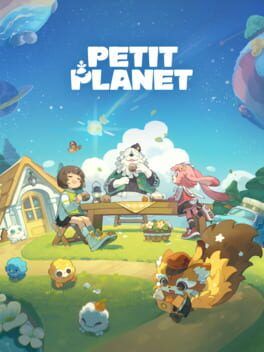
Early Petit Planet previews paint HoYoverse’s cozy sim as an openly Animal Crossing-inspired life game with charm, planetary scale, and unanswered long-term questions.
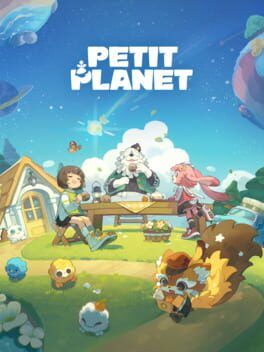
Image: IGDB
HoYoverse’s cozy pivot is already being judged against Animal Crossing
The clearest takeaway from the first Petit Planet preview wave is also the hardest challenge for HoYoverse to escape: early hands-on reports say the studio’s cozy life sim follows Animal Crossing: New Horizons closely, while trying to give that familiar routine a larger galactic frame.
IGN’s Petit Planet preview, published November 9, describes HoYoverse’s new life sim as a game that “will remind you a lot of Animal Crossing,” specifically pointing to New Horizons-style outdoor furniture placement, crafting, bug catching, fishing, and museum-like donations. Geek Culture, which played a two-hour hands-on demo during the HoYoverse Media Tour 2026 in Seoul, also says the Animal Crossing influence is obvious from the start.
That comparison is not automatically a weakness. Cozy games live and die by ritual, and there is a reason shaking trees, arranging furniture, fishing before bed, and filling out a collection book have endured. The tension around Petit Planet is whether HoYoverse can turn that recognizable comfort into a long-term habit with enough personality of its own, rather than letting players spend the first few hours mentally naming every Nintendo equivalent.
The early answer is cautiously encouraging, but incomplete. IGN says Petit Planet still hooked its writer despite fatigue from a crowded 2026 cozy field that included Animal Crossing: New Horizons’ Starsand Island update, Pokémon Pokopia, Tomodachi Life: Living the Dream, and other life sims. Geek Culture writes that its two-hour session could not fully answer whether Petit Planet has enough of its own identity, but left the outlet seeing the direction and imagining a game players could spend hundreds of hours inside. Those are preview impressions, not verdicts, and they leave the most important question for launch: whether the charm holds after the first surprise gives way to daily routine.
A planet instead of an island, but the first steps are familiar
Petit Planet’s premise gives HoYoverse its cleanest differentiator. According to IGN, players begin by creating a character, signing up for a program run by Loomi Co., and settling on an uninhabited planet with guidance from a dog named Mobai. Geek Culture describes the setting as the Starsea, a universe of uncharted planets where the player becomes a Planet Tender and nurtures a chosen world.
That planetary language matters because it changes the fantasy around a familiar structure. Animal Crossing: New Horizons gave players an island getaway. Petit Planet gives them a miniature planet to shape, which Geek Culture says made the scale feel larger even though the demo began with a choice between two starting planets: Hexia, with Verdant Plains, and Taffeh, with Golden Savannas. Each had its own starting biome and natural resources in the preview build.
Once the player lands, however, both IGN and Geek Culture say the early flow becomes much more recognizable. You meet a colorful cast of anthropomorphic companions, gather materials, decorate a small home, change outfits, catch bugs, fish, and complete tasks that gradually build up the planet. IGN reports that each planet has a native fruit, that fish and insects can be sold, cooked, or donated, and that donations go to a facility called the Eco House, which the preview compares to Animal Crossing’s museum function.
The strongest confirmed identity play so far is spatial rather than mechanical. A planet is a cute enough hook, and the Starsea framing gives HoYoverse room for biome variety, off-world travel, hidden recipes, and themed discoveries. But the previews suggest the opening hours are designed to feel immediately legible to Animal Crossing players. Petit Planet is not hiding its influences. It is betting that cozy players will accept the overlap if the world is warm, responsive, and dense with tiny interactions.
Mobai, money, and the danger of being too self-aware
The previews make Mobai sound like Petit Planet’s most direct wink at Nintendo’s cozy empire. IGN says the dog guide fills a role similar to Tom Nook, helping players settle into their new home. The same preview notes that Mobai even jokes about whether the player had to take out a loan on a previous planet, reassuring them that Petit Planet has no such system.
The gag lands because it knows exactly what players will be thinking. It also exposes one of the design questions Petit Planet will need to answer carefully. IGN reports that while there is no loan in that early setup, upgrading the temporary home into a proper house still costs money upfront. That is not a scandal, of course. Life sims need goals, prices, and pacing. But if Petit Planet calls attention to Animal Crossing’s debt structure, players will naturally scrutinize the replacement economy.
That scrutiny will be sharper because this is HoYoverse. Geek Culture’s headline describes Petit Planet as free-to-play, and HoYoverse’s broader reputation comes from live-service games such as Genshin Impact, Honkai: Star Rail, and Zenless Zone Zero. The provided preview material does not give enough detail to judge Petit Planet’s full monetization, cosmetic economy, crafting timers, or long-term progression pressure. A Head Topics aggregation also references a ScreenRant item with the headline that HoYoverse confirmed the monetization model excludes character gacha, but the excerpt available here does not provide the full underlying explanation.
So the responsible read is narrow: early previews confirm cozy activities, home upgrades, resource gathering, and a currency gate for moving beyond temporary housing. They do not yet confirm how generous the live economy will feel over weeks or months. For a Petit Planet cozy sim to thrive long term, the difference between a relaxing goal and a sticky grind will matter as much as the furniture catalog.
The best early signs are in the small craft details
Where Petit Planet starts to separate itself in the previews is in the texture of interaction. IGN points to shallow-water gathering with tongs as one of the features that goes beyond the obvious New Horizons foundation. In that preview, the writer specifically enjoyed trying to catch hermit crabs hiding beneath rocks by timing the approach carefully.
That sounds small, but small is where this genre often wins. A cozy life sim does not need every task to be mechanically difficult, but it does need enough hand-feel to keep repeated actions from becoming menu labor. Fishing, bug catching, shellfish gathering, decorating, and cooking become durable only when the animations, timing windows, creature behaviors, and rewards make players feel gently attentive rather than half-asleep.
IGN also notes that nearby animals applaud or compliment the player after a successful bug or fish catch, and that newly discovered creatures come with amusing descriptions. Those details are easy to dismiss until they are absent. A good cozy game rewards curiosity with a little social sparkle. A great one makes the world feel like it noticed you doing something ordinary.
Geek Culture’s preview adds that Petit Planet encourages exploration through whimsical islets that can unlock hidden recipes and secrets, according to the outlet’s hands-on summary. That is potentially important for players worried that the game will be a pure checklist of domestic chores. The Starsea setup gives HoYoverse a natural excuse to send players outward, not only inward toward home customization. The long-term test will be whether those excursions keep producing surprise after the demo slice, or whether they settle into another predictable material route.
Animal Crossing comparison helps, but Tomodachi Life expectations need care
Petit Planet is already being positioned in search and conversation beside Animal Crossing, and that is fair based on the available previews. The confirmed loop of settling a personal space, collecting creatures, decorating indoors and outdoors, and donating discoveries fits that comparison directly.
The Tomodachi Life connection is murkier. IGN mentions Tomodachi Life: Living the Dream as part of the crowded 2026 cozy and life-sim landscape that contributed to the writer’s genre fatigue before trying Petit Planet. That does not mean the preview confirms Petit Planet as a Tomodachi Life style game in the deeper sense of Nintendo’s relationship-driven social simulation. Based on the provided source material, Petit Planet’s demonstrated strengths are closer to place-making, collecting, crafting, and environmental customization than to the oddball interpersonal drama that defines Tomodachi Life.
That distinction is useful for readers deciding how closely to watch the game. If you want a HoYoverse Animal Crossing alternative with a cosmic theme, the early hands-on reports speak directly to that appetite. If you are looking for a Tomodachi Life style game built around unpredictable resident relationships, the current preview material does not establish that as Petit Planet’s center of gravity.
What HoYoverse does appear to understand is the importance of company. Mobai and other companions are present from the beginning, according to IGN, and Geek Culture describes a colorful cast of anthropomorphic creatures living alongside the player. The unanswered question is depth. Are these characters long-term personalities with evolving routines, stories, and social friction, or are they primarily cute quest-givers and atmosphere? The previews confirm charm. They do not yet prove social staying power.
Release timing and platform questions are still uneven
The practical picture is also incomplete. MMORPG.com says Bradford was in Korea seeing Petit Planet ahead of “next month’s launch,” framing the hands-on around the upcoming life sim from HoYoverse. IGN, meanwhile, says the Switch 2 version will not arrive until next year. Those two details can coexist if the game has a staggered platform rollout, but the provided source material does not include a full official platform list, date, price page, or regional launch breakdown.
That leaves players with a few concrete takeaways and several open questions. Petit Planet has been shown in hands-on preview form. It is developed by HoYoverse, the company behind Genshin Impact and Honkai: Star Rail, as IGN notes. A Switch 2 version is planned for next year according to IGN. Geek Culture describes the game as HoYoverse’s first cozy title and, in its headline, as free-to-play. Beyond that, readers should wait for official HoYoverse listings or storefront pages before making assumptions about cross-progression, controller support, mobile or PC availability, cosmetic pricing, or whether all launch regions receive the same content.
For cozy players, the wait-and-see point is not whether Petit Planet resembles Animal Crossing. It does, openly and repeatedly, across the previews. The real question is whether HoYoverse can use its production polish, planetary premise, and live-service experience without sanding away the softness that makes the genre work. The early Petit Planet preview consensus is that there is charm here, and enough craft in the tiny interactions to make the comparison feel promising rather than purely derivative.
But long-term cozy games are built in the months after the tutorial. They need rhythms that respect the player’s time, characters worth checking in on, economies that feel generous rather than extractive, and new discoveries that arrive before routine turns stale. Petit Planet has shown the cover of that book. The launch version has to prove there are enough handwritten notes inside.