
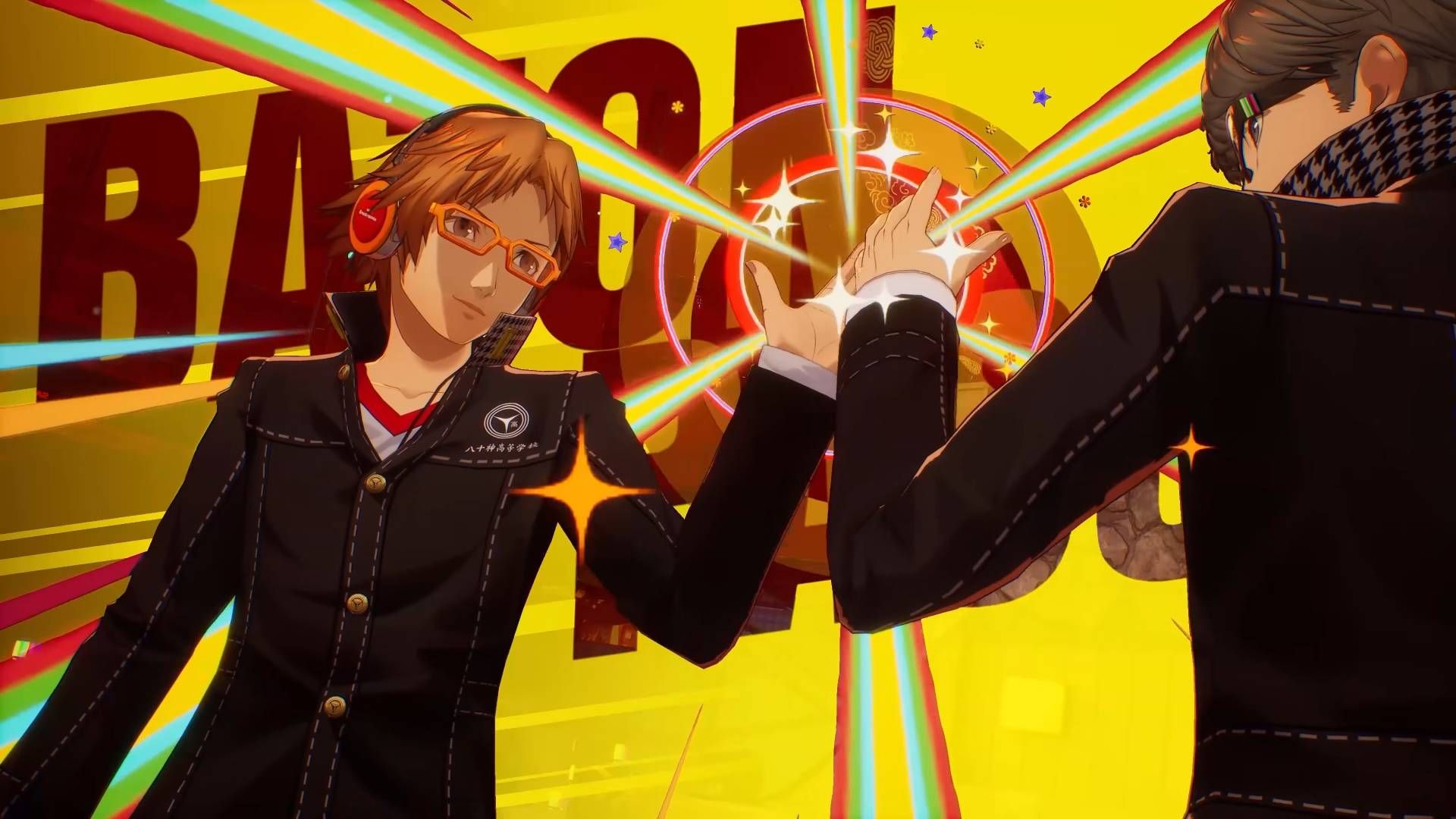

Daman Mills is the new English voice of Kanji Tatsumi in Persona 4 Revival, adding a major cast detail as Atlus explains how the remake is handling localization, character intent, and sensitive legacy writing.
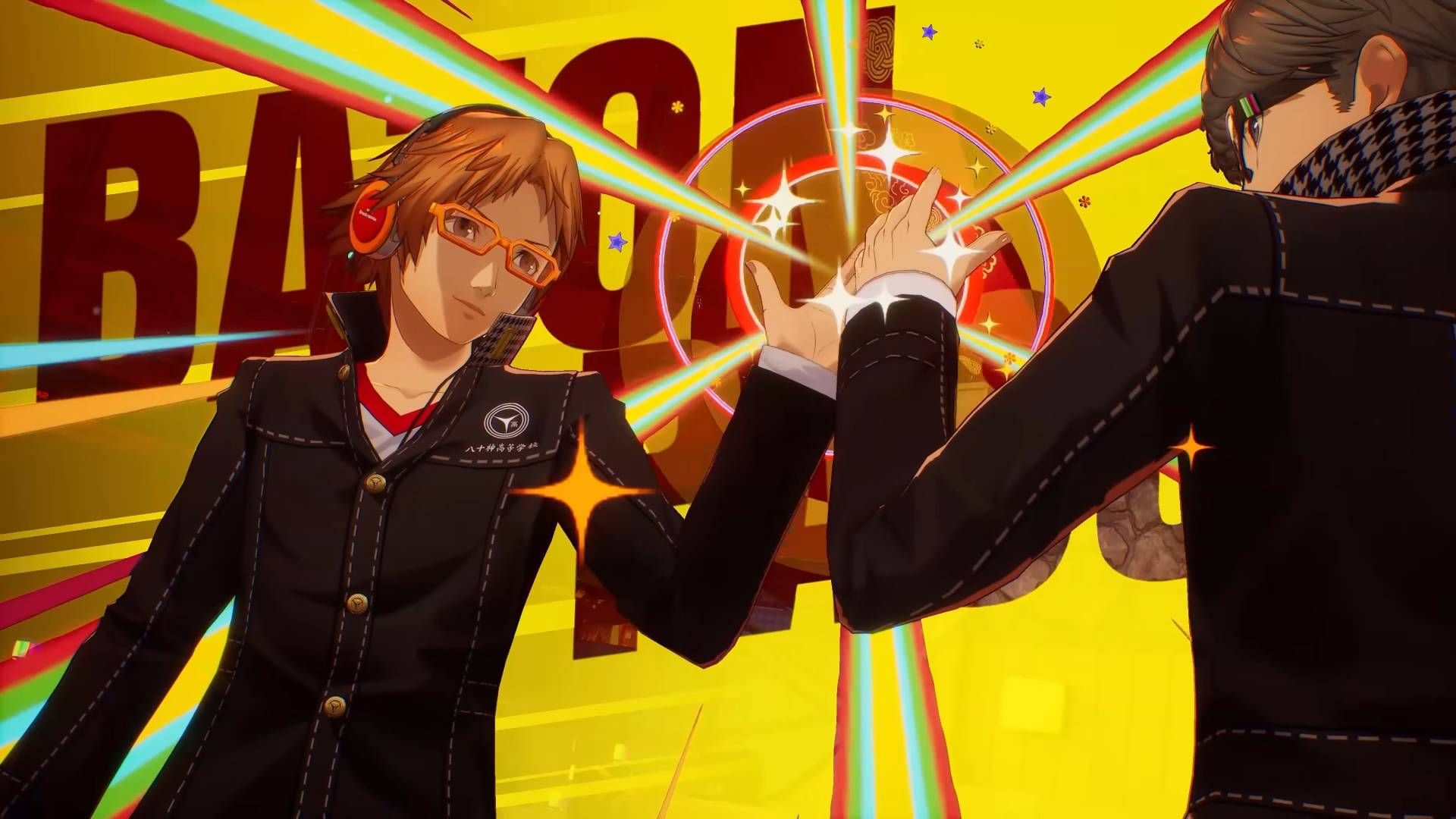
Image: gamesradar.com
Daman Mills is Persona 4 Revival’s new English Kanji
Atlus has confirmed Daman Mills as the English voice of Kanji Tatsumi in Persona 4 Revival, according to 8Bit/Digi and Polygon, giving the remake one of its most closely watched casting answers yet. Mills also confirmed the role himself on X, thanking Sega, Atlus West, and Studiopolis and calling Kanji “a beloved character” whose legacy he wanted to honor while bringing his own interpretation to the performance.
That casting carries extra weight because Kanji is not a minor party member being quietly slotted into a remake. He is the Emperor Arcana character, a recruitable member of the Investigation Team, and one of Persona 4’s central tests of how well Revival can preserve a beloved RPG while clarifying material that players have debated for years. 8Bit/Digi’s report describes the new “Kanji Sizzle” trailer as an introduction to a character known publicly as a delinquent, while hiding a softer side, with Takeji Zaiten as his Persona.
Polygon notes that Kanji was previously voiced by Troy Baker and Matt Mercer, two recognizable names in English game performance. Mills’ own post acknowledges that history directly, saying his predecessors built an “unforgettable” foundation for the character. The practical takeaway for fans is straightforward: the Persona 4 Revival cast is continuing its clean-break approach for English voice work, and Kanji’s new actor is someone Atlus has already used across several related projects.
A legacy role tied to one of Persona 4’s hardest adaptation problems
Kanji’s casting matters because his arc sits near the center of the larger Persona 4 Revival localization conversation. Polygon frames him as an early prominent game character exploring gender identity, while also noting the controversy around how characters such as Yosuke treat him in the original Persona 4. Eurogamer’s Gamescom interview with series director Kazuhisa Wada similarly focuses on the remake’s challenge: keeping the core of Persona 4 intact while addressing lines that some players see as clumsy, especially around Yosuke and storylines read through gay and trans themes.
Mills’ own comments at the PAX West panel, as quoted by Polygon, suggest he is approaching Kanji as a character whose masculine presentation coexists with traits he fears are outside social norms. He described Kanji as someone with “some femininity” that he admires, and said the character’s insecurity becomes part of his progression through the story.
For an RPG audience, that language is important because Kanji’s arc is structured like a Persona character build in narrative form. His party role, Arcana, dungeon material, and Social Link all depend on whether the writing and performance sell the difference between a public mask and a private fear. Revival’s English performance will have to land that progression without sanding Kanji into a safer, flatter version of himself.
Wada says Revival keeps character cores but adjusts unclear lines
The clearest official guidance on Persona 4 Revival localization comes from Eurogamer’s interview with Kazuhisa Wada. Asked about how Atlus is approaching the original text, Wada said through an interpreter that the team “didn't really change the core of any character.” He added that the characters are “still who they are, saying what they're saying.”
That is the conservative boundary around the remake. Fans expecting a full rewrite of Persona 4’s social politics should not treat the interview as evidence for that. Wada’s explanation points instead to targeted revision. He said some original lines were unclear, lacked information, or were phrased in a way that did not effectively portray the intended character. Atlus revisited those areas and made small tweaks so the character intention would be clearer.
Yosuke is the example Eurogamer pressed on, and Wada’s answer is careful. According to Eurogamer, he said Yosuke is saying the same things, but “a couple parts” have been made “a little bit more gentle.” That is a meaningful localization signal, but a narrow one. It supports the expectation of adjusted phrasing and tone. It does not support claims that Yosuke’s role, Kanji’s core arc, or the overall structure of Persona 4 has been rebuilt.
Localization is being treated as part of the remake, not a late handoff
Eurogamer’s interview also places Persona 4 Revival in the context of Atlus’ changing global release strategy. The outlet contrasts older Atlus releases, where games could debut first in Japan and arrive later elsewhere, with the post-Persona 5 era. Eurogamer cites Persona 5 as an example: it launched in Japan in September 2016 and globally in April 2017. The interview then says Atlus modified its approach after Persona 5’s worldwide and mainstream success.
The provided excerpt cuts off before Wada’s full explanation of that newer process, so there are limits to what can be reported from it. Still, the available material supports one important reading: localization is not being discussed as packaging after the Japanese script is locked away. Wada is describing line-level intent, Western audience reception, and the remake’s text in the same conversation.
That matters for a game with Persona’s structure. Calendar scenes, dungeon dialogue, battle barks, Social Link ranks, and party banter all reinforce character intent over dozens of hours. A localization team cannot simply fix one infamous line in isolation if the surrounding progression still points somewhere else. Wada’s comments suggest Atlus knows clarity has to be systemic, even if the scope of revision remains modest.
What fans can reasonably infer, and where inference has to stop
The safest inference from the Persona 4 Revival interview is that Atlus wants continuity of character, not a replacement script. Wada’s comments support changes that make intention clearer and soften selected wording, especially around Yosuke. They do not confirm restored cut romance content, major route changes, new Social Link outcomes, or a fundamentally different reading of Kanji’s story.
The casting news reinforces that same middle path. Mills is a new English voice in a legacy role, and Polygon says Atlus is recasting everyone for this remake. His comments show awareness of Kanji’s complexity, and his X post emphasizes both respect for the earlier performances and room for his own interpretation. That gives fans reason to expect a performance calibrated for Revival’s tone, but it is still performance direction, not proof of rewritten quest design.
The future spin-off question is even more speculative. No source provided here announces Persona 4 Revival spin-offs, sequel projects, arena follow-ups, rhythm entries, or new crossover appearances. What can be said is narrower: if Atlus uses this English cast as the new baseline for Persona 4 characters, Mills is now positioned as the English Kanji for future appearances. That is a reasonable industry expectation after a remake recast, but it remains unannounced.
Release plans, editions, and the remaining practical unknowns
Persona 4 Revival is listed for PlayStation 5, Xbox Series X|S, and PC. 8Bit/Digi reports a February 18, 2027 launch date and says the PC version is via Steam, while Polygon reports the same date for PS5, Windows PC, and Xbox Series X and adds that it will be available on Game Pass from day one.
8Bit/Digi also reports five purchase options: Digital Standard, Digital Deluxe, Digital Premium, Physical Standard, and a Physical Collector’s Edition. According to that report, the Digital Deluxe Edition includes the base game, a Velvet Outfit Set, and four Persona sets featuring iconic Personas from Persona 3 Reload and Persona 5 Royal. The Digital Premium Edition adds P3R and P5R BGM Sets, while the Physical Collector’s Edition includes the base game, an artbook, steelbook, keycaps and a keychain, a Protagonist and Izanagi statue, and all DLC bonuses.
The supplied sources do not provide prices, PC requirements, performance targets, upgrade paths, or confirmation of any Nintendo platform version. They also describe Revival’s source material slightly differently: Eurogamer calls it a remake of the 2008 original, while the supplied Wikipedia excerpt describes it as a faithful reproduction of Persona 4 Golden’s story with graphical and mechanical enhancements. Until Atlus publishes a fuller feature list, the safest buying advice is to treat the localization and cast news as promising but incomplete. Fans focused on English performances now have a major answer for Kanji. Fans waiting to see how far the remake goes with Golden content, script adjustments, and platform-specific features still need more official detail.