
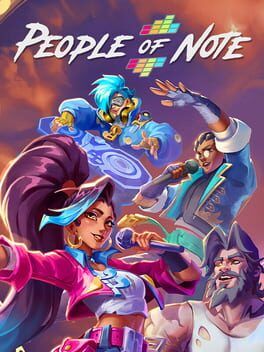
How People of Note turns every battle into a live musical performance, what the demo reveals about its tone and pacing, and why its star-studded cast could make it the standout RPG on Nintendo Switch 2 in 2026.
People of Note is the kind of pitch that sounds like a one-off gimmick on paper: a fully voiced RPG musical where every fight is staged as a performance and every party member is defined by their genre. After a wave of early previews and the fresh announcement of its April 7, 2026 release date on Nintendo Switch 2, it feels a lot less like a curiosity and more like 2026’s genuine wildcard.
On Nintendo’s next system, Iridium Studios’ rock-opera RPG is positioned to be that weird, specific game everyone with a Switch 2 ends up recommending. Between its performance-driven combat, a tone that swings confidently between satire and sincerity, and a cast headlined by Erika Ishii and Debra Wilson, People of Note is carving out a niche no other RPG is currently chasing.
Combat as performance, not just turn order
At its core, People of Note uses a traditional JRPG skeleton: you have a party, you pick commands from menus, you watch abilities fire off in turn. The difference is that the game treats each encounter as a miniature setlist, and the systems all reinforce the fantasy that you are on stage.
Battles are broken into “stanzas” that function as shared turns for both your band and the enemy. Instead of simply queuing actions and watching the turn order list, you’re looking at a musical staff along the bottom of the screen. That bar doesn’t just show who acts when; it also defines how many actions are available and what style is currently in the spotlight.
Time signature becomes a resource. A 4/4 stanza might give your side four actions to distribute, while a more complex signature can shuffle the number of moves available to both you and your opponents. Enemies can even alter specific measures, dropping in debuffs that, for example, halve the damage of anything used in the first beat of each stanza. You’re not just deciding which skill to use, but when in the phrase to place it.
On top of that structure sits a rhythm layer. Attacks and skills can be boosted by hitting timed prompts in sync with the backing track. Hit the beats cleanly and your damage spikes; miss them and your output drops. Unlike a pure rhythm game, though, the timing never overwhelms the tactical layer. Early previews stress that the windowing is generous, and the game includes options to soften or disable some timing elements for players who prefer to lean on planning rather than execution.
The real hook is how musical style interacts with mechanics. Each character is tied to a genre, and the current stanza’s genre dictates who is “on” at any given moment. If the bar swings to metal, your metal-focused guitarist suddenly comes alive with damage buffs and special effects. When the song shifts into pop, Cadence takes center stage. The soundtrack isn’t just aesthetic dressing; it is a constantly shifting climate that raises and lowers party member effectiveness in real time.
Because those styles rotate predictably along the timeline, encounters become about planning toward the next big moment. You might spend a stanza setting up buffs and resource generation so that when your preferred genre hits two phrases later, you can unload your most powerful finisher in perfect sync with the song. Rather than spamming the same best move, you’re nudged into a longer view, almost like you’re charting out verses and choruses ahead of time.
Layered on top of this are “mashup” attacks that fuse multiple genres. Bring characters from different musical backgrounds into the same band and you unlock duet-style abilities that not only look like full-blown music videos but also bend the combat rules, extending stanzas or overriding enemy debuffs. It makes party composition feel like building an actual ensemble rather than just picking the highest raw numbers.
What the demo says about tone and pacing
Several outlets have now spent a couple of hours with the Durandis demo, and a consistent picture is starting to form about People of Note’s tone and pacing.
The story opens with Cadence, a pop singer blocked from entering the Noteworthy Song Contest, pushed to find another path to stardom. That setup could have easily tipped into pure parody, but the demo threads the line between affectionate genre ribbing and genuine emotion. Rock, pop, EDM and country are all skewered in turn, yet the characters behind those styles are treated as more than walking jokes.
Durandis, the rock city featured in the demo, sets this balance well. It leans into exaggerated rock culture, all neon signs, cracked pavement and overblown stage gear, but it also gives room for quieter scenes where bandmates talk through insecurities and creative differences. Cadence’s clashing ideology with classic rock icon Fret, for example, starts as a clash of caricatures and slowly becomes an argument about authenticity, compromise and what it means to “sell out.”
Previews note that the musical numbers are full songs rather than short stingers. These sequences are presented as cinematic set pieces, complete with choreography and visual flair, and they land often enough that they start to define the game’s rhythm outside combat. The tradeoff is that they can be dense: you’re watching full performances with lyrics that move the plot forward. For players who gel with musical storytelling, this is a huge part of the appeal. Those who want to sprint through dialogue may feel the brakes applied.
In terms of moment-to-moment pacing, the demo aims for a late 90s console RPG feel. Town exploration, dungeon crawling and banter-heavy cutscenes are all given room to breathe rather than being compressed into a modern, hyper-condensed structure. Most impressions frame this as a conscious throwback: People of Note wants you to sit in scenes, listen to songs and soak up the world rather than mainlining quest markers.
Combat frequency in the demo is described as moderate. Encounters are spaced enough that you’re not thrown into a fight every few steps, which gives each battle enough weight to feel like a performance instead of filler. Early dungeons are compact, with a clear throughline and the occasional side path, which keeps the musical set pieces from overstaying their welcome.
Crucially, the developers are building in a lot of customization levers for pacing. Environmental puzzles can be toned down or disabled. Combat timing aids and difficulty settings can be tweaked so that players who just want to enjoy the music and story are not punished. That flexibility lets People of Note keep its theatrical density without turning away those who would rather treat it like a lightly interactive musical than a hardcore tactics game.
The tone leans surprisingly heartfelt. Beneath the jokes about genre wars and industry nonsense, the overarching thread about the Harmonic Convergence and dark forces disrupting the world’s music gives the cast something larger to push against. Previews consistently describe the writing as earnest in a way that is more Buffy musical episode than pure meme script, carried by a cast that can sell both punchlines and pain.
Casting that can actually carry a musical
A musical RPG lives or dies on performance, not just systems, and this is where People of Note quietly separates itself from other “music-flavored” games.
Headlining the voice and performance cast are Erika Ishii and Debra Wilson, names that carry serious weight among RPG fans. Ishii’s track record across character-driven games means Cadence’s journey stands a real chance of feeling grounded even as she belts out big pop hooks. Wilson, meanwhile, has become one of the most versatile and intense performers in games, equally at home delivering raw vulnerability or larger-than-life rage.
This matters for more than trailer bullet points. People of Note’s musical numbers are full scenes where characters are singing through conflict, doubt and joy. Without performers who can thread spoken delivery into sung lyrics without losing character, the whole structure would collapse into camp. Early impressions from the demo highlight how natural the transitions from dialogue to song feel, a sign that the team has cast with that exact challenge in mind.
The supporting cast, filled out by other seasoned actors and musicians, helps sell the idea that each city and genre is its own culture. Rock legends feel distinct from EDM producers not just in costume but in cadence, slang and musical phrasing. When the game leans into its mashup numbers, that variety pays dividends, as voices and styles crash into each other in ways that feel designed rather than stitched together.
For Nintendo Switch 2 specifically, this cast is a smart play. Nintendo platforms have a history of breakout, personality-driven RPGs that thrive on strong localization and vocal performances. A star-led musical, backed by Annapurna Interactive’s reputation for narrative curation, is exactly the sort of game that can ride word of mouth in that ecosystem.
Why it stands out on Nintendo Switch 2 in 2026
The Switch 2 launch window is already shaping up to be crowded with polished sequels and familiar brands, but People of Note is staking its claim on something few others are attempting. It is not just a rhythm game with RPG dressing, or an RPG with a musical marketing hook. By tying its turn-based combat, narrative beats and worldbuilding directly into performance, it feels designed from the ground up around the idea of music as a system.
On a technical and structural level, that gives it several advantages on Switch 2. Battles hinge on readable timing and snappy feedback rather than ultra-precise inputs, which should translate well to docked and handheld play. The shared “stanza” structure means you can meaningfully progress a fight in short bursts, ideal for portability. At the same time, the fully produced musical sequences take advantage of the new hardware’s ability to push higher fidelity character animation and lighting, which matters when so much of the game is about being under the stage lights.
Thematically, it fills a gap. There are very few big-budget or mid-budget RPGs foregrounding pop, rock and EDM as narrative pillars instead of background tracks. People of Note’s city-hopping tour across genre-defined hubs has the potential to scratch the same itch that classic PS1-era road trip RPGs did, but reframed around the global music industry instead of fantasy kingdoms.
Finally, the combination of Iridium Studios’ design, Annapurna’s backing, and recognizable talent like Erika Ishii and Debra Wilson gives the project both indie weirdness and mainstream reach. If the full game can sustain the demo’s balance of tactical depth, accessible options and emotionally resonant songs, People of Note could very well become 2026’s cult hit on Nintendo’s new hardware, the kind of game Switch 2 owners push on friends with the simple pitch: “It’s a turn-based RPG where every battle is a concert, and somehow it works.”